AI-led selloff pushes S&P 500 and Dow into correction, Nasdaq erases 2026 gains
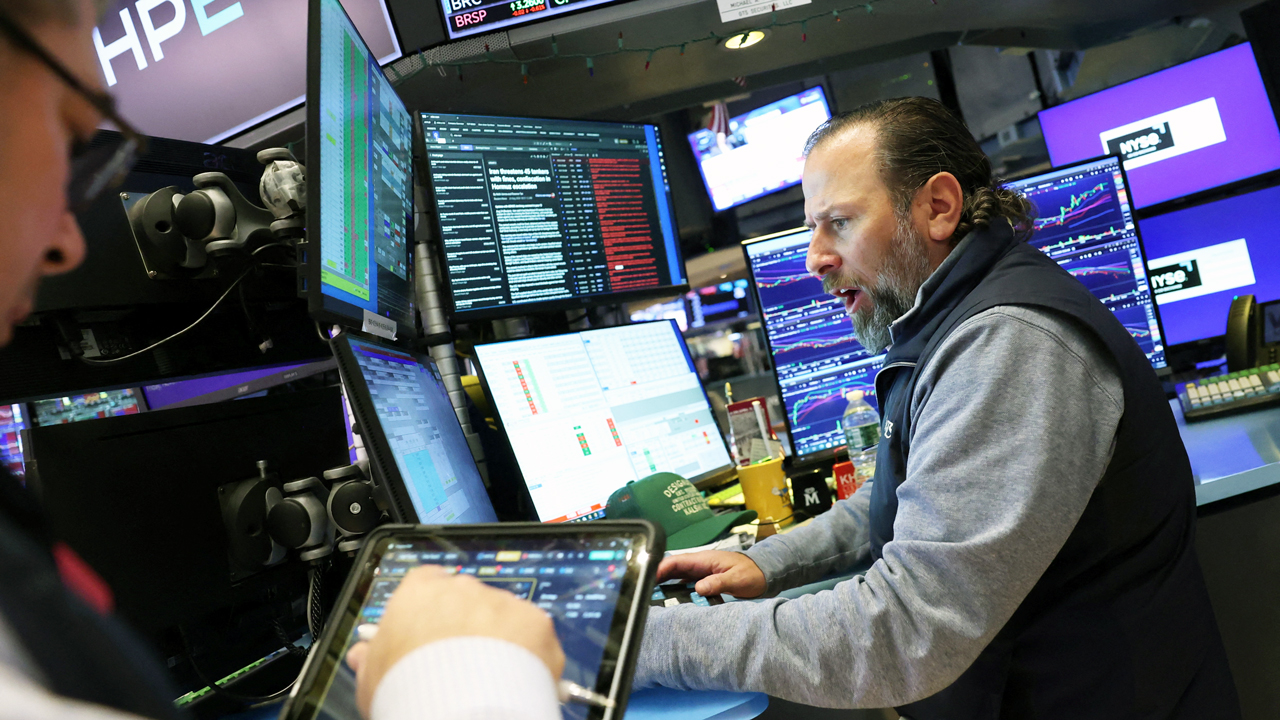
A steep drop in AI and chip stocks on Friday sent the S&P 500 and Dow more than 10% below their records and wiped out the Nasdaq's gains for 2026.
The full story
Here is the full story. A broad selloff in artificial intelligence stocks on Friday pushed the S&P 500 and the Dow Jones Industrial Average into correction territory, meaning both closed more than 10% below their recent record highs. The S&P 500 fell 3.7%, or 265.44 points, to 6,910.39. The Dow dropped 949.73 points, or 1.9%, to 48,147.33. The Nasdaq Composite lost 1,261.47 points, or 5.3%, to 22,617.73, erasing all of its gains for 2026. It was the Nasdaq's second drop of more than 5% this year, after a 5.52% fall on Nov. 5 that first put it into a correction.
The week as a whole was among the worst in years. The S&P 500 fell every day and recorded its seventh straight loss, its longest losing streak since February 2020, and its worst weekly decline since April 2025, when tariff announcements shook markets. The Nasdaq lost about 10% over the week, its steepest weekly drop since around March 2020. The Nasdaq Composite closed at a record 27,599.79 on Oct. 6 and now sits about 18% below that peak, within about 2% of a bear market. The narrower Nasdaq-100 has already fallen more than 20% from its high. The VIX, a measure of expected volatility, rose above 30 and reached its highest close since April 2025. The S&P 500 is now up less than 1% for the year.
Chip stocks led the decline. Nvidia closed about 14% lower, its lowest close in 18 months, and has fallen in nine of the last 10 sessions. AMD sank 13.3%, Micron 13.9% and Broadcom 12.1%, while the PHLX Semiconductor Index fell 10.7%. Other companies tied to the AI buildout, including Corning, Bloom Energy, CoreWeave and Nebius, also dropped sharply, as did large tech names such as Meta, Amazon and Tesla. Outside technology, many stocks rose: General Mills and Lennar gained, and consumer staples, healthcare and energy edged higher. Investors bought Treasury bonds, pushing the 10-year yield down to about 4.93% from 5.04%. Bitcoin fell below $60,000 for the first time since early July.
Anthropic, the maker of the Claude chatbot, could not escape the slide. The company raised about $81 billion on Thursday in the largest initial public offering ever, surpassing SpaceX. Its shares opened at $111.50, briefly hit $115.10 and closed up 17%. Chris Beauchamp, chief market analyst at IG, said the offering could be "draining market liquidity" as investors sell other shares to buy into Anthropic.
Nvidia has been under pressure since a scandal involving co-founder Jensen Huang, who resigned as CEO on Nov. 12; finance chief Colette Kress is interim CEO. The New York Post reported that Huang was forced out over an affair with a suspected Chinese spy. Since the scandal broke, Nvidia's stock has lost more than 25%. The company beat expectations in its earnings report on Tuesday but said its quarterly filing with regulators would come in the coming weeks, and Reuters reported that the Securities and Exchange Commission is looking into its accounting. The Guardian reported that California has served Nvidia with a subpoena in an investigation into whether its chips reached China. Huang and Commerce Secretary Howard Lutnick have agreed to testify before Congress.
Other worries added to the pressure. Democrats' midterm wins raised fears of slower data center construction, and President Donald Trump threatened a "tremendous tax" on U.S. companies building data centers abroad. The Federal Reserve is signaling more rate increases to fight inflation, and futures put the odds of a hike at its Dec. 9 meeting at about 95%. The selling spread worldwide: Taiwan's market fell about 6%, Japan's Nikkei and South Korea's Kospi each dropped about 5%, and Germany's Dax lost 2.6%.
Analysts split on what comes next. "The whole notion that AI can continue to spend unlimited amounts of money and support the stock market, I think the notion of that is ending as we speak," said Michael Antonelli of Baird, though he said he did not think the bull market that began in October 2022 was over. Chris Larkin of E*Trade from Morgan Stanley said only five of the past 15 corrections from record highs since 1983 became bear markets. Dan Ives of Yorkville Ives & Co called it a "panic-driven sell-off." Kevin Gordon of Charles Schwab said markets face "dual forces" from the Fed and the tech downturn, and warned that a long enough slide could cut into economic growth.
Reported by
- Fox Business: Wall Street suffers historic losses as Dow, S&P 500 plunge into correction territory
- TheStreet: The Nasdaq is tracking for its worst November since 2008
- Fortune: BNP Paribas sees ‘panic selling’ as the AI selloff drags the S&P 500 into a correction and wipes out the Nasdaq’s 2026 gains
- CBS News: Stocks enter correction territory, driven by deepening tech rout
- BBC News: Tech stock sell-off drags markets down as Anthropic shares slide
- Los Angeles Times: Nasdaq goes negative for the year, tech stocks slammed by AI swoon
- The Guardian: Nasdaq erases all 2026 gains as AI sell-off dampens Anthropic’s second day of trading
- Breitbart: Stocks Plunge as AI Selloff Pushes S&P 500 and Dow Into Correction
- New York Post: S&P 500 and Dow enter correction territory, Nasdaq loses 2026 gains as Anthropic dives
- NBC News: Wall Street meltdown: Tech stocks drop sharply as AI hype cools
Get this email every day
Want the day's top story in your inbox each morning? Sign up below to get this email every day.
Other news / Full articles
 GTA 6 launches with record estimated sales as Take-Two shares stay down for the year
 Shoppers stock up on generators and emergency food after string of tech outages
 Dow drops 1,100 points as AI stock worries spread despite Anthropic's strong debut
 Walmart raises full-year sales and profit outlook after strong third quarter
 Anthropic makes record-breaking stock market debut on Nasdaq
 Walmart raises full-year outlook after third-quarter sales top expectations