In the fall of 2023, Minneapolis Public Schools gained the funds to install special smoke detectors in four schools’ bathrooms. These inauspicious detectors had a unique purpose — they had the ability to immediately detect marijuana, tobacco, and vape fumes and send administrators a text or email within seconds. The detectors were installed in the spring of 2024 and then turned on in the fall of 2024.
The sensors were designed to primarily combat nicotine vape usage. Vapes have devastating impacts on the long-term health of the user, and teenagers are especially vulnerable to their lure. Sweet candy flavors, bright, cartoonish marketing, and an increasing popularity among teenagers make vapes an attractive choice for the younger set. After widespread complaints that targeted youth marketing was helping to fuel the teen vaping crisis eventually manifested themselves in over 5,000 lawsuits, vape manufacturer Juul agreed to settle in 2022 for $1.7 billion dollars.
Teenage nicotine use hit a high in 2019, but has since dropped. In 2024, 8.1 percent of middle and high schoolers admitted to using a nicotine product in the last 30 days. Of those users, three out of four chose a vape. National teacher surveys and private researchers, however, tend to conclude that the actual number of students who regularly use vapes is much higher.
Minneapolis’ vape detection program cost $100,000. Administrators seem to believe that it’s more than worth the investment. MPS Executive Director of Student Support Services Dr. Meghan Hickey noted in 2024 that initial responses from administrators at the four schools chosen for the pilot program featured rave reviews.
Each school chosen had previously reported high levels of vape usage in the bathrooms, meaning that many students were uncomfortable using the bathroom during school hours or chose to forego a bathroom break altogether. Dr. Hickey said that “Our goal was to make all students feel safer in school bathrooms.” While old-school methods like locking bathrooms or stationing a teacher in the bathrooms created logistic headaches, the digital alerts sent by vape detectors allowed administrators to respond immediately and accurately to vaping incidents. The increased oversight, Dr. Hickey said, made the bathrooms cleaner and safer for all students.
How did this affect school discipline?
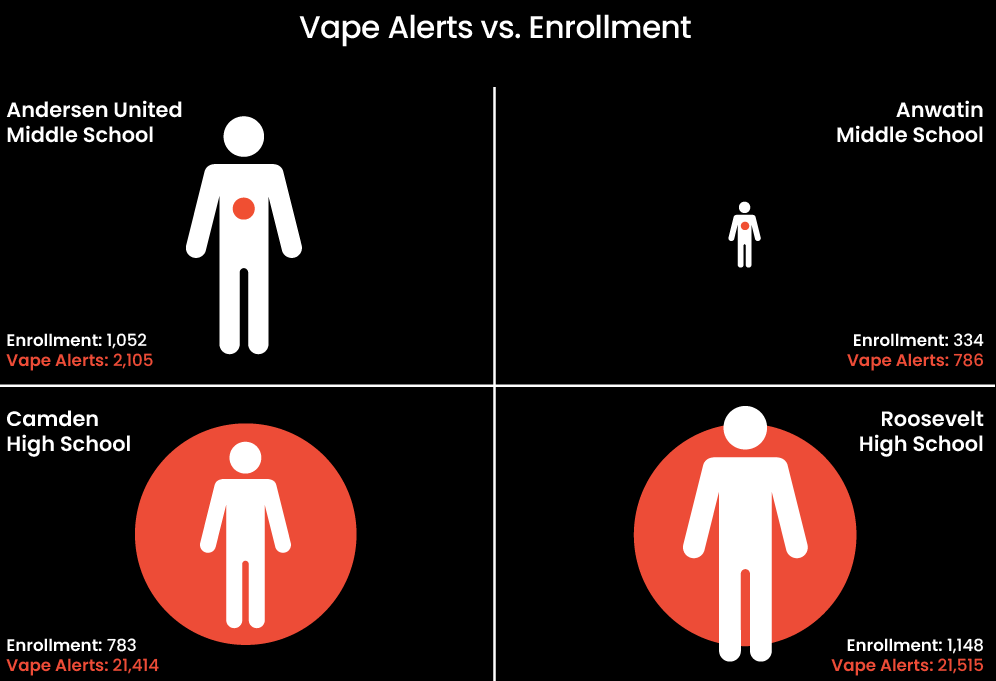
Since the schools were chosen for the pilot program specifically because they had high rates of student vaping, there were a high number of vape alerts at each school in the year following the installation of the devices. Anwatin Middle and Andersen Middle had fewer vape alerts than Camden High and Roosevelt High, which fits with the bigger-picture observation that high schoolers tend to vape more than middle schoolers.
As might be predicted, more students were disciplined for vaping after the sensors were installed than before they were installed. A The 74 Investigation report, produced in partnership with WIRED, found that
Across the four campuses, a student was disciplined for vaping every 3.1 school days on average in the two years before the devices were activated and inundated administrators with tens of thousands of alerts. In a nine-month period after they were deployed in September 2024, a student was disciplined for the same offense every 1.4 days.
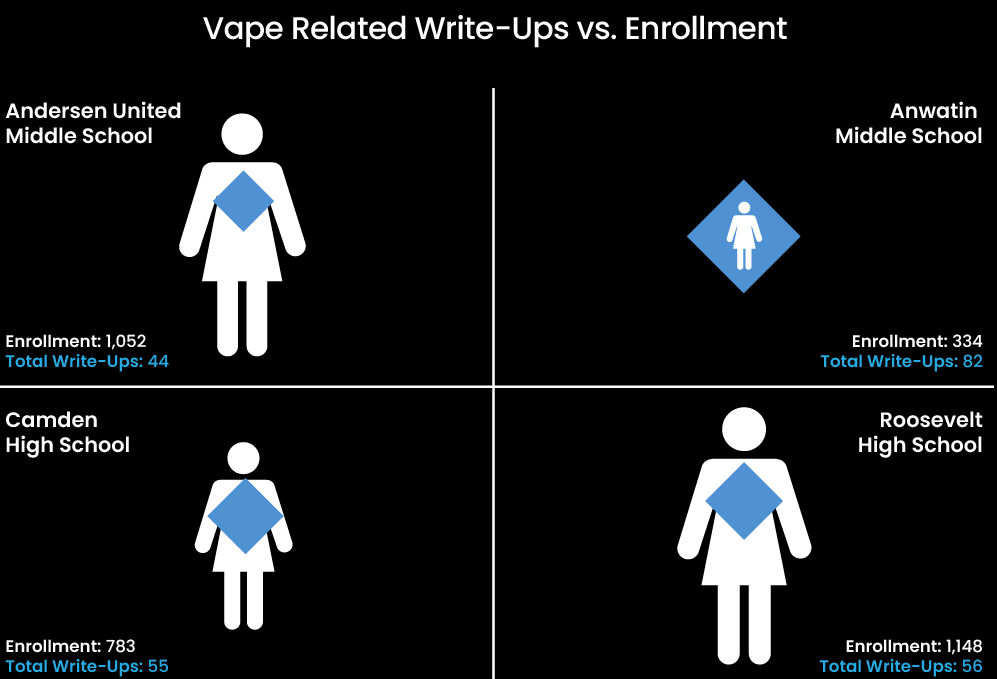
The increase was particularly pronounced at Anwatin Middle School where, in the 2022-23 school year, there were 15 vape-related disciplinary incidents. During the 2024-25 school year, after the sensors were installed, disciplinary actions for vaping reached 67.
Not every vape alert led to a disciplinary incident like a suspension or even a write-up. Anderson United Middle’s 2,105 vape alerts led to 44 write-ups. Anwatin Middle’s 786 vape alerts led to 82 write-ups. Camden High’s 21,414 vape alerts led to 55 write-ups. Roosevelt High’s 21,515 vape alerts led to 56 write-ups.
(Vape) clouds of controversy
The program isn’t without criticism. Advocates for student privacy expressed concern that the sensors represented a technological overreach, and that student bathrooms should be without surveillance.
Other criticisms came regarding the enforcement piece of the program. While vaping creates a deeply unpleasant bathroom and social environment, it is not a violent act and ultimately harms the vape user most of all. Some punishments for vaping, critics say, simply go too far. From The 74 Report:
Across the four campuses, at least half of the vape-related disciplinary incidents occurred in school bathrooms. Nearly 81% led to suspensions. Just 7% led to a referral to an alcohol and drug abuse counselor, according to the discipline logs, and after the vape detectors were installed, the rate of treatment referrals declined compared to the average over the two years before.
So, for example, of the 44 disciplinary incidents logged at Andersen United Middle (noted in The 74’s report as “write-ups”) 81 percent culminated in a suspension. The report did not publish whether these incidents were logged against the same student(s) or many different students, whether suspensions were given to the same student(s) or different students, or the duration and placement of these suspensions. The Minnesota Department of Health explicitly advocates against suspensions based on tobacco-related offenses, and the Minnesota Department of Education ranks tobacco use on slot 21 out of 31 student offense types.
Local activist Markika Pfefferkorn, who works with the No Tech Criminalization In Education (NOTICE) Coalition, argued that the technology is a piece of government overreach which empowers unfair student treatment. “Teachers and administrators have said that with vaping and vape detection, that we’re treating some students as if it’s a mental health issue … and then for other students, it’s a behavior issue,” Pfefferkorn said.
For now, the technology is here to stay. School administrators believe that they make the bathrooms safer and the overall school environment more pleasant and nurturing for students. The sensors alerted fewer times as the year went on, a sign that the vapes were being used less — or, perhaps, that the students who continued to use vapes found more sophisticated workarounds than an unhindered bathroom jaunt.
More pieces of student discipline data will need to be examined, clearer discipline policies will need to be put in place, and (much) more money will need to be found before the program sees a wider rollout over all of Minnesota.