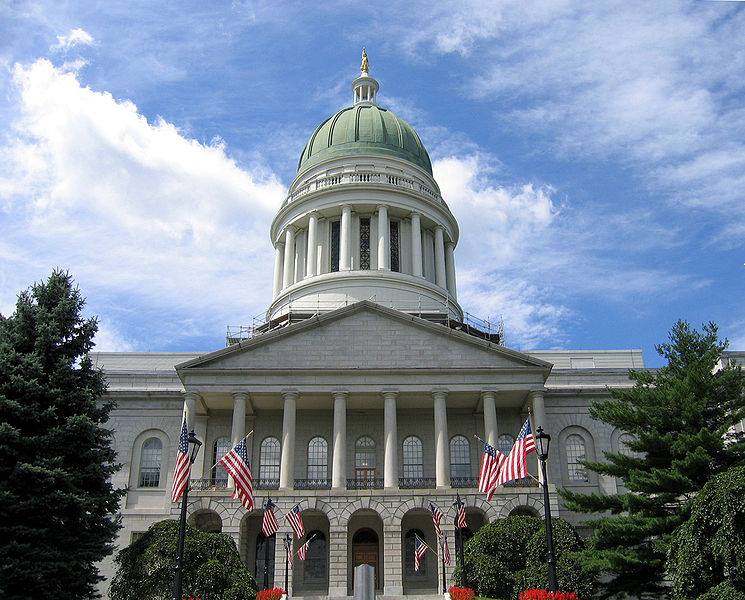
The Maine Legislature meets again in January 2026 and lawmakers have already planned out which bills will be carried over from the 2025 session, and which new legislation will be added to that list. While dozens of bills remain alive, only a small number of them have statewide impact and clear implications for Maine taxpayers, families, and businesses.
It would require a novel for Maine Policy Institute to fully explain every bill before the legislature next year, but below are a few of the most important bills and issues facing Maine going into 2026, a mid-term election year.
1. Housing Reform: High Stakes for Local Control and Affordability
LD 1247: Restricting Local Housing Ordinances – Presented by Rep. Traci Gere (D)
This bill would prohibit municipalities from imposing larger minimum lot sizes or certain parking requirements. While it would boost development on paper, it does so by stripping local control. MPI supports reducing regulatory barriers but opposes state mandates that override local land-use decisions. A better approach: incentives rather than top-down mandates from the state.
LD 1419: Sales Tax Exemption for Off-Site Housing Construction – Presented by Sen. Rick Bennett (I)
Current law exempts up to 50% of certain housing-related sales taxes. This bill raises that to 75% for off-site construction, matching on-site treatment. MPI supports the exemption increase because it reduces front-loaded building costs. A broader or full exemption would go further, but this bill is a step in the right direction.
LD 1806: Statewide Rental Unit Registry – Presented by Rep. Ambureen Rana (D)
This proposal creates a statewide database requiring landlords to register every rental unit with the Secretary of State. MPI strongly opposes it. A mandatory registry increases compliance burdens, expands surveillance of property owners, and opens the door to escalating regulation.
LD 1921: Statewide Housing Resolution Board – Presented by Rep. Traci Gere (D)
This bill creates a specialized review board within the Judicial Branch to streamline housing-related appeals, similar to systems in New Hampshire. MPI supports it as a way to reduce time-wasting legal bottlenecks without infringing on municipal authority.
2. Energy Policy: Rate Relief and the Grid’s Future
LD 32: Repeal of Net Energy Billing (NEB) – Presented by Sen. Stacey Guerin (R)
NEB has significantly driven up electricity costs. Repealing it would directly reduce ratepayer burdens and slow the growth of above-market power contracts. MPI supports full repeal.
LD 343: Directing Public Utilities Commission to Seek Informational Bids for Small Model Nuclear Reactors (Amended title and purpose) – Presented by Rep. Reagan Paul (R)
Once a strong push for small modular nuclear reactors (SMNRs), this bill has been watered down through the legislative process. It now directs the state’s energy plan to include evaluations of emerging technologies. MPI supports the remaining language but notes that it does not directly advance Maine’s nuclear energy portfolio as ambitiously as the original bill proposed.
LD 1223: Shifting Net Energy Billing Costs off of ratepayers and to the General Fund – Presented by Rep. Steven Foster (R)
This bill prevents utilities from passing NEB-related costs to ratepayers, moving them to the General Fund instead. MPI supports lowering electricity bills, even if this approach increases state spending. Rate relief is urgently needed. The state currently forces ratepayers to eat the cost of its NEB policies.
3. Education: Tax Hikes Disguised as School Funding
LD 1089: Permanent 55% School Funding via an Increased Income Tax – Presented by Rep. Cheryl Golerk (D)
A new surtax on incomes over $1 million would be used to “guarantee” 55% state education funding. In practice, it rewards school administrative units for overspending and inflates long-term costs. MPI opposes this bill for both the tax increase and the perverse incentives it creates.
While Maine’s public school system is performing worse than ever, very few bills before the legislature actually attempt to make any system-wide structural reforms. The Maine Department of Education is considering a “back to basics” proposal after years of advocating the exact opposite through their “measure what matters” initiatives.
This may reduce some of the damage Maine’s education system is currently causing, but is unlikely to fully solve the problem. It remains to be seen if any bills newly-proposed or carried over from last year will be substantially amended to address the many problems MPI has emphasized in Maine’s education system.
4. Taxes and Transparency: Competing Visions for Maine’s Future
LD 127: Legislative Access to Confidential Records – Presented by Sen. Craig Hickman (D)
Strengthens the Government Oversight Committee’s ability to review confidential state records while keeping them exempt from public disclosure. MPI supports this expansion of oversight authority.
LD 229: Increasing “Fair” State Income Tax Rates (Up to 8.95%) – Presented by Rep. Ann Matlack (D)
Raises Maine’s top rate to 8.95%, making it one of the highest in the nation. MPI strongly opposes it. The governor has repeatedly said she will not support broad-based tax increases, so this bill also faces an almost certain veto (we hope).
LD 1682: New “Fair” Top Tax Brackets (Up to 10.3%) – Presented by Rep. Laurie Osher (D)
This bill proposes an even more aggressive tax hike. At $300,000 of income, Maine would have the highest marginal tax rate in the country until other states’ much higher thresholds kick in. MPI opposes this unequivocally.
LD 1939: “Worldwide Combined Reporting” Corporate Tax Change – Presented by Rep. Ann Matlack (D)
Requires multinational corporations with greater than $1 billion in revenue to file worldwide combined returns in Maine. This is among the most aggressive anti-investment tax measures a state can enact. MPI opposes it because it sharply discourages foreign capital and complicates Maine’s tax climate.
5. Elections: Integrity, Constitutional Limits, and Public Money
LD 818: Maine “Clean Election” Funds for Dependent Care – Presented by Rep. Kristen Cloutier (D)
Allows Clean Election candidates to use public campaign funds for dependent care. MPI opposes it because MPI opposes the Clean Election system itself, as public financing for private campaigns is fundamentally flawed. Using this money to allow candidates to pay for dependent care is even more irresponsible.
LD 1666: Expanding Ranked-Choice Voting (RCV) to Governor/State Sen./State Rep. – Presented by Sen. Cameron Reny (D)
This bill applies RCV to gubernatorial and legislative races. MPI strongly opposes it for three reasons:
- RCV is confusing and distorts outcomes.
- It violates the Maine Constitution’s requirement for plurality elections.
- The governor herself has previously stated the policy would be unconstitutional when she served as Maine’s attorney general.
LD 1356: Winner-Take-All Electoral Votes (Conditional on Nebraska) – Presented by Rep. Adam Lee (D)
Under this bill, Maine would abandon its district-based allocation only if Nebraska abandons its as well. MPI opposes this bill for delegating Maine’s electoral rules to another state and for reducing independent representation of Maine’s two very different congressional districts.
6. Civil Liberties and Government Overreach
LD 566: Statewide Electronic Registry for Motor Vehicle Inspections – Presented by Sen. Bradlee Farrin (R)
“Modernizes” vehicle inspections by increasing fees and creating a centralized electronic tracking system. MPI opposes the inspection system broadly and opposes this expansion of surveillance-oriented enforcement.
LD 1230: Repeal 72-Hour Waiting Period for Gun Purchases – Presented by Rep. Quentin Chapman (R)
Repeals a new waiting-period law already driving businesses to move operations to New Hampshire. MPI supports the repeal unequivocally.
LD 1457: Automated Speed Enforcement Program – Presented by Sen. Bradlee Farrin (R)
This bill allows the Maine Turnpike Authority to deploy automated, machine-run, speed enforcement cameras statewide in highway construction zones. MPI opposes this as a serious expansion of surveillance and a shift toward automated policing.
Final Takeaway
The 2026 session will be shaped by a clear divide: proposals that expand mandates, taxes, and state control versus those that aim to lower costs, strengthen oversight, and protect individual liberties. The bills above represent the most consequential decisions lawmakers will face when they return to Augusta among the bills they decided to carry over to the legislature’s Second Session.