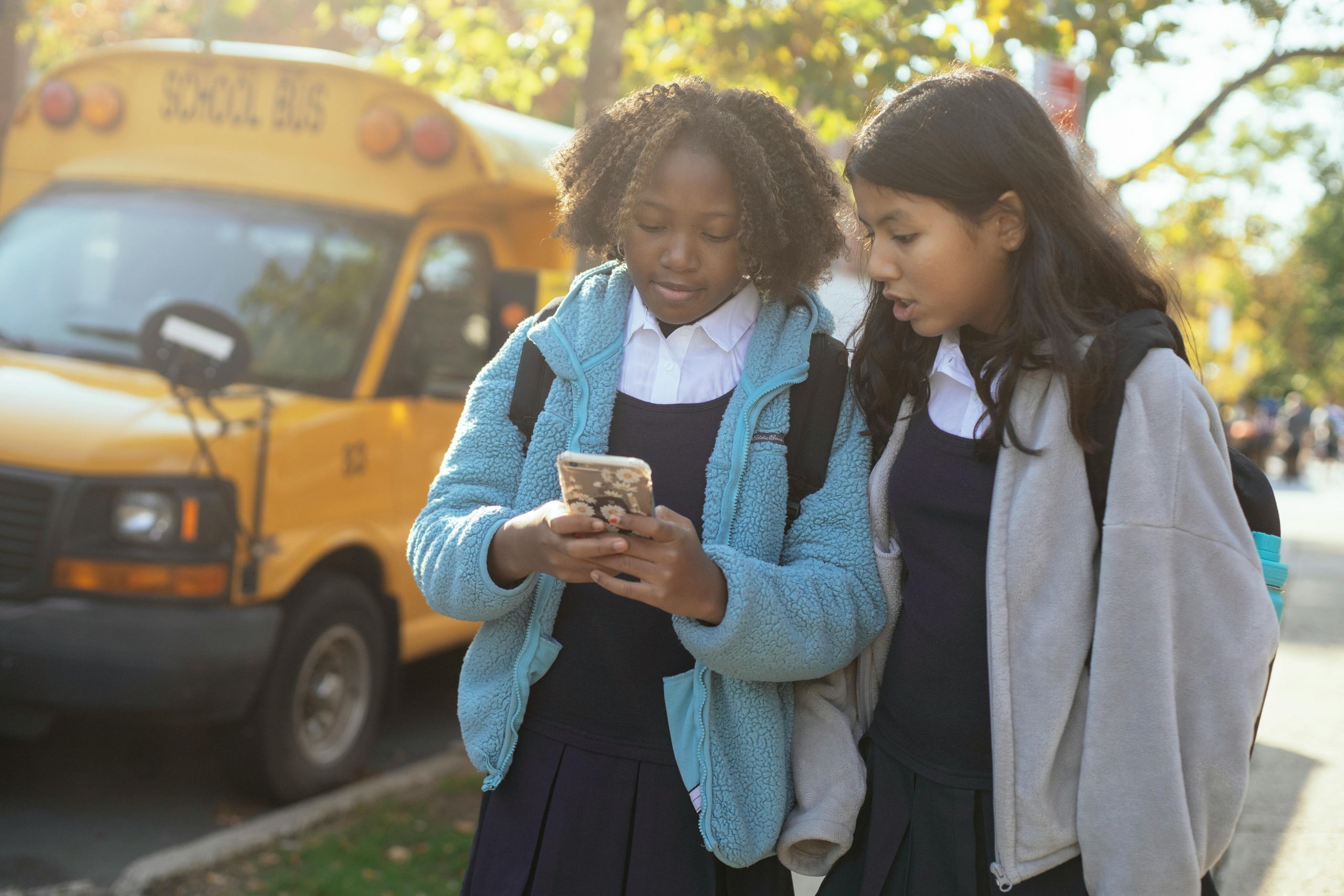
New polling suggests that there is broad bipartisan support in Minnesota for a bell-to-bell cell phone ban in the classroom. The numerous harms connected to unfettered access to the digital world are seemingly clear to many Minnesotans.
Setting aside the recent shocking headlines of children who are lured into suicide by AI-powered chatbots, even slight cell phone use strongly affects children’s sleep, depression and anxiety rates, impulse control ability, and their social and emotional health. A recent JAMA study found that preteens who used any amount of social media saw corresponding declines in their cognitive ability and memory capacity. Recently released documents from an upcoming lawsuit suggests that social media manufacturers purposely designed the digital world to be addictive and harmful to children as part of a long-term business strategy.
All this digital pressure spills over into the academic day, as students struggle to academically perform in class and teachers compete with endless notifications. One recent study found that students, on average, were on their phones during an entire quarter of the school day.
Minnesota does not yet have a comprehensive plan to protect students from the digital world, instead mandating that individual school districts create and enforce their own cell phone policy.
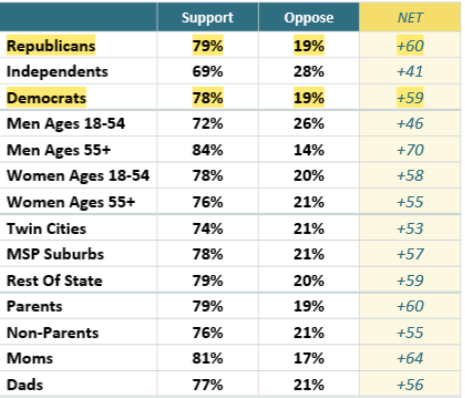
New polling suggests that the public might welcome a change. In our December 2025 polling of 500 Minnesotans, conducted by Meeting Street, when asked “Would you support or oppose prohibiting kindergarten through 12th grade students from using cell phones while in the classroom, unless it’s part of their education plan or an emergency?”, high majorities of both Republicans (79 percent) and Democrats (78 percent) said that they would support a prohibition.
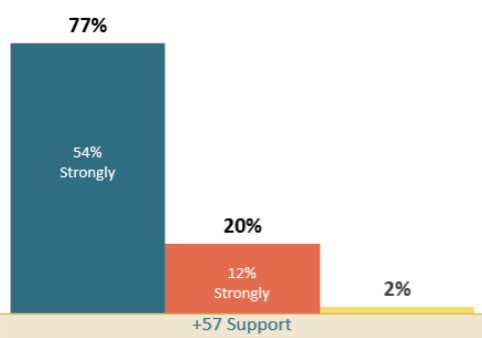
From the Minnesotans who supported a bell-to-bell cell phone prohibition, 54 percent noted that they would “strongly support” a prohibition. Only 12 percent of respondents felt that they would “strongly oppose” the prohibition.
Many states, like North Dakota, already mandate bell-to-bell cell phone bans within the classroom. Some states, concerned with spotty implementation and subsequent discipline and equity issues, take the mandate a step farther. New York recently invested $13.5 million into a fully funded ban that allowed districts to purchase phone storage devices like Yondr, a magnetic pouch that irrevocably seals during the academic day. For many states, the decision to invest in phone storage technology is a complex calculus that weighs line items in the state’s budget against the likelihood that districts will be able to effectually mandate a phone-free space without the technology.
The states that have enacted bell-to-bell cell phone bans have largely reported positive effects for their students. For example, Florida found that discipline issues increased in the first year after the ban, but dropped in the second year. Standardized test scores began to strongly improve following the ban.
There are many ways for Minnesota to invest in our students’ digital health and safety. Louisiana and Texas require age verification to access pornography sites, protecting children under 18 from accessing sexually explicit, potentially damaging material. Australia recently banned social media for children under 16. District leaders can promote social pact pledges, like the Wait Till 8th Pledge, which asks parents not to give their child a cell phone until 8th grade.