Alabama leaders spent the last week showcasing students who use publicly-funded vouchers to attend private schools and urging lawmakers to pour millions more into the program.
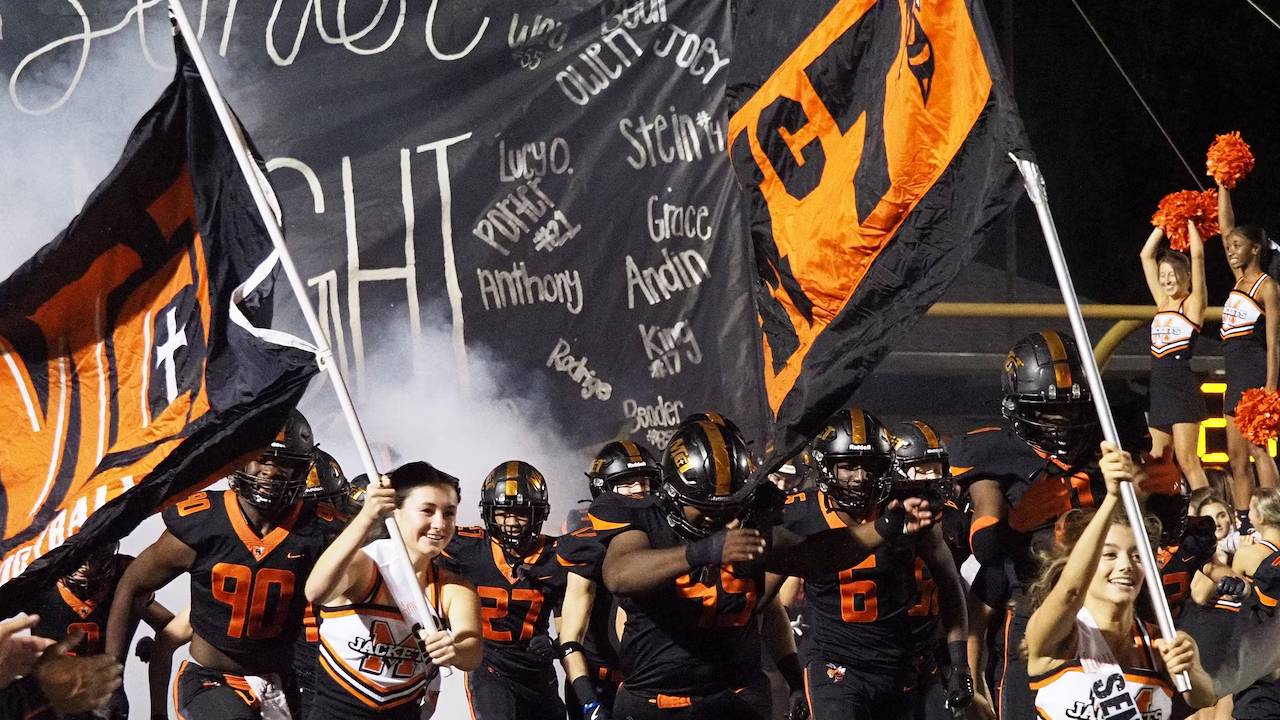
But critics of the new CHOOSE Act program were buoyed by backlash after the Alabama High School Association decided to split public and private school sports championships.
Suddenly, fault lines were unmistakable in debates intertwining education policy with athletics: rich versus poor, urban versus rural, state leaders versus the people they serve. On Lt. Gov. Will Ainsworth’s social media feeds and AL.com’s Facebook pages, a torrent of frustration put CHOOSE Act supporters on their heels.
Buried in the anger was a fair question: In a state where roughly 9 in 10 students attend a public school, and where many families live miles from the nearest private school, just how popular is a law so championed by Alabama’s Republican leadership?
Rep. David Standridge, R-Hayden, is chair of the Alabama House Rural Caucus and voted against the CHOOSE Act two years ago. “Most of the people in my area are close to the public schools, and they feel they are doing a good job,” he said.
School choice is broadly popular, according to polling. But some experts say it’s less so when a program starts to impact daily life.
“School choice typically polls better at the idea stage than at the implementation stage,” said Andrew Pendola, an associate professor of educational leadership at Auburn University. “Many people support expanded options in principle, but reactions become more mixed once policy changes begin to affect the long-standing structure of local public schools – even among some supporters.”
Defending school choice
CHOOSE Act advocates, including Ainsworth, say polling consistently shows that school choice is popular in Alabama, and that leaders are on the right path even as they clash with AHSAA leadership over the postseason split.
An Alabama GOP survey two years ago found that 57% of Alabamians supported the legislation, including 67% of Republicans. Last month, an Alabama Policy Institute poll showed that 69% of Alabamians favor extending the CHOOSE Act to all families. The API is a conservative think tank based out of Birmingham.
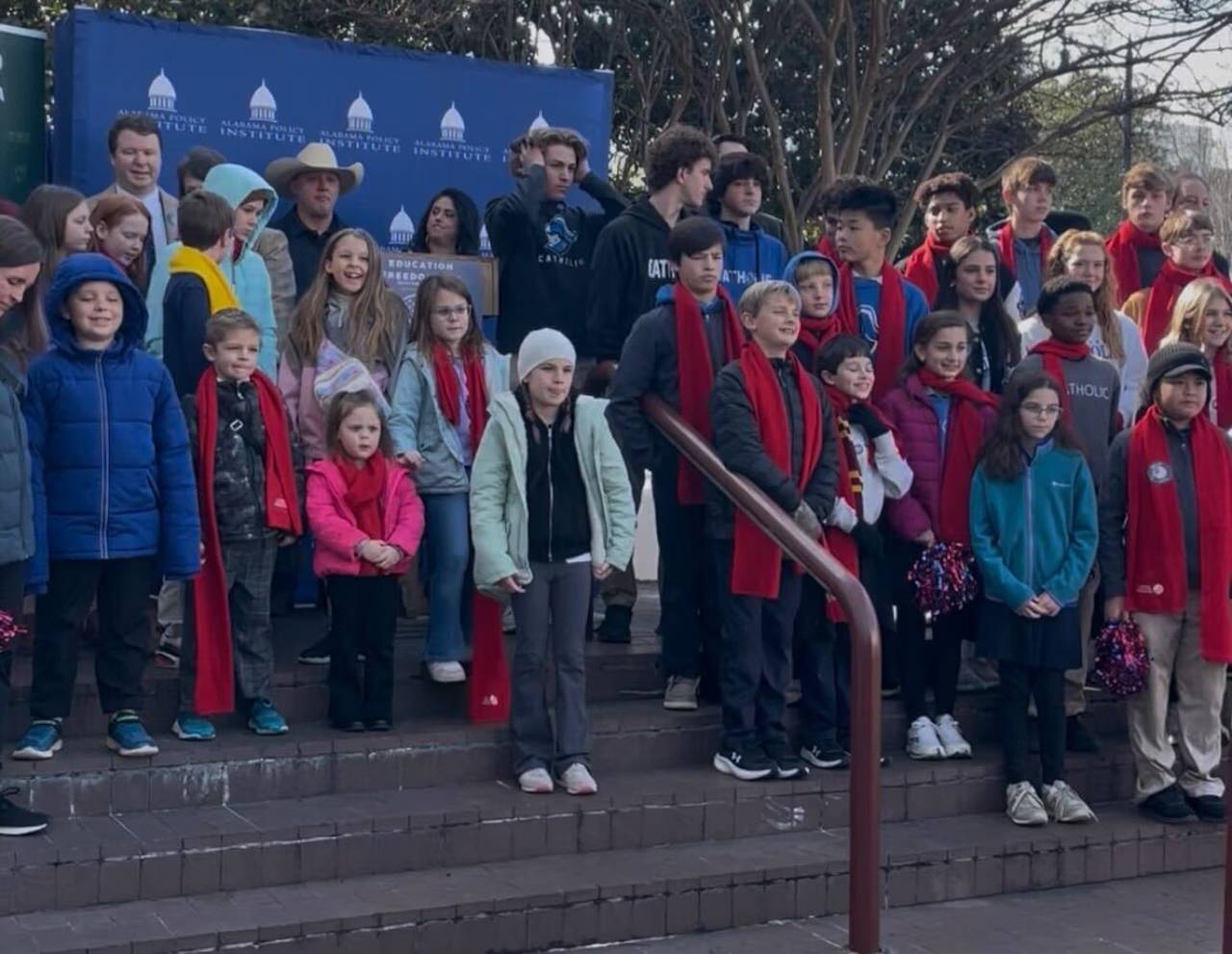
Polling from EdChoice, a nonprofit backing school choice, showed that three-quarters of parents with children in Alabama schools support tax-funded education savings accounts, the mechanism by which the CHOOSE Act covers tuition and fees at approved educational Service Providers. Most of those providers are private schools.
Alabama Gov. Kay Ivey’s office has highlighted the number of CHOOSE Act applications, with 36,873 coming from all 67 counties in the state.
“It polls as one of the top issues in the state,” Ainsworth said, adding that the AHSAA split has sparked “a lot of strong opinions on both sides.” He does not believe the controversy has damaged public support for the CHOOSE Act.
“There is a lot of misunderstanding in that,” Ainsworth said, pointing to unresolved transfer and eligibility rules at the center of a lawsuit and ongoing legislative debate in Montgomery.
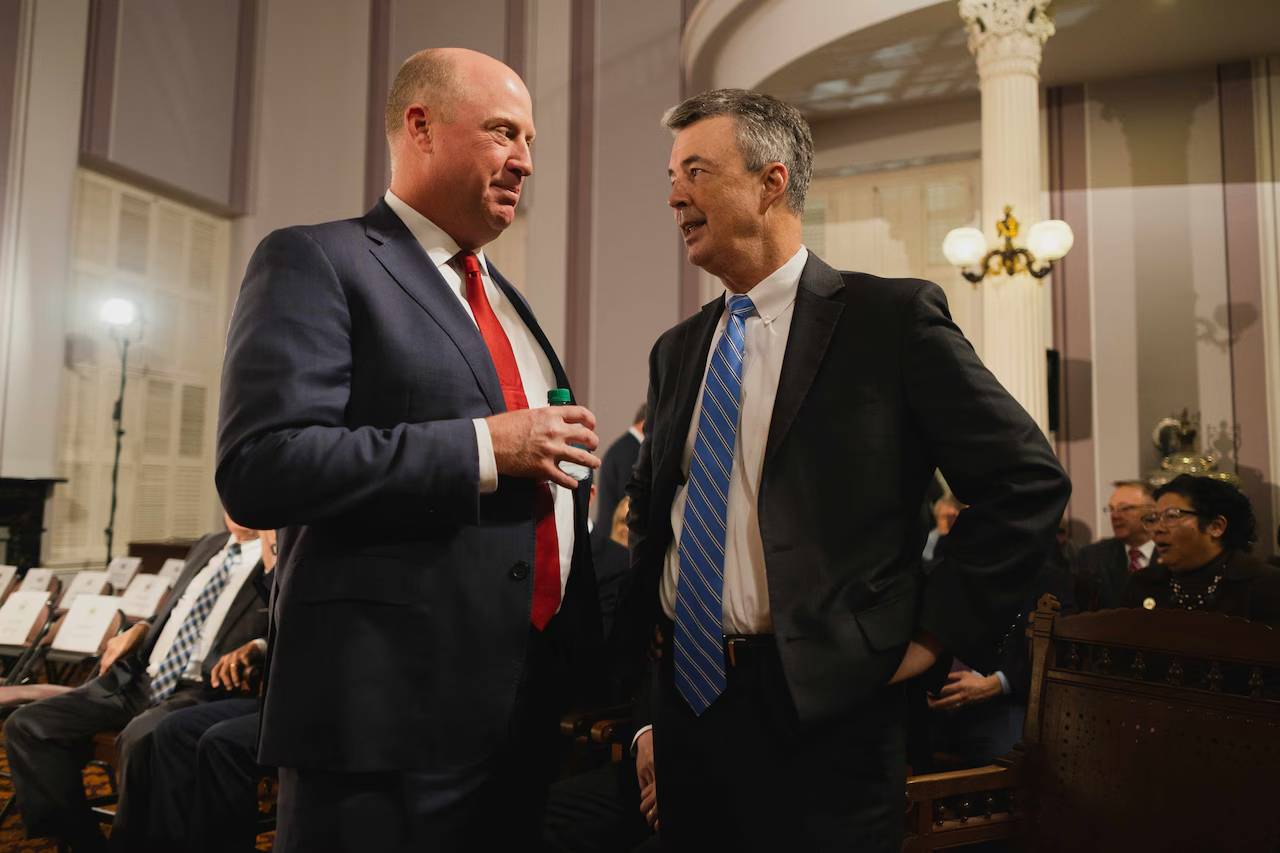
Rep. Danny Garrett, R-Trussville, chair of the House Ways and Means Education Committee, said his concern is the AHSAA’s decision to classify CHOOSE Act funding as “financial aid,” which he argues it is not. That classification makes CHOOSE Act recipients ineligible to play high school sports for one year if they transfer schools using the state funding.
“If they removed CHOOSE Act based on financial aid, there would be no issue,” Garrett said, adding that he hopes “reasonable heads” will negotiate a solution. Ainsworth predicts the dispute will be resolved “where hopefully everyone is happy.”
AHSAA concerns
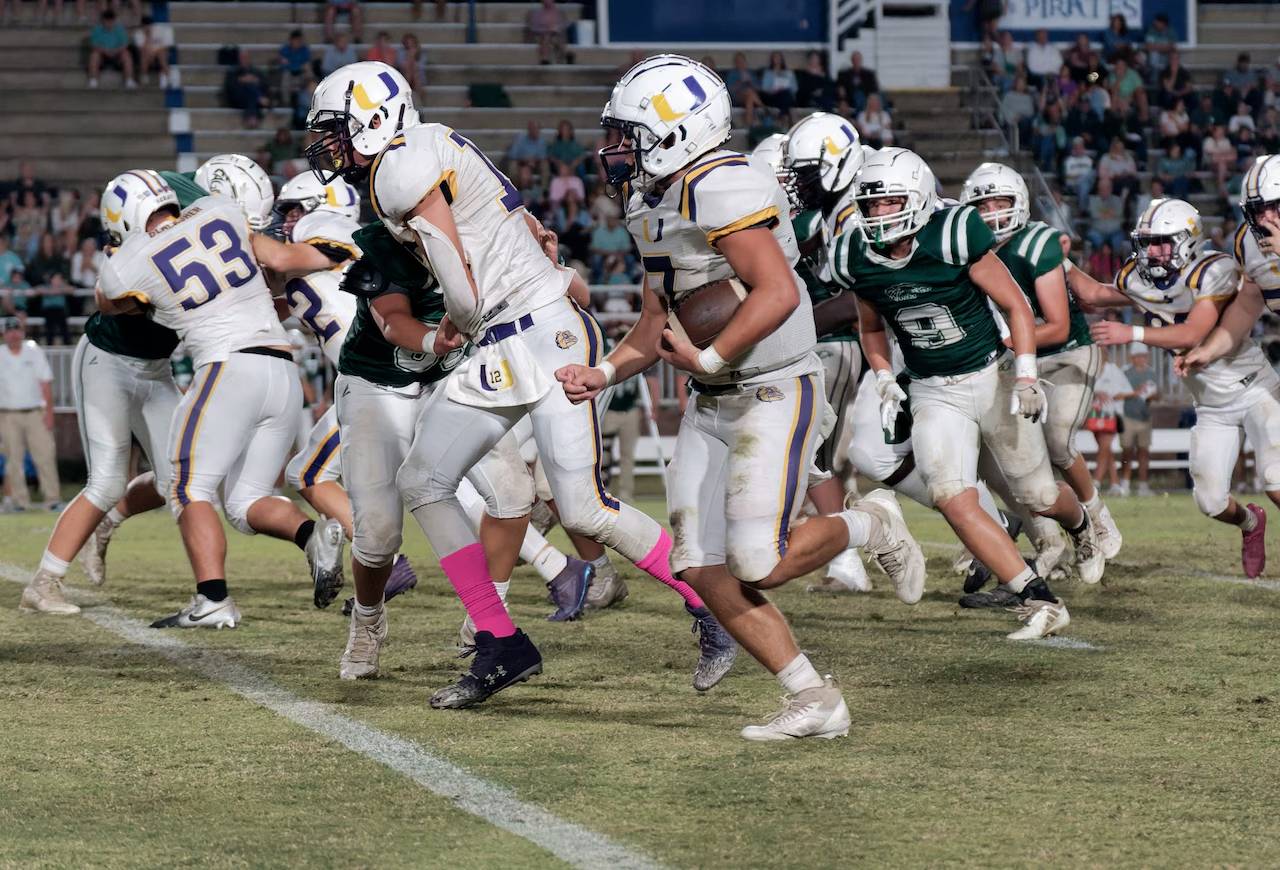
Polling is also driving state officials to pursue changes to the AHSAA, including legislation to address eligibility rules and a bill to reform who appoints AHSAA board members.
API, in its poll of 800 registered voters, showed that 80% support reforming the AHSAA or holding it more accountable. The poll, conducted Jan. 2–9 by the Napolitan News Service, was founded by pollster Scott Rasmussen, whose work is often cited by right-leaning organizations.
Stephanie Smith, API’s president, said she believes AHSAA issues “have been going on for decades,” but that school choice has “been a catalyst to increase the conversation.”
“And just like with school choice, API’s position on that is that we want to give kids as many opportunities to participate in athletics and academics as we possibly can,” she said, adding that she sees “governance issues” within AHSAA and questions whether the organization fairly represents its membership.
A USA Today–Alabama Network online poll showed a more divided public:
- 44.53% of respondents supported a full split,
- 37.75% wanted public and private schools kept together for postseason play, and
- 17.72% preferred the current system.
CHOOSE Act criticism
On Ainsworth’s Facebook page, hundreds of commenters supported the AHSAA’s 13–2 vote to split public and private schools. Many also expressed disgust with the CHOOSE Act and the idea of diverting public school tax dollars to private education.
Two-thirds of students who want to use the CHOOSE Act already attend private school or home school.
That figure has sparked arguments that the CHOOSE Act equates to public subsidization of private schools, and further entrenching arguments for a public-private school split during postseason athletic events.
Pendola said the reaction is predictable.
“Concerns tend to rise when communities perceive possible funding losses, student social disruption, or instability from new schools that may not last,” he said. “Those concerns are especially strong in rural areas, where the public school often serves both a major employer and a central civic institution.”
He added that the backlash is not purely partisan.
“When choice policies are seen as potentially affecting economic stability or community identity, public support can shift quickly,” Pendola said. “Overall, public response to school choice policies tends to depend less on party alignment and more on perceived local impact. And since it is Alabama, any impact on football is going to cause a stir.”
Organizations such as the Alabama Education Association and Alabama Arise say the backlash shows lawmakers should pause before expanding the CHOOSE Act.
“The CHOOSE Act is set to redirect hundreds of millions of dollars away from Alabama’s public schools and toward private schools and homeschooling in the coming years,” said Robyn Hyden, executive director of Alabama Arise. “That cost will continue to grow if lawmakers expand the programs’ size and scope even further.”
Amy Marlowe, AEA’s executive director, said early enthusiasm for the CHOOSE Act is giving way to scrutiny as costs rise. Gov. Kay Ivey’s budget request includes increasing CHOOSE Act’s financial support from $180 million to $250 million for the 2027–2028 school year.
Joint legislative hearings on the education budget are set to begin at 2 p.m. Monday in Montgomery.
“In rural communities, people begin asking why public dollars are being redirected away from their local schools, which serve not only as classrooms but also as economic and community anchors,” Marlowe said.
Lawmakers react
Lawmakers interviewed this week said they have not heard significant pushback on the CHOOSE Act or the AHSAA decisions as they consider Ivey’s budget request.
Rep. Mark Shirey, R-Mobile, said he has heard “not a peep” from constituents. Rep. Rick Rehm, R-Dothan, said school leaders in his district want to discuss the AHSAA decision, which he is still evaluating.
“I’m still working through where I’m going to be on this,” Rehm said.
Sen. Greg Albritton, R-Atmore, said the AHSAA decision is “contentious,” but he does not believe it will affect the CHOOSE Act’s future.
He noted, however, that Ivey’s $250 million request comes as lawmakers face broader budget pressures, including finding $200 million more in state funding for the Supplemental Nutrition Assistance Program (SNAP) under federal requirements.
“She sent us a budget, and we got to do something with that,” said Albritton, chair of the Senate’s General Fund committee.