The following testimony was submitted by the Grassroot Institute of Hawaii for consideration by the House Committee on Finance on Feb. 27, 2026.
_____________
Feb. 27, 2026, 2 p.m.
Hawaii State Capitol
Conference Room 308 and Videoconference
To: House Committee on Finance
Rep. Chris Todd, Chair
Rep. Jenna Takenouchi, Vice Chair
From: Grassroot Institute of Hawaii
Ted Kefalas, Director of Strategic Campaigns
RE: TESTIMONY IN SUPPORT OF HB1725 HD1 — RELATING TO BUILDING CODES
Aloha Chair, Vice Chair and other Committee members,
The Grassroot Institute of Hawaii supports HB1725 HD1, which would amend how the state and counties adopt and implement the International Building Code.
This bill would make several changes to Hawaii’s convoluted, dysfunctional building code adoption process.
First, it would specify that once a county has issued an authorization to proceed with construction, a building permit issued under one set of codes is valid even if a code change takes place before the permitted project is complete.
Second, it would require the State Building Code Council to adopt building codes every six years.
Third, it would eliminate the process by which the counties adopt their own amended versions of the state code. Instead, the code adopted by the SBCC would be the statewide code, with counties retaining some authority to make amendments to the code only as applicable in their jurisdictions.
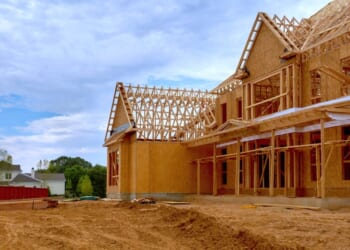
Fourth, it would allow three- and four-unit homes to be built under the International Residential Code instead of the International Building Code, subject to certain conditions.
Last, it would appropriate funding for staff to assist the SBCC in administering its duties.
State law currently requires that the State Building Code Council adopt every iteration of the International Building Code and related codes within two years of their being released; the counties then have an additional two years to make amendments to the state code and adopt those versions.
It is concerning, however, that the state and counties often struggle to meet these deadlines. For example, the State Building Code Council adopted the 2018 Interim Building Code[1] in April 2021, and Honolulu didn’t fully adopt its own amended code based on that version until mid-2024.[2] In the meantime, the IBC released updated codes as scheduled in 2021 and 2024.
Because of this staggered adoption process, county building officials, builders and architects must constantly learn different building codes. For builders, this means navigating as many as four different codes, which takes time and training that increase administrative costs.
This process also stresses already-understaffed county planning and permitting departments, and research has shown that permitting delays can affect home prices.[3]
Furthermore, specifying that three- and four-unit homes can be built under the International Residential Code instead of the International Building Code under certain conditions would reduce construction costs for these dwellings,[4] which could encourage more construction of them to help mitigate Hawaii’s housing crisis.
Thank you for the opportunity to testify.
Ted Kefalas
Director of Strategic Campaigns
Grassroot Institute of Hawaii
_____________
[1] “State Building Code Adoption,” State Building Code Council, April 20, 2021, p. 1.
[2] Ashley Mizuo, “As stakeholders navigate building code updates, counties bear the burden,” Hawai‘i Public Radio, Aug. 27, 2024.
[3] Paul Emrath, “How Government Regulation Affects the Price of a New Home,” National Association of Homebuilders, Economics and Housing Policy Group, 2011, p. 5; and Adam Millsap, Samuel Staley and Vittorio Nastasi, “Assessing the Effects of Local Impact Fees and Land-use Regulations on Workforce Housing in Florida,” James Madison Institute, Dec. 11, 2018, p. 19.
[4] John Zeenah, “Beyond Zoning: Hidden Code Barriers to Middle-Scale Housing,” Center for Building in North America, September 2025.