As we reported in last week’s Capitol Watch, Democrats in St. Paul are attempting to make the 2026 session about Operation Metro Surge and ICE. The numbers from our recent Thinking Minnesota Poll should give them pause. Minnesotans strongly support the mission of the surge and are split on the tactics, despite the onslaught of biased media coverage. Eighty-one percent of poll respondents support deporting illegal immigrants who have a criminal record in the U.S. or abroad, the mission of the surge.
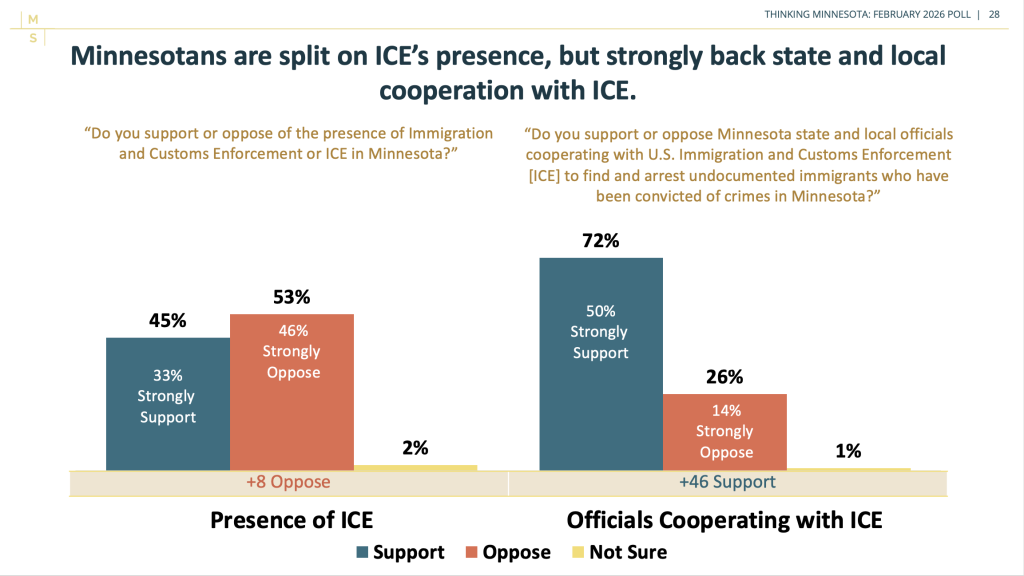
What about the tactics, though? Surely Minnesotans agree with the ICE OUT sentiment we see on highway overpasses. Minnesotans are split on the presence of ICE, with 45 percent supporting their presence and 53 percent opposed. That’s likely the high-water mark for ICE OUT since the poll was taken February 16-18, 2026, just as the announcement was made to wind down Operation Metro Surge. Anti-ICE sentiment will decrease in the weeks and months to come as news coverage of ICE raids and protests is replaced with the next round of fraud indictments, which we know are coming. Keeping ICE at the top of the legislature’s priority list will be a difficult task for Democrats in the House and Senate.
Minnesota on the wrong track
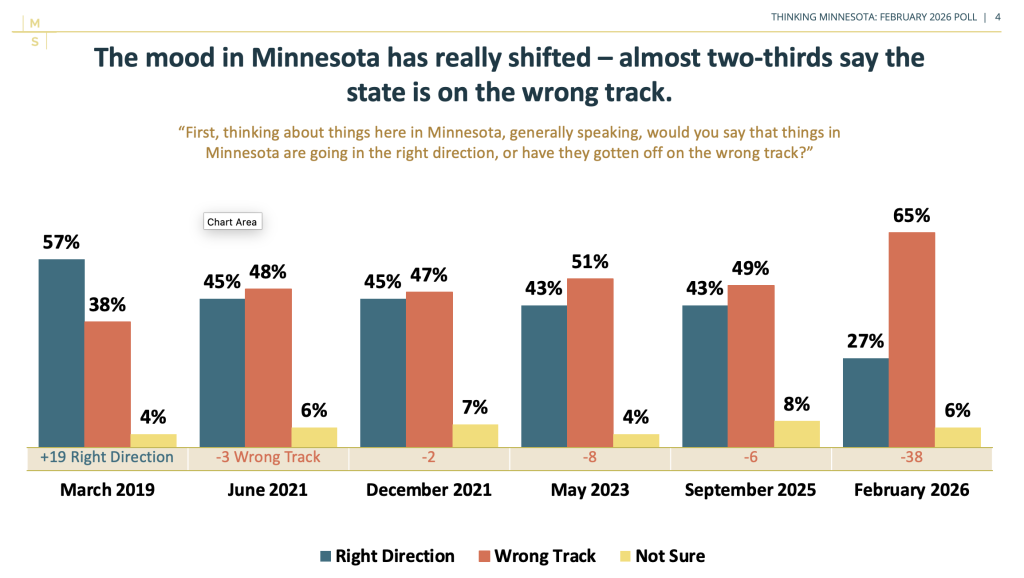
Another significant result from the poll was the number of people who think the state is on the wrong track. Sixty-five percent of Minnesotans now believe the state is on the wrong track, the largest number ever recorded in the Thinking Minnesota Poll, representing a 16-point jump in just five months. Record high wrong track numbers can’t be good for the party in charge of the House, Senate and governor’s office.
More opinions on immigration and ICE:
- Minnesotans split when asked if we should deport as many people as possible who are here illegally back to their country of origin, a group well beyond those with criminal records.
- Half of respondents told us political leaders – such as the governor and mayors – made the ICE situation more heated with their comments, with only 25 percent saying leaders helped reduce tensions. Minnesotans believe Tim Walz and Jacob Frey made the situation worse with their divisive rhetoric.
- Seventy-two percent support Minnesota state and local officials cooperating with U.S. Immigration and Customs Enforcement [ICE] to find and arrest undocumented immigrants who have been convicted of crimes in Minnesota, a number similar to other recent polls in Minnesota.
- Seventy-five percent support making sure illegal immigrants cannot vote in Minnesota elections.
Click here for more information on the latest Thinking Minnesota Poll.
February budget forecast better, but still in structural deficit
As American Experiment economists wrote here and here, the budget surplus for the current biennium — 2026-27— increased by over $1 billion since November. Assuming no spending this session (Ha!), this improved outlook also turns the previously forecast deficit in the 2028-29 biennium into a surplus. Economist Martha Njolomole writes:
Every year since 2024, Minnesota has spent more than it collects in revenue. That is expected to continue throughout the entire forecast period. Spending will exceed revenue by nearly $3 billion in the current biennium (2026-27) and another $3.2 billion in the 2028-29 biennium. Without spending reform, Minnesota is on track for persistent deficits once the COVID-19-driven surplus runs out.
It’s unlikely we’ll see any spending reform during the 2026 session. There’s no incentive to reform with a cash balance of $3.7 billion. Instead, we’ll see all kinds of creative ways to spend the current “surplus.” Bailouts for businesses who shut down for fear of ICE. Bailouts for people who stopped going to work and can’t pay their rent. Bailouts for cities to cover the costs of out-of-control protests. Bailouts for free lunch and paid family leave programs that will soon be under water. Bailouts for the Minneapolis school district who agreed to teacher salaries they could never afford.
What the 2026 legislature should work on is compliance with the Medicaid reforms in the Big Beautiful Bill. Minnesota has two options: Comply with the BBB by restricting eligibility and adding work requirements for Medicaid recipients or receive huge financial penalties from the federal government. State Budget Director Ahna Minge understood the assignment and commented during the forecast press conference:
“If state law is not amended to comply with this [work requirement] change, we stand to lose significant federal funds.”
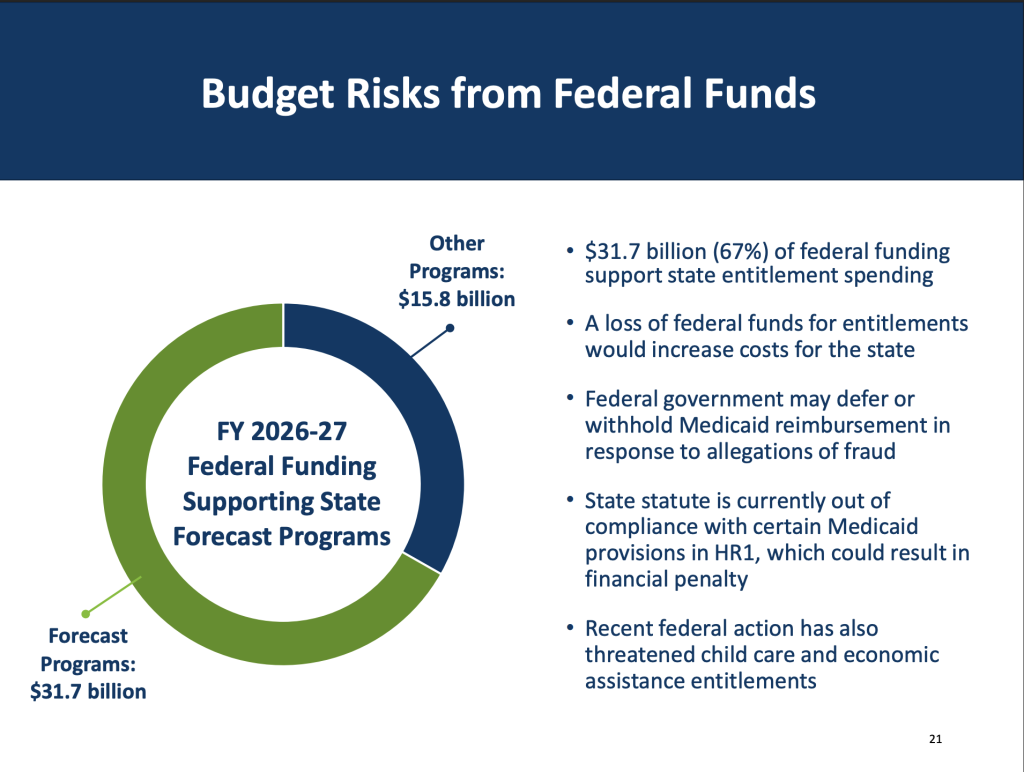
That’s in addition to the Medicaid funding being held back by the feds due to the rampant fraud in Minnesota’s program. The message is clear: fix the fraud and tighten up eligibility for Medicaid.