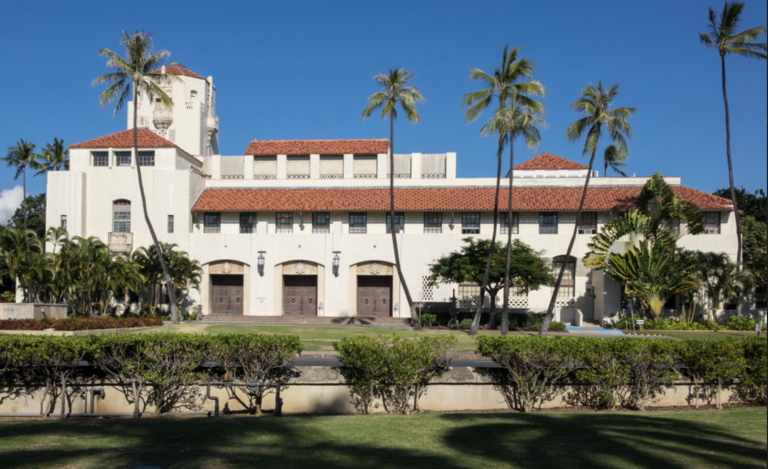
The following testimony was submitted by the Grassroot Institute of Hawaii for consideration by the Honolulu City Council Committee on Housing, Homelessness and Parks on March 3, 2026.
_____________
March 3, 2026, 2:30 p.m.
Honolulu Hale
To: Honolulu City Council’s Committee on Housing, Homelessness and Parks
Andria Tupola, Chair
Augie Tulba, Vice Chair
From: Grassroot Institute of Hawaii
Ted Kefalas, Director of Strategic Campaigns
RE: Bill 18 (2026) — RELATING TO AFFORDABLE RENTAL HOUSING
Aloha Chair Tupola, Vice Chair Tulba and other members of the Committee,
The Grassroot Institute of Hawaii supports — and offers amendments to— Bill 18 (2026), which would make changes to the Bill 7 affordable housing program.
Specifically, Bill 18 (2026) would allow Bill 7 projects to be built in business zoning districts; repeal the 20,000-square-foot maximum lot area; clarify that Bill 7 projects can be built to the height allowed by the underlying zoning district instead of a blanket 60-foot height limit; allow more units per building in areas near high-service bus stops in the Honolulu Primary Urban Development Center Development Plan area; and repeal maximum square footage rules for different unit configurations.
Currently, Honolulu’s Bill 7 program offers homebuilders relaxed zoning rules, property tax breaks, fee waivers and other financial incentives in exchange for building multiple housing units, at least 80% of which are required to be rented for at least 15 years at rents that would be affordable to residents making 100% or less of the area median income.[1]
The program has been an important tool for city homebuilders trying to produce affordable housing, and the expansions proposed in this bill would add much-needed flexibility for homebuilders interested in using the program to reduce Honolulu’s housing shortage.
After all, a 2024 update to the Hawaii housing planning study estimated that Honolulu needs 27,710 new units built between 2023 and 2027 to keep up with demand.[2]
Bill 18 (2026) also aligns with several goals outlined in the city’s 2025-2028 Strategic Housing Plan. One such goal is to “Identify opportunities for maximizing urban land use through adjustments to density standards in the Land Use Ordinance,” and another is “Enhancing predictability for developers is also critical, with a focus on methods to streamline and standardize processes.”[3]
Likewise, the legislation supports the Primary Urban Development Center Development Plan’s housing goals.
Its policy H-1.1 aims to “Enable and incentivize residential infill development in transit-accessible planned growth areas,” and its policy H-1.3 aims to “Encourage a greater variety of housing types, including low or middle-density multifamily housing, ADUs and ohana units, mid-rise apartment buildings and shared housing models.”[4]
Chair Tupola has proposed an amendment to Bill 18 (2026) that would change the height limit to be “60 feet or the maximum building height for the underlying zoning district, whichever is greater.”
Maintaining the existing 60-foot allowance while still enabling larger projects in areas already designated for higher-intensity development would provide flexibility without undermining current Bill 7 projects.
However, the proposed amendment would also require that every Bill 7 project include at least 10 off-street parking stalls, which could make some Bill 7 projects financially infeasible.
A 2020 study commissioned by the Ulupono Initiative found that podium parking for affordable and mixed-income rentals in urban Honolulu — which is built above ground but under housing units — costs as much as $55,000 per space, while surface-level parking can cost $22,500 per space.[5] A separate 2019 estimate put the cost of underground parking at $48,000 per space.[6]
Since 2020, construction costs have increased almost 20% for highrise buildings, as measured by the Hawaii Department of Business, Economic Development and Tourism.[7] Applied to Ulupono’s parking costs, this means each podium parking space could easily cost $65,000.
The Committee should also leave out the proposed 40,000-square-foot maximum lot size and the requirement that all buildings taller than 30 feet contain elevators. Both of these amendments would also increase project costs that could make them impossible to finance.
Under the current program, elevators are not always required in Bill 7 projects, but can be if the project meets certain criteria in the city building code.[8] Otherwise, Bill 7 projects must follow the usual building codes applicable to all multifamily housing projects.
Grassroot’s recommendations related to these amendments are aimed at ensuring that the Bill 7 program succeeds in producing more abundant housing.
Thank you for the opportunity to testify.
Ted Kefalas
Director of Strategic Campaigns
Grassroot Institute of Hawaii
_____________
[1] § 32-1.1 Definitions., Revised Ordinances of Honolulu, accessed Oct. 31, 2025.
[2] “Hawaii Housing Planning Study 2024,” prepared by SMS Research and Marketing Services, Inc., FSR Consulting LLC and Ward Research, Inc. for the Hawai’i Housing Finance and Development Corporation, Table 39A, p. 124.
[3] “Strategic Housing Plan 2025-2028,” Prepared by the Mayor’s Office of Housing with CommunityScale, January 2025, p. 70.
[4] “Primary Urban Development Center Development Plan,” Honolulu Department of Planning and Permitting, April 2025, p. 158.
[5] “The Costs of Parking in Hawai‘i,” prepared by PBR & Associates for the Ulupono Initiative, August 2020, p. 3.
[6] Kathleen Rooney and Donald Shoup, “There’s No Such Thing As Free Parking,” Civil Beat, Dec. 9, 2019.
[7] Honolulu Construction Cost Index for highrise buildings shows that such costs increased by 19% over the past five years, from 267.1 in the first quarter of 2020 to 318.1 in the first quarter of 2025. See: “Quarterly Statistical & Economic Report,” Hawaii Department of Business, Economic Development and Tourism, 2nd Quarter 2025, Table E-7, p. 108.
[8] § 32-3.2 Standards., Revised Ordinances of Honolulu, accessed March 3, 2026.