The following testimony was submitted by the Grassroot Institute of Hawaii for consideration by the House Committee on Judiciary & Hawaiian Affairs on March 4, 2026.
_____________
March 4, 2026, 2 p.m.
Hawaii State Capitol
Conference Room 325 and Videoconference
To: House Committee on Judiciary & Hawaiian Affairs
Rep. David A. Tarnas, Chair
Rep. Mahina Poepoe, Vice Chair
From: Grassroot Institute of Hawaii
Ted Kefalas, Director of Strategic Campaigns
RE: TESTIMONY IN OPPOSITION TO HB1990 HD1 — RELATING TO RESIDENTIAL REAL PROPERTY
Aloha Chair, Vice Chair and other Committee members,
The Grassroot Institute of Hawaii opposes HB1990 HD1, which would allow county permitting agencies or the attorney general to commence foreclosure procedures upon private property and use the revenues to satisfy unpaid civil fines for unaddressed zoning violations related to the property.
We sympathize with the desire of the counties to address nuisances and recoup fines, but this bill does not adequately protect the equity interests of homeowners. Unless those interests are protected, any actions taken to recoup fines via foreclosure sales would be vulnerable to legal challenge.
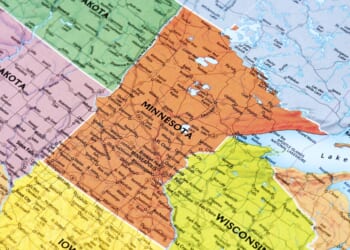
In Tyler v. Hennepin County, Minnesota, the Supreme Court held that the county’s retention of the excess value of the plaintiff’s home above her tax debt violated the U.S. Constitution’s takings clause. Thus, it is important that the bill be amended to protect the homeowner’s equity interest, including removal of the provision directing a percentage of the fines assessed to the general fund.
Moreover, we are concerned that the sales envisioned in this bill are ripe for corruption. Without a provision requiring that the property be sold promptly at or near market value, it is possible for a bad actor to deprive the owner of his or her equity interest in the property.
For example, in Michigan, corruption at the local level resulted in some foreclosed properties being sold to friends and families of local officials at far below market value.[1]
There is currently a case before the U.S. Supreme Court, Pung v. Isabella County, that centers specifically around whether the Fifth Amendment requires compensation based on fair market value in foreclosure situations such as those envisioned by this bill.
If this bill were to move forward, we suggest that the Committee amend it to include the bolded sections as follows:
(3) If within thirty days of receiving notice of the lien, the owner of real property fails to:
(A) Satisfy the lien specified in paragraph (2); and
(B) Commence and diligently conduct remediation of all conditions that gave rise to issuance of the notice of violation, to the county planning or permitting agency’s satisfaction,
then the applicable county planning or permitting agency shall commence foreclosure proceedings, judicial or nonjudicial, on the real property without delay; provided that the county sell the property at no less than the market value of similarly situated properties and that all revenues received from the sale that exceed the amount of the unpaid civil fines be refunded to the property owner.
(b) If the applicable county planning or permitting agency fails to commence foreclosure proceedings pursuant to subsection (a)(3) within thirty days, then the attorney general shall commence foreclosure proceedings without delay; provided that proceeds from the sale in the amount of the outstanding fines shall be remitted to the applicable county and that any moneys recovered from the proceedings that exceed the amount of the unpaid civil fines shall be refunded to the property owner; provided further that any properties subject to foreclosure under this section shall be offered at a timely and competitive sale to the highest bidder at no less than the market value of similarly situated properties.
We also urge the Committee to consider the possibility that the foreclosures and sales envisioned in this bill might unfairly target vulnerable populations.
It is possible that the effect of these foreclosures would fall most heavily on older individuals living on fixed incomes who do not have the resources to pay their fines, hire attorneys or otherwise navigate complicated legal and financial matters. According to the AARP, “tax authorities’ seizure of all of their home equity is nothing short of catastrophic” for older individuals.[2]
Under the circumstances, we urge the committee to defer this bill.
Thank you for the opportunity to testify.
Ted Kefalas
Director of Strategic Campaigns
Grassroot Institute of Hawaii
_____________
[1] “Ending Home Equity Theft,” Pacific Legal Foundation, accessed Feb. 4, 2025.
[2] Brief of Amici Curiae AARP and AARP Foundation Supporting Petition for Writ of Certiorari, Tyler v. Hennepin County, Minnesota, Sept. 22, 2022, p. 4.