A version of this commentary appeared in the St. Louis Business Journal.
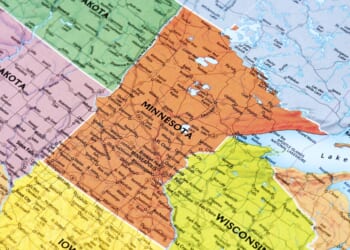
Missouri’s property tax system works best when the assessments are accurate, the tax base is wide, and the rates are low. That combination will help grow Missouri’s economy for everyone while properly funding the necessary functions of local government. However, a radical change in the system is being put before voters in St. Charles, Jefferson, and Franklin counties in April. These three counties will vote on whether to prohibit any property tax increases due to reassessments. Current law requires local governments to roll back tax rates as assessments increase, but we all know that taxes still go up, sometimes substantially.
This change would also reduce the ability of school districts to fund themselves and would make them more dependent on state aid. Consider the following: Parkway school district in St. Louis County is 89% funded by local taxes. However, Fox school district in Jefferson County is only 51% locally funded, while Wentzville school district in St. Charles is only 64% locally funded, and St. Clair school district in Franklin is just 45% locally funded. These changes would make school districts in these three counties more dependent on state aid, not less. Again, I’m aware that many voters may view that as a benefit, but it is anything but.
At the Show-Me Institute, we support low taxes, and I am well-aware of how tempting this will be to voters. But using market valuations in reassessment to set tax levels is a good system. While our property tax system needs reforms, eliminating any and all tax increases from reassessments will make Missouri more dependent on other taxes that hurt our economy far more than property taxes do. Hate them as much as you wish, but property taxes indisputably harm economic growth less than other taxes do.
Numerous other harmful effects would come from diluting the market forces (in the form of assessments based on market values) that form the basis of property taxation. California provides us with an example of the harms of these types of property tax caps with its famous Proposition 13, passed in 1978, which dramatically limited increases in property assessments and taxes. Proposition 13 certainly had its intended effect of lowering property taxes for California homeowners. However, it also reduced mobility, significantly increased alternative taxes, limited homeownership opportunities, and caused substantial tax disparities for similar properties receiving similar services. These negative consequences are exactly what St. Charles, Jefferson, and Franklin counties would experience over the long run.
There are also significant constitutional concerns with this legislation. Missouri Constitution Chapter X, Section 3 states that “taxes . . . shall be uniform upon the same class or subclass of subjects within the territorial limits of the authority levying the tax.” So, consider the issue of the Meramec Valley R-III school district. This school district serves families in three counties. If voters approve these tax changes, the property tax system in one of those three counties would remain unchanged (St. Louis), while in the other two (Jefferson and Franklin) it would be illegal to have a tax increase from reassessment. It would certainly seem unconstitutional for property owners within the same taxing district who own the same type of property (single-family homes) to face different tax and assessment systems for the same services.
We need property tax reform in Missouri, but this total limitation is too severe. If enacted, the property tax proposals before the voters in these three fast-growing counties would make the region’s overall tax system worse, not better. I hope voters will look past the easy appeal of a tax limit to think about the long-term harms.