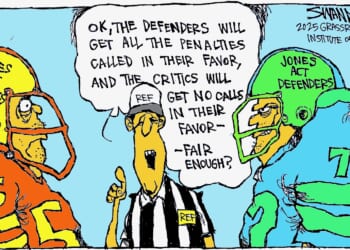
On paper, Connecticut’s public hearings are open to everyone. In practice, access depends on timing — and luck.
This week, the Public Health and Education Committees are holding hearings on several controversial bills. Both begin mid-morning. Speaker order is randomized. Testimony runs until midnight in one case and 24 hours in the other.
That sounds generous. It isn’t.
If you are a member of the public, there is no guarantee you will be heard. You can take time off work, arrange childcare, drive to Hartford, or wait online for hours — and still lose your chance to speak if the clock runs out before your name is called.
There is one exception.
Legislators, constitutional officers, agency heads, and chief elected municipal officials are given the first hour of testimony. Their time is structured and assured. They are not subject to the same uncertainty.
That distinction may be procedural. But it is not insignificant.
Government officials are guaranteed access to lawmakers. Ordinary citizens enter a randomized queue and hope their turn arrives before adjournment.
Each speaker is allotted three minutes, standard practice. The issue is not the time limit. It is whether that time ever materializes.
The Public Health Committee will hear testimony on S.B. 450 and H.B. 5044, both related to vaccine standards. The Education Committee will consider H.B. 5468, concerning homeschoolingregulation. These are issues that generate strong public interest. Many residents will show up prepared to speak. Not all will be heard.
To be clear, the hearings are publicly streamed. Written testimony can be submitted online and becomes part of the official record.
But watching is not the same as participating.
When participation hinges on endurance and timing rather than guaranteed access, the label “public hearing” begins to feel conditional.
Connecticut prides itself on transparency. If public testimony is meant to be meaningful, not symbolic, then the structure of hearings should reflect that.
Otherwise, “public” becomes an asterisk.