A version of the following commentary appeared in the St. Louis Post-Dispatch.
They say that the best time to plant a tree was 20 years ago, and the second-best time is now. That about sums up my opinion on the City of St. Louis’s one-percent earnings tax, the continuation of which is before St. Louis voters on the April ballot. The best time to start phasing out the earnings tax really was 20 years ago, and the second-best time is still now.
The 20 years in the saying is particularly appropriate in this case, as the Show-Me Institute released its first study on the earnings tax almost exactly 20 years ago. Professor Joseph Haslag, then at the University of Missouri, documented how the earnings tax reduces overall income and employment in the city by encouraging businesses and individuals to locate outside of the city. Additional studies conducted by Show-Me Institute analysts and others have found similar results regarding the harms of local income taxes generally.
Haslag didn’t just demonstrate the harm of the earnings tax; he also recommended a strategy to replace it in order to maintain necessary city services. Haslag suggested changing state laws to allow St. Louis to institute a land tax, which is simply a property tax on the value of the land only. Pittsburgh is one city that had beneficial results from implementing land taxation in the 1980s. Alas, while land taxes are popular with economists and fiscally beneficial, they are politically unpopular to say the least. Needless to say, land taxes have never been adopted in St. Louis (nor has state law been amended to allow them). But the harms of the earnings tax have continued to help drive St. Louis’s population and economy lower, and those fiscal harms were exacerbated during the pandemic.
An easier change (legally, if not politically) than a land tax would have been to start phasing out the earnings tax 20 years ago while increasing a combination of property and sales taxes over time to replace the lost revenues (while cutting spending where possible as well). Poor decision-making over the past two decades has made that already-difficult change almost impossible. Damaging special sales taxes such as community improvement district (CID) taxes are now ubiquitous throughout shopping areas in the city. Primarily used as a smokescreen for harmful corporate welfare, CIDs and other special sales taxes have driven sales tax rates sky high. While the sales taxes have gone up, commercial property values have plummeted. According to the St. Louis Business-Journal, downtown St. Louis office buildings have lost 19 percent of their assessed value since 2019, and even more if you go back further. The largest office building downtown, the AT&T building at 909 Chestnut, paid $5.5 million in property taxes in 2009. It paid just $200,000 in 2024. While that is the most extreme example, similar examples can be found throughout downtown.
The economic situation in the city was already bad, and the tornado that hit in May made it even worse. It was the type of disaster that could make people consider radical changes, and perhaps the land tax is the type of radical change the city needs. (For the record, the Show-Me Institute’s offices were destroyed in the tornado, and while we’re a nonprofit, our office building is subject to property taxes.)
As large parts of the Central West End and the Northside are still recovering from the tornado, St. Louis city government has commendably allowed homeowners with damaged homes to reduce their tax payments, but the long-term impacts on city tax revenues may be significant. The population of New Orleans still hasn’t recovered from Hurricane Katrina and, while the damage to St. Louis was not that severe, the risk is the same.
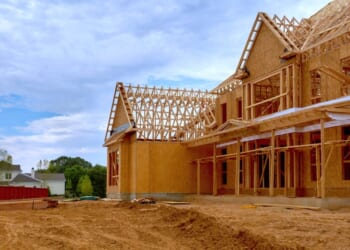
I suggest it is time to change state law to allow for a land tax, including on land owned by larger “nonprofits” like Barnes Hospital. The land tax could be imposed on the value of the land throughout St. Louis at a level that would gradually increase to make up for revenue lost as the earnings tax is phased out over a period of 10 years (or more). (Other changes would be necessary, including ending the tax subsidies the city gives out.) What makes land taxation so beneficial is that as homeowners and businesses rebuild their damaged property, they aren’t hit with higher taxes for the home or building. The tax is set to the land, which can’t be altered, rather than the building. So, return to the city, rebuild your home or business, make it even larger—do whatever you want—and you won’t be punished with higher taxes.
Pittsburgh in the 1970s was experiencing economic difficulties just as St. Louis is now. Land taxation helped spur investment in Pittsburgh, and it could have the same effect on St. Louis. The city has been hemorrhaging population, jobs, and wealth for decades. Honestly, at this point in its history, what does St. Louis have to lose?