Tax Day is around the corner, and a new national report suggests Connecticut taxpayers are getting less for their money — and falling further behind.
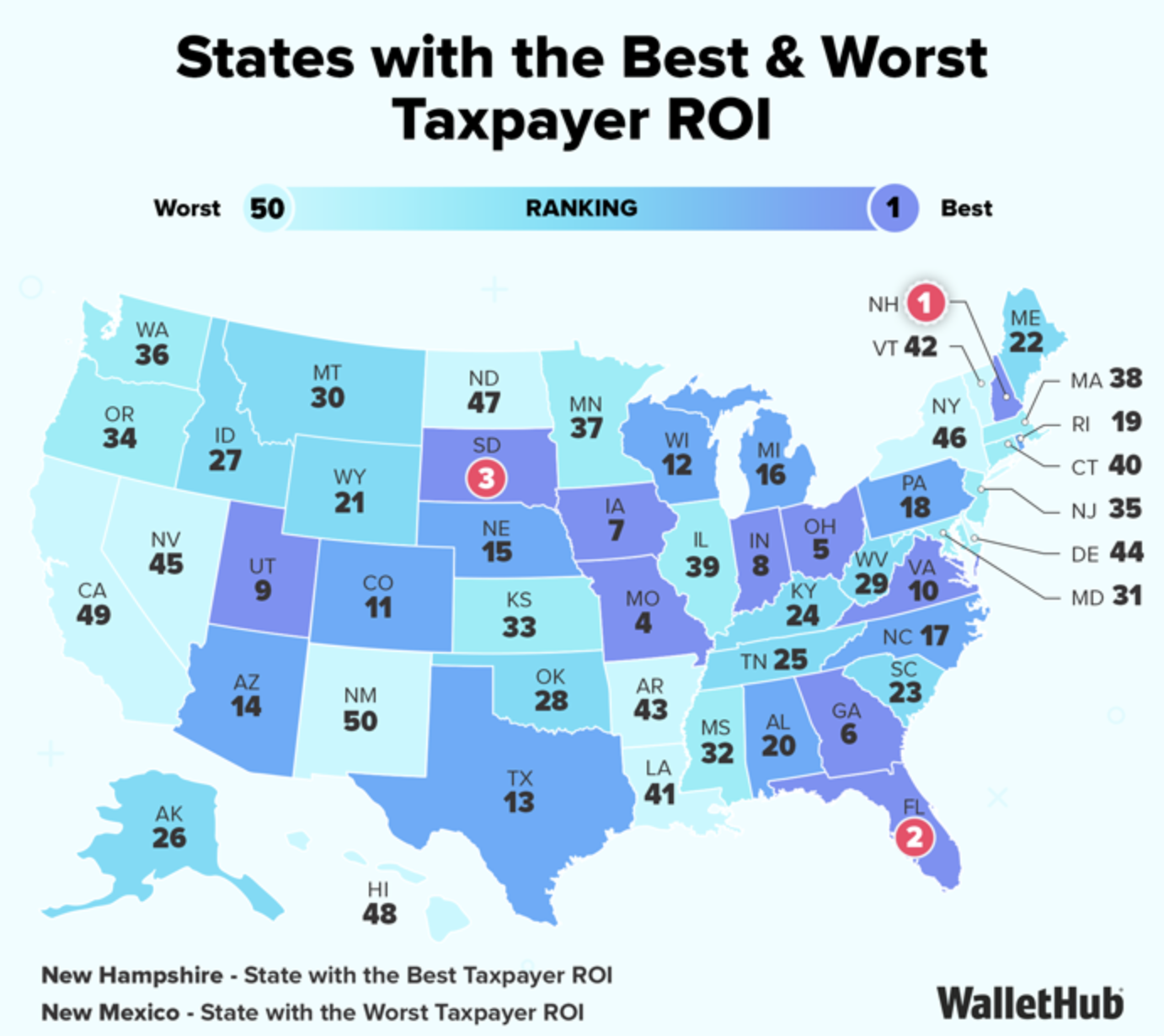
According to WalletHub’s 2026 “States with the Best & Worst Taxpayer ROI” study, released March 24, Connecticut now ranks 40th in the nation for return on investment, down from 37th last year.
The study compares how much residents pay in state and local taxes to the quality of services they receive, using 29 metrics across education, health, safety, infrastructure, and economic performance.
It’s not a ranking of who has the best services or the lowest taxes. Instead, it asks a more practical question: Are taxpayers getting sufficient value for what they pay?
For Connecticut, the answer is increasingly no.
Strong Outcomes — At a High Cost
Connecticut continues to perform well in several key areas:
- 3rd in education
- 4th in safety
- 8th overall in government services
These are strong outcomes by any national measure.
But they come with a price.
Connecticut ranks 43rd in taxes paid per capita, meaning residents are paying near-top-dollar for those results. That imbalance, strong services paired with a high cost, is what drives the state’s lower ROI ranking.
Connecticut isn’t a low-performing state. It’s a high-cost one.
What Higher-Ranked States Do Differently
The contrast becomes clearer when looking at the states with the best taxpayer ROI.
- New Hampshire: 1st
- Florida: 2nd
- South Dakota: 3rd
These states take different approaches, but they share a common model: lower tax burdens paired with competent, though not necessarily top-tier, government services.
New Hampshire, for example, operates without state income tax and still delivers strong outcomes in areas like public safety, education, and environmental quality. Florida and South Dakota follow a similar pattern.
The result is a stronger return on each dollar taxpayers send to the government.
Regional Comparison: Connecticut Falls Behind
Within the region, Connecticut continues to lag.
2026 ROI Rankings (New England):
Even among high-cost New England states, Connecticut underperforms. Massachusetts, often viewed as a high-tax benchmark, ranks slightly higher. Only Vermont ranks lower in the region.
New York, with a similar high-tax structure, ranks 46th nationally, reinforcing the same pattern.
A Familiar Pattern — and a Concerning Trend
The broader takeaway is consistent with prior years: states with lower tax burdens tend to deliver stronger value, while higher-tax states struggle to convert spending into proportional outcomes.
Connecticut fits that pattern.
What’s changed is the direction.
The state’s drop from 37th to 40th may not seem dramatic on its own, but it signals something more important: relative decline. Other states are improving or maintaining value. Connecticut is slipping.
The Price Keeps Climbing. The Value Doesn’t
The issue is not whether Connecticut delivers quality services — it does in many areas.
The issue is whether those services justify the cost.
High taxes, combined with weaker performance in infrastructure and economic indicators, continue to widen the gap between what residents pay and what they receive. As lawmakers debate spending proposals, tax changes, and labor agreements this session, that gap should remain front and center.
Connecticut has long been a high-cost state. What’s increasingly clear is that the value isn’t keeping pace.
For taxpayers, the equation is simple: what they pay versus what they get.
Right now, Connecticut is moving in the wrong direction.
And unless that trend changes, the state’s affordability challenge will only become more difficult to ignore.
Connecticut taxpayers are paying first-class prices for a coach seat experience — and increasingly, they’re noticing the difference.