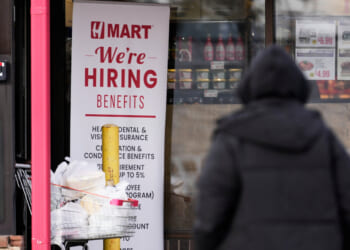
State residents earn more than they did in 2019 but are falling behind the rest of the country while the tax burden drives out businesses.
Income growth in Illinois lags the U.S. under Gov. J.B. Pritzker, while his tax increases drive out businesses and thus opportunities.
Since 2019, Illinois’ per capital personal income has grown about 35%, compared with over 37% nationally. Illinoisans now trail the nation in income growth after previously keeping pace.
This comparative slowdown points to weaker economic momentum in Illinois, consistent with reduced business investment and job creation compared with the national average. While growth in Illinois appears to have accelerated under Pritzker, that improvement largely reflects a strong national post-pandemic rebound and high inflation.
Some of the highest tax burdens in the nation, businesses leaving, high unemployment and fewer opportunities have combined to leave Illinoisans worse off.
Illinois’ roughly 35% personal income growth since 2019 ranks 39th in the nation — and worse than any of the state’s neighbors. Meanwhile, Illinois state tax collections have surged 46%. The gap shows that state government is growing faster than residents’ ability to pay.
Sharp increases have hit drivers, with gas tax collections increasing more than 116% since 2019 and taxes on private vehicle use, including registrations, growing nearly 82%.
The largest saving grace for Illinois has been its flat income tax. Individual income tax collections have grown 28% since 2019, slower than the growth in personal income, driven down partially by state deductions, exemptions and credits.
Even the flat tax has been under attack, with recent pushes for a graduated tax and a “millionaire’s tax” bill in the General Assembly. A graduated income tax — which would require a voter-approved amendment to the state constitution — would let lawmakers raise rates on targeted groups, making future tax hikes easier.
High taxes push out businesses
A large driver of state revenue growth has been business income taxes, which have increased nearly 140% since 2019. High taxes have been a key factor in companies leaving Illinois, affecting residents through lower investment, fewer job opportunities and slower wage growth. The state is projected to continue experiencing unemployment rates higher than the national average.
These trends erode Illinois’ built-in advantages. Historically, the state has maintained higher personal income than the national average, benefiting from its central location and Chicago’s role as a global economic hub.
If residents and businesses continue to leave, Illinois will face increasing difficulty sustaining its economy.
What should change
Illinois needs real reform to move toward a more stable future. That starts with transparency in the budget process instead of approving pay increases and funding questionable programs with little scrutiny. The state risks further weakening its economic foundation if it doesn’t lower its spending.
Additional reforms should include a state budget spending cap and cutting some business taxes to encourage investment and economic growth.
Without reform, Illinois will continue asking for more from its residents while offering fewer opportunities in return.