
In 2023, the DFL-controlled Minnesota Legislature eliminated basic skills, content, and pedagogy testing requirements for many teacher candidates who complete state-approved preparation programs.
The move was framed as a way to reduce barriers to entering the profession, noting that the exams were not necessary because teacher preparation programs include in-course assessments.
But licensure tests serve as a baseline check to verify that every teacher, regardless of where they trained, possesses fundamental reading, writing, and math skills. The National Council on Teacher Quality (NCTQ) testified against this change, noting that meaningful teacher licensure tests are of importance — even for those who graduate from a college-level teacher preparation program — because they act as a “final check” on the knowledge teacher candidates need to enter the classroom that may have been missed in their teacher preparation program coursework.
Now, without this safeguard for many candidates, the state is relying almost entirely on teacher preparation programs. However, evidence suggests that not all these programs consistently provide strong instruction.
I have previously written that this has been the case with reading instruction in Minnesota’s elementary teacher preparation programs. Now with the passage of the READ Act, which requires teacher preparation programs to instruct teacher candidates in evidence-based reading instruction, perhaps that will turn around.
The data on teacher preparation for math is also concerning. According to the NCTQ, only 14 percent of Minnesota’s elementary teacher prep programs dedicate enough instructional time to math content and pedagogy to earn top marks. Many programs fail to allocate what is considered sufficient hours to core topics like algebraic thinking, geometry, and data analysis.
Does the state provide guidance to elementary teacher preparation programs about what they should teach in the four core math content topic areas?
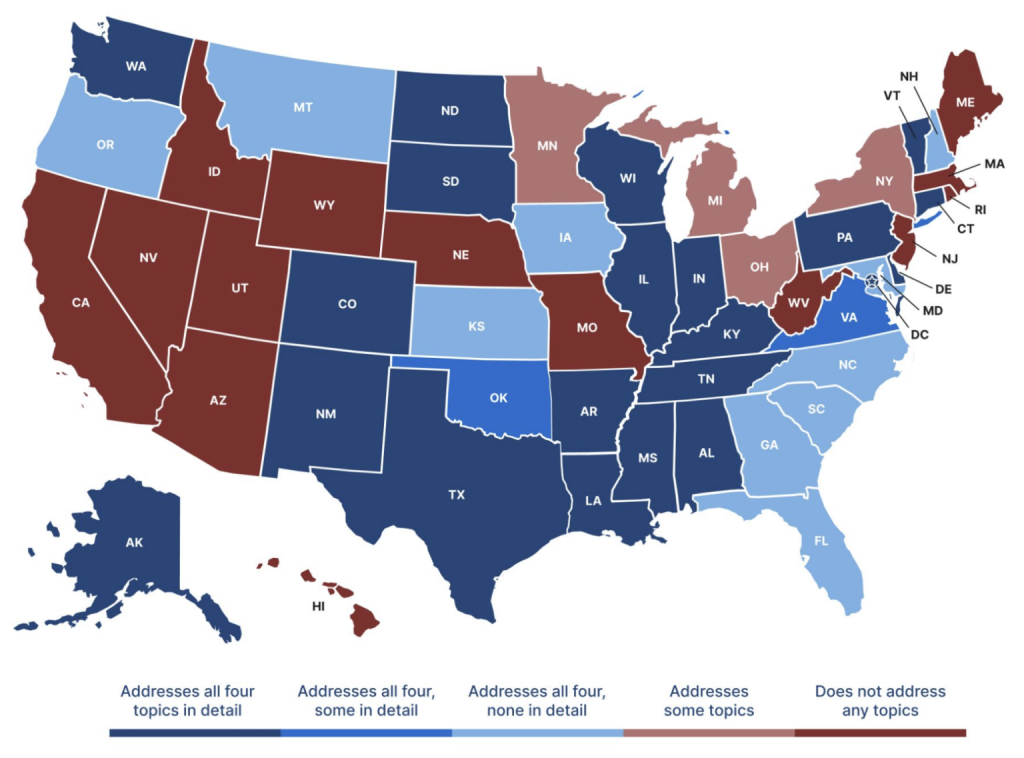
Without adequate time for aspiring teachers to build deep math knowledge, they are more likely to be underprepared to teach such content effectively. While many factors affect student performance, this is one contributor to weaker student outcomes. As my colleague Josiah Padley wrote here, nowhere is this more evident than in math, where early gaps compound over time and become harder to close.
But changes can be made to restore accountability in the profession. First, policymakers should reinstate meaningful licensure assessments by repealing amendments made to Minnesota Statutes 120A.22 subdivision 10 and 122A.185 subdivision 1. The state doesn’t have to choose between access and rigor; other states maintain both through baseline assessments and program accountability.
Second, teacher preparation programs should be held accountable through transparent data (such as pass rates and instructional hours). Minnesota’s Professional Educator Licensing and Standards Board (PELSB) dramatically and retroactively lowered passing scores on the state’s teacher licensure exams prior to their removal. On average, instructional hours allocated for math content preparation in Minnesota’s undergraduate elementary programs total 83 hours, below the target of 105 hours.
Third, the changes made to the Standards of Effective Practice that teachers must demonstrate in order to be licensed should be undone. The changes politicize teacher training requirements by prioritizing ideological frameworks and content over subject-matter knowledge and instructional skill.
Finally, empower parents with transparency about curriculum and teacher preparation quality. Minnesota does not require districts to publish what curricula they are using — which is helpful not only for transparency purposes but also for assessing quality and rigor of materials. Under Minnesota Statute 120B.20, school districts are required to have a procedure in place for parents to review the instructional materials provided to their child and, if the parent objects to the content, to make reasonable arrangements with school personnel for alternative instruction.
The disconnect between what aspiring elementary teachers learn in many teacher preparation programs and what they need to know to elevate their instruction effectiveness has raised questions about how this affects student reading and math proficiency across the country. Less than half of Minnesota students are meeting grade-level benchmarks in these two core subject areas for a second year in a row. (New reading standards and benchmarks from the Minnesota Department of Education went into effect fall 2025, and the new math standards and benchmarks are scheduled for full implementation in the 2027 school year.)
If the goal is to improve student achievement in foundational subjects like math and reading, the solution is not to remove baseline licensure standards and shift responsibility for teacher quality onto a system that data suggest is uneven. Doing so lowers the bar for entry and risks weakening instruction at a time when students can least afford it.