June 3, 2026, 10 a.m.
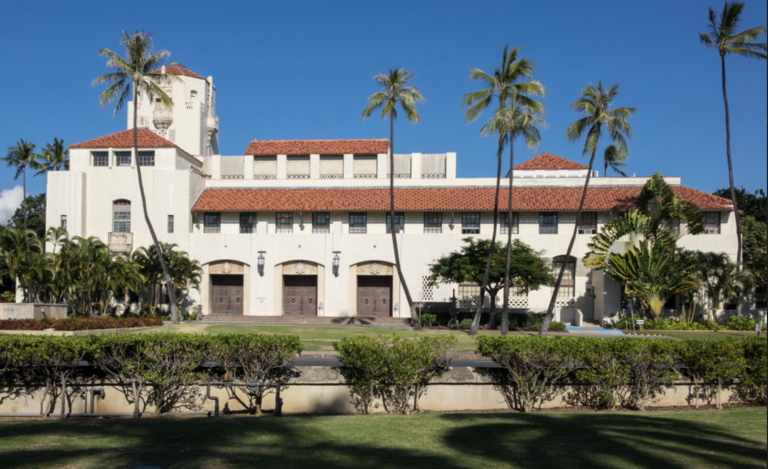
Honolulu Hale
To: Honolulu City Council
Tommy Waters, Chair
Andria Tupola, Vice Chair
From: Grassroot Institute of Hawaii
Ted Kefalas, Director of Strategic Campaigns
RE: Bill 22 (2026), CD2 — RELATING TO THE EXECUTIVE OPERATING BUDGET AND PROGRAM FOR THE FISCAL YEAR JULY 1, 2026, TO JUNE 30, 2027
Aloha Chair Waters, Vice Chair Tupola and other members of the Council,
The Grassroot Institute of Hawaii offers comments on Bill 22 (2026), CD2, which would allocate and appropriate funds for the 2026-2027 fiscal year.
Grassroot appreciates the fiscal prudence that the proposed budget represents overall and encourages the Council to identify additional areas in which city operations can be slimmed down or made more efficient.
The original draft of the bill called for $3.803 billion in non-federal funds, and the current CD2 draft would allocate $3.798 billion in non-federal funds — a roughly $5 million decrease. The enacted fiscal 2025-2026 budget contained $3.766 billion in non-federal dollars, which would make the current draft of the bill a 0.8% increase over the enacted 2025-2026 budget.
With the proposed floor draft seeking to add about $4.7 million to the budget, the net result would be a budget that shrunk by a few hundred thousand dollars.
This fiscal prudence keeps the city’s budget growth well below the inflation rate over the past year. Since March 2025, the Consumer Price Index for Urban Hawaii increased by 3.7%, driven partially by surging energy prices.[1]
Meanwhile, the state Department of Business, Economic Development and Tourism estimates real personal income growth was 2.1% in 2025 and is expected to be 1.9% in 2026.[2] However, DBEDT also anticipates the state’s economy to remain sluggish in 2026 and 2027, with gross domestic product growth rates of just 1.7% and 1.8%, respectively.[3]
Grassroot also applauds the Council for seeking to pare back duplicative services and government operations as a part of this budget.
Defunding some of the city’s more than 2,000 vacant positions is a great start,[4] as is reducing the budget for the Office of Economic Revitalization, which a recent city audit found has not met its Charter-mandated goals.[5]
The current CD2 draft of the bill would remove approximately $1.8 million from OER’s budget. Although the proposed floor draft of the bill would restore funding for two positions, the net result would still be a reduction of about $1.6 million.
Thank you for the opportunity to testify.
Ted Kefalas
Director of Strategic Campaigns
Grassroot Institute of Hawaii
1050 Bishop St. #508 | Honolulu, HI 96813 | 808-864-1776 | info@grassrootinstitute.org
[1] “Consumer Price Index, Honolulu Area — March 2026,” U.S. Bureau of Labor Statistics, April 10, 2026.
[2] “DBEDT Projects 1.7 Percent Growth for 2026,” Hawaii Department of Business, Economic Development and Tourism, March 12, 2026.
[3] Ibid.
[4] “Lapsed Funds and Vacancy Reports,” Memo from Tommy Waters to Kiana Pascal, March 9, 2026.
[5] “Audit of the Office of Economic Revitalization,” Honolulu City Auditor, Report No. 26-01, January 2026.