When David Lucero went to work one night in June 2013, he wasn’t thinking about criminal justice reform.
He was thinking about his son.
The single father had picked up a shift as a bouncer outside a Sunnyvale nightclub to help pay for his son’s Pop Warner football fees and uniforms. Parents do these things every day. They take extra shifts because a child wants to play football, join a school trip, or pursue a dream. They do it because that is what parents do.
He was shot and killed that night, leaving behind a twelve-year-old son, his mother Delia Caraway, his stepfather Steve Caraway, a brother, a sister, and a family whose lives would never be the same.
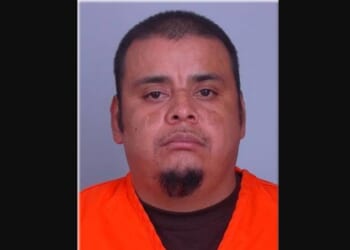
Years later, a jury convicted Steven Bowie of first-degree murder. The evidence included surveillance footage of the shooting itself. After hearing the evidence, the jury returned its verdict, and the family believed the legal process had reached its conclusion.
That is what most Americans assume a verdict means.
Not that grief ends.
Not that a family is made whole again.
What a verdict offers is something more modest but no less important: finality. It marks the moment when a family can stop waiting for justice and begin living with the outcome of it. It is society’s way of acknowledging that a life mattered, that a wrong was committed, and that the person responsible has been held accountable.
For victims’ families, that kind of finality can be the beginning of peace.
That was the understanding the Caraway family carried with them for more than a decade.
Now they find themselves back in court.
The reason is California’s Racial Justice Act, a law enacted in 2020 and later expanded retroactively to convictions that predated the law itself. The law emerged from a belief that traditional legal standards made it too difficult to challenge racial discrimination in criminal proceedings.
For decades, courts generally focused on a straightforward question: did the alleged prejudice affect the outcome of a particular case?
The Racial Justice Act broadened that inquiry. Courts may now consider broader patterns of bias, statistical disparities, and systemic discrimination as well.
Supporters view that change as long overdue. Critics worry that it allows convictions to be revisited without proof that the alleged prejudice affected the jury’s verdict in the case before the court.
The Lucero case illustrates that debate.
No one is arguing that Bowie is innocent. No court has questioned the surveillance footage. No court has concluded that the jury reached the wrong factual conclusion about who killed David Lucero.
Instead, a judge found that evidence introduced during the original trial concerning Bowie’s gang affiliation and rap lyrics violated standards established years later under the Racial Justice Act. Combined with subsequent legal changes, that ruling has placed the conviction in jeopardy.
The prosecutor’s explanation to the family was candid. She did not express doubt about the verdict. Rather, she explained that the legal landscape had changed so dramatically that preserving a reduced conviction appeared preferable to risking the possibility of losing the conviction altogether.
That distinction lies at the heart of the debate. The question is not whether racial bias should be remedied. It should. The question is whether a murder conviction should be altered without proof that the alleged prejudice affected the jury’s verdict.
The case also reflects a reality increasingly common in California. Questions of race and justice are often more complex than the categories used to describe them. The defendant is Black. The victim was Latino. The elected district attorney is Jewish. The author of the Racial Justice Act is Indian-American.
None of this proves that bias is impossible.
It does suggest that questions of race and justice have become increasingly complicated in one of the most diverse states in America. That reality makes individualized inquiry more important, not less.
The Lucero case also sits at the intersection of another criminal justice debate.
California’s youthful offender laws presume that offenders who committed crimes at age 25 or younger possess a greater capacity for growth and rehabilitation. Because Bowie was 25 at the time of the murder, he qualifies for California’s youthful offender parole process.
Like the Racial Justice Act, youthful offender laws are built on broader assumptions about human behavior. Whether those assumptions prove true in any individual case is left to the Board of Parole Hearings.
Prosecutors have described Bowie as a model prisoner during his years of incarceration. Most people hear that phrase and assume it means rehabilitation. But good conduct and rehabilitation are not necessarily the same thing.
Following prison rules, maintaining employment, and avoiding disciplinary violations are positive things. Yet they are also the minimum expectations of incarceration. Compliance demonstrates an ability to follow rules. It does not necessarily demonstrate transformation.
Rehabilitation suggests something deeper. It implies growth, insight, accountability, and a genuine reckoning with the harm that was done.
Whether Bowie has achieved that level of rehabilitation is ultimately a question for the Board of Parole Hearings, not a newspaper column.
Victims’ families, however, are entitled to ask what evidence supports that conclusion.
Compliance is evidence of obedience.
Parole should require evidence of transformation.
Perhaps that is why the timing of the upcoming hearing feels so striking. David Lucero was murdered on June 9, 2013. The hearing expected to reduce Bowie’s conviction is scheduled for June 11, only days after the anniversary of his death.
No one suggests that timing was intentional. Yet it illustrates something important. Court calendars treat dates as administrative necessities. Families experience them differently. An anniversary is not a scheduling detail. It is a memory. It is a wound. It is a reminder of the day life changed.
For thirteen years, the Caraways believed they were learning to live with a tragedy. They never imagined they would be asked to relitigate it.
The debate over the Racial Justice Act will continue. So will the debate over youthful offender parole and criminal justice reform.
What should not be lost in those debates is David Lucero.
In discussions about systemic bias, sentencing reform, rehabilitation, and parole, it is easy to focus on defendants. It is harder to remember the families who believed the case was over, the children who grew up without a parent, and the victims whose stories disappear beneath layers of legal doctrine.
Those people deserve to be part of the conversation too. Because justice is not measured only by what it does for defendants.
It is also measured by what, and who, it remembers.
Steve Smith is a senior fellow in urban studies at the Pacific Research Institute, focusing on California’s ongoing crime challenges.