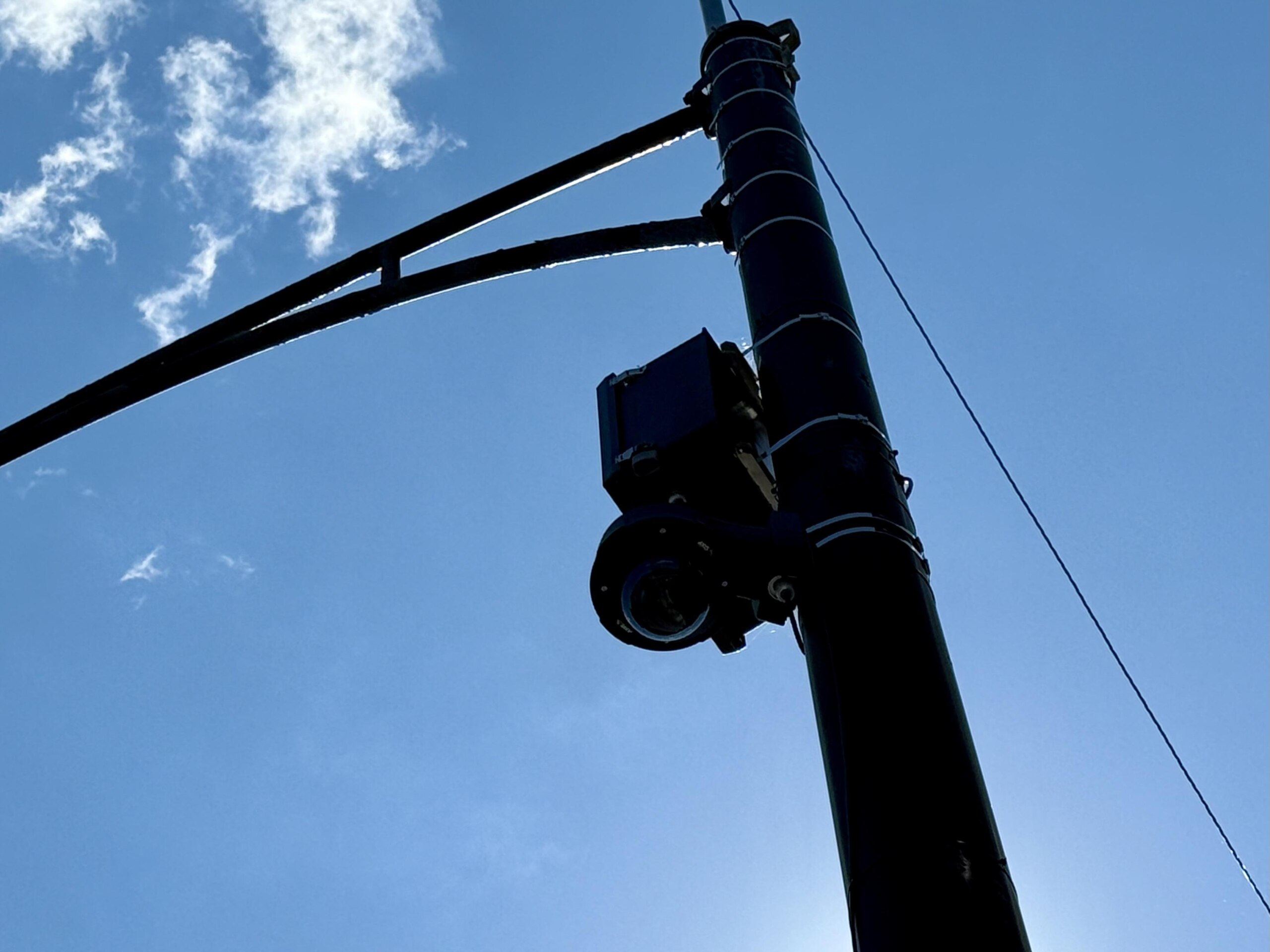
Many want better safeguards in the use of the law enforcement tool.
With automated license plate readers a common policing tool in Illinois, residents want more transparency and stronger safeguards, and a federal appeals court will hear arguments this month on whether the state’s use of the cameras violates the U.S. Constitution.
The Illinois debates mirror national concerns: More than 50 cities and counties across the U.S. have canceled or deactivated the cameras so far this year over privacy and data-sharing concerns.
What are automatic license plate readers?
Unlike red-light or speed cameras, ALPR cameras do not issue tickets. They photograph passing vehicles, capturing license plates and possibly the make, model and color of the vehicle and the location, date and time of the image.
Police can search the information during investigations or receive alerts when a license plate matches a vehicle on a “hot list.”
Flock Safety is the nation’s largest provider of ALPRs, with more than 120,000 cameras across 49 states capturing more than 20 billion license plate scans each month. For the Illinois State Police, Motorola Solutions is the primary camera provider.
History of license plate readers in Illinois
Illinois’ state-run ALPR program began as a response to expressway shootings but has since expanded in geography and purpose.
After U.S. Postal Service worker Tamara Clayton was fatally shot in 2019 while driving on Interstate 57, lawmakers passed the Tamara Clayton Expressway Camera Act, authorizing cameras on Cook County expressways to help the Illinois State Police investigate shootings.
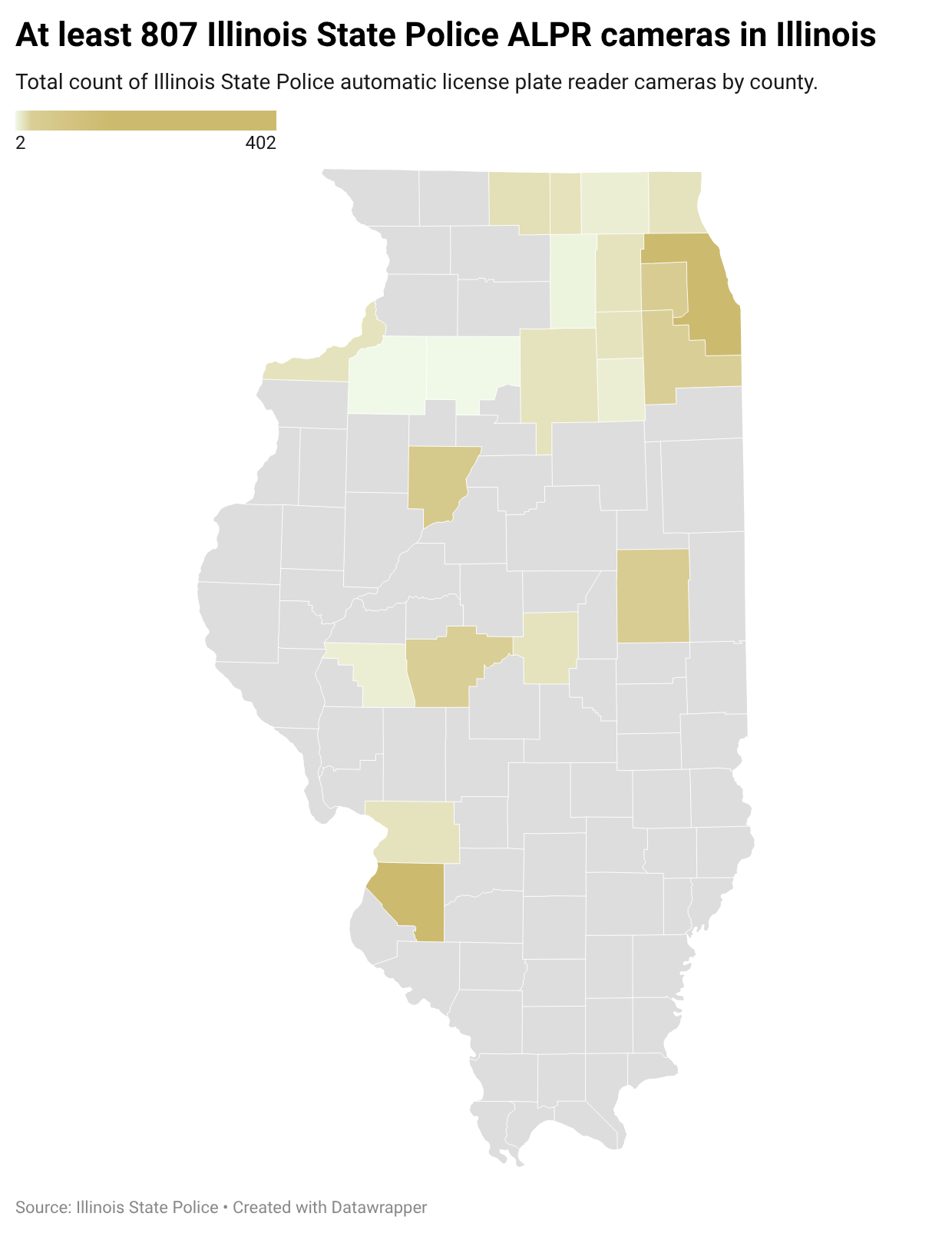
By the end of 2022, almost 300 cameras had been installed on every expressway within Cook County. That year, Gov. J.B. Pritzker expanded the program to 21 additional counties and DuSable Lake Shore Drive.
Today the Illinois State Police has at least 807 ALPR cameras statewide.
The program was scheduled to expire in 2023, but lawmakers continue to extend it. Pritzker signed legislation last year extending the program through July 1, 2028.
As ALPR use expanded, concerns emerged among state leaders about who could access the data. Illinois law restricts ALPR data from being shared for immigration enforcement or investigations involving health care that is legal in Illinois.
A 2025 audit by Illinois Secretary of State Alexi Giannoulias’ office found Flock violated state law after U.S. Customs and Border Protection had access to Illinois license plate-reader data. Flock attributed it to a communication error.
Communities question the cameras
While the cameras in Illinois are touted as a tool for good, there are debates over how much information is collected, how long it’s retained and who can access it.
At the Sept. 1 Joliet City Council meeting, residents asked for periodic reports showing how often police use Flock camera data and for what purposes. Police Chief Rob Brown said the department is updating its Flock policy, strengthening audits and considering posting reports.
At its city council meeting Aug. 25, residents called on Aurora to terminate its Flock contract, citing concerns about public oversight, data sharing and potential Fourth Amendment implications.
Despite residents and privacy advocates urging it to reject the surveillance system, the Pekin City Council voted Aug. 24 to renew the city’s annual contract with Flock Safety for its network of 54 ALPR cameras.
Setting limits on surveillance
License plate readers give police another tool to investigate crime, but their expansion raises questions about the appropriate limits of government surveillance. Clear limits on who can access license plate data, how it can be used and how long it can be stored can prevent public-safety tools from becoming a system for tracking residents without sufficient oversight.