We have a few victories to celebrate together. Four, in fact.
That’s because Hawaii has received four shipments of fuel from refineries along the U.S. Gulf Coast — something that hasn’t happened for at least two decades.
Moreover, one of those deliveries was propane transported aboard a bulk liquefied petroleum gas carrier, a type of vessel that has been unavailable to serve Hawaii from U.S. ports for decades because there simply haven’t been any in the Jones Act fleet.
That shipment was also noteworthy because the tanker was large enough to move roughly half of all the propane Hawaii has imported so far this year.
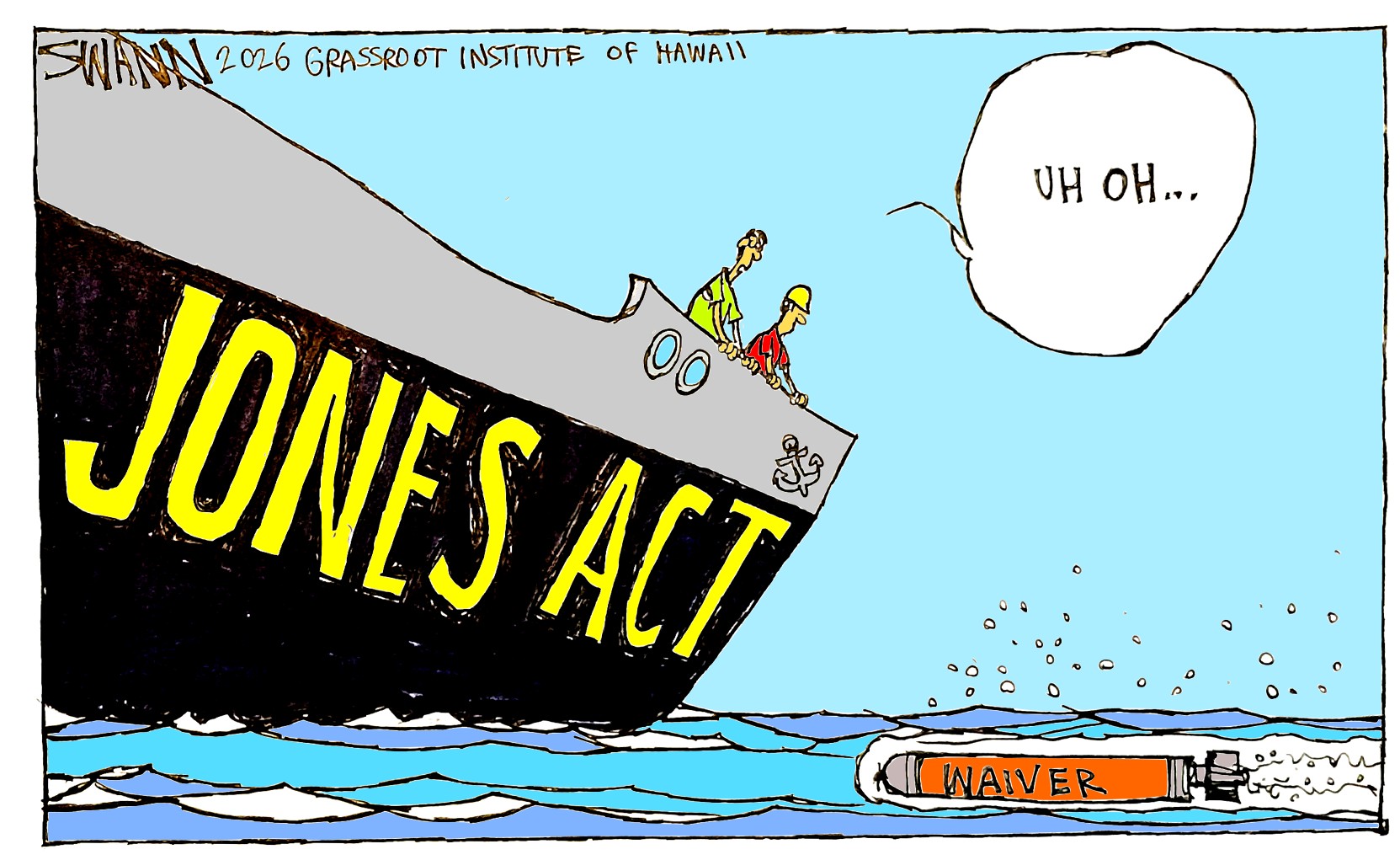
These landmark voyages, discussed at length in new research by Grassroot Scholar and Cato Institute trade policy analyst Colin Grabow, were completed thanks to the ongoing waiver of the federal Jones Act, first ordered in March as a wartime measure to facilitate greater access to fuels and fertilizers.
The ostensible reason for the waiver is unfortunate — not only because it took overseas military hostilities to trigger it, but also because Americans deserve relief in any case from this costly 106-year-old, special-interest maritime law.
The evidence has been mounting for years that the Jones Act strangles trade within the U.S. and increases the cost of living for Americans nationwide, especially for those of us who live in places that rely heavily on water transportation for our daily needs.
This happens because the Jones Act restricts the transportation of goods between U.S. ports to ships that are U.S. flagged and built and mostly owned and crewed by Americans.
Allegedly intended to bolster national security, boost shipbuilding and ensure a vibrant merchant marine force, the Jones Act has achieved none of those goals; and it is way past time that this anachronistic law be lifted for good — if not wholly, at least in ways that would benefit Americans more generally.
When it comes to fuel, the Jones Act in normal times has resulted in Hawaii importing the vast majority of its supplies from foreign sources. This is partly because of the high cost of transporting U.S. fuels to Hawaii on Jones Act ships, but also because doing so is sometimes simply impossible, as is the case with certain types of vessels not existing in the ever-dwindling Jones Act fleet.
The four fuel deliveries Hawaii has received from U.S. producers so far under the waiver might not seem like much, but they are a promising indicator for the future.
Nationwide, the waiver has resulted in an explosion of new shipping routes between U.S. ports. And that’s even considering its temporary nature and limited scope.
For that reason, the shipments that have come to Hawaii so far under the waiver represent the floor — not the ceiling — of what could be accomplished.
Right now, the waiver is proving in real time and with hard facts that the Jones Act is a barrier to our economic well-being and our national security.
The only remaining question is why Congress hasn’t yet acted on this new information to modernize the Jones Act.
_____________
This commentary was Keli‘i Akina’s weekly “President’s Corner” column for Sept. 26, 2026. If you would like to have his columns emailed to you on a regular basis, please call 808-864-1776 or email info@grassrootinstitute.org.