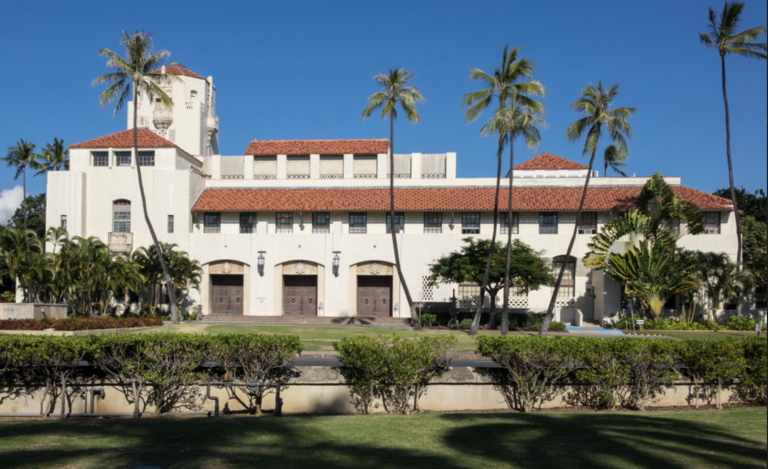
The following testimony was submitted by the Grassroot Institute of Hawaii for consideration by the Honolulu City Council Committee on Zoning and Planning on March 5, 2026.
_____________
March 5, 2026, 9 a.m.
Honolulu Hale
To: Honolulu City Council Committee on Zoning and Planning
Esther Kiaʻāina, Chair
Tommy Waters, Vice Chair
From: Grassroot Institute of Hawaii
Ted Kefalas, Director of Strategic Campaigns
RE: Bill 6 (2026), CD1 — RELATING TO DEVELOPMENT STANDARDS IN THE APARTMENT AND APARTMENT MIXED-USE DISTRICTS
Aloha Chair Kiaʻāina, Vice Chair Waters and other members of the Committee,
The Grassroot Institute of Hawaii supports — and offers amendments to— Bill 6 (2026), CD1, which would amend development standards for the apartment and apartment mixed-use zoning districts.
Grassroot believes this bill could unlock a range of new housing opportunities for Honolulu residents and would result in more plentiful, affordable housing.
In particular, Bill 6 (2026) would reduce the minimum lot sizes for these districts and increase floor area ratios. The floor area ratio for a property is currently calculated using a complicated formula tied to the size of the lot and the zoning district. Table 1 below shows the current maximum FARs by zoning district compared to the new ratios proposed in the bill.
Table 1: Current and proposed maximum floor-area ratios
| Zone | Maximum current FAR | Proposed residential FAR |
| A-1, AMX-1 | 0.9 | 2.0 |
| A-2, AMX-2 | 1.9 | 3.0 |
| A-3, AMX-3 | 2.8 | 4.0 |
A greater floor area ratio means more building square footage can be built on a parcel. Increasing these ratios is critical because Honolulu needs more housing units. According to the 2019 Hawaii Housing Planning study, Honolulu needed 22,168 new units between 2020 and 2025.[1] A 2024 update to the Hawaii housing planning study estimated that Honolulu needs 27,710 new units built between 2023 and 2027 to meet demand.[2]
For homebuilders to justify buying a property and replacing aging buildings, they must be sure the project can be profitable.
Grassroot analyzed the potential impact of this bill by identifying apartment and apartment mixed-use parcels that have buildings 50 years old or older, none of which is designated as a condominium unit.[3] We identified 1,230 such parcels in the A-1, A-2, A-3 and AMX-2 zones, and the results are shown in Table 2.
Table 2: Current actual and legal average floor-area ratios
| Zone | Count of parcels | Average actual FAR | Average max. FAR | Proposed FAR |
| A-1 | 185 | 0.28 | 0.46 | 2.0 |
| A-2 | 994 | 0.26 | 1.31 | 3.0 |
| A-3 | 27 | 0.23 | 1.31 | 4.0 |
| AMX-2 | 24 | 0.28 | 0.92 | 3.0 |
Increasing the allowable floor area ratios could move some projects from questionably to realistically profitable. Consider a 10,000-square-foot A-2 lot where a 1,500-square-foot, 70-year-old single-family home now sits. The land value of that property could easily be $1 million.
If a homebuilder acquired that property, current FAR limits would allow up to 13,000 square feet of building area,[4] with a land cost per square foot of $79.
On the other hand, increasing the allowable FAR for that parcel to 3.0 would increase the amount of building area to 30,000, which would lower the land cost per square foot to $33 — a more than 50% reduction that could help the project pencil out.
Although Bill 6 (2026) would improve the financial feasibility of infill projects, Grassroot urges the Council to adopt two amendments.
First, Grassroot requests that the FAR for A-2 and AMX-2 parcels be increased to 4.0.
A-2 parcels with older, non-condominium dwellings make up 80% of the properties Grassroot reviewed. Allowing more density in those areas would help ensure that new housing comes online at a quicker rate.
Second, Grassroot requests that the minimum lot width and depth be set to no more than 50 feet.
Martin Nguyen has explained in testimony on this bill that many existing apartment and apartment mixed-use lots are 45 or 50 feet wide,[5] which would mean any homebuilder trying to meet the 60-foot width and depth proposed in this legislation would need to obtain some sort of time-consuming discretionary approval, such as a variance or a consolidation and resubdivision.
If these two amendments are added, the resulting legislation would give homebuilders greater flexibility in constructing apartment units in zones that are already selected for higher-density development.
Thank you for the opportunity to testify.
Ted Kefalas
Director of Strategic Campaigns
Grassroot Institute of Hawaii
_____________
[1] “Hawai’i Housing Planning Study, 2019,” prepared for the Hawai’i Housing Finance and Development Corporation by SMS Research and Marketing Services, Inc., December 2019, p. 56.
[2] “Hawaii Housing Planning Study 2024,” prepared by SMS Research and Marketing Services, Inc., FSR Consulting LLC and Ward Research, Inc. for the Hawai’i Housing Finance and Development Corporation, Table 39A, p. 124.
[3] Data from Hawaii Information Service’s Multiple Listing Service, which requires a subscription to access. Reviewed tax year 2024 parcels with condominiums and properties without year built information excluded.
[4] Calculated by multiplying the lot size (10,000 square feet) by the current A-2 FAR calculation (FAR = 0.00002 x lot area + 1.1).
[5] Martin Nguyen, “Testimony In Support Of Bills 5 And 6 (2026) – Relating To The Development Standards For The Apartment And Apartment Mixed-Use Districts,” Feb. 3, 2026, p. 7.