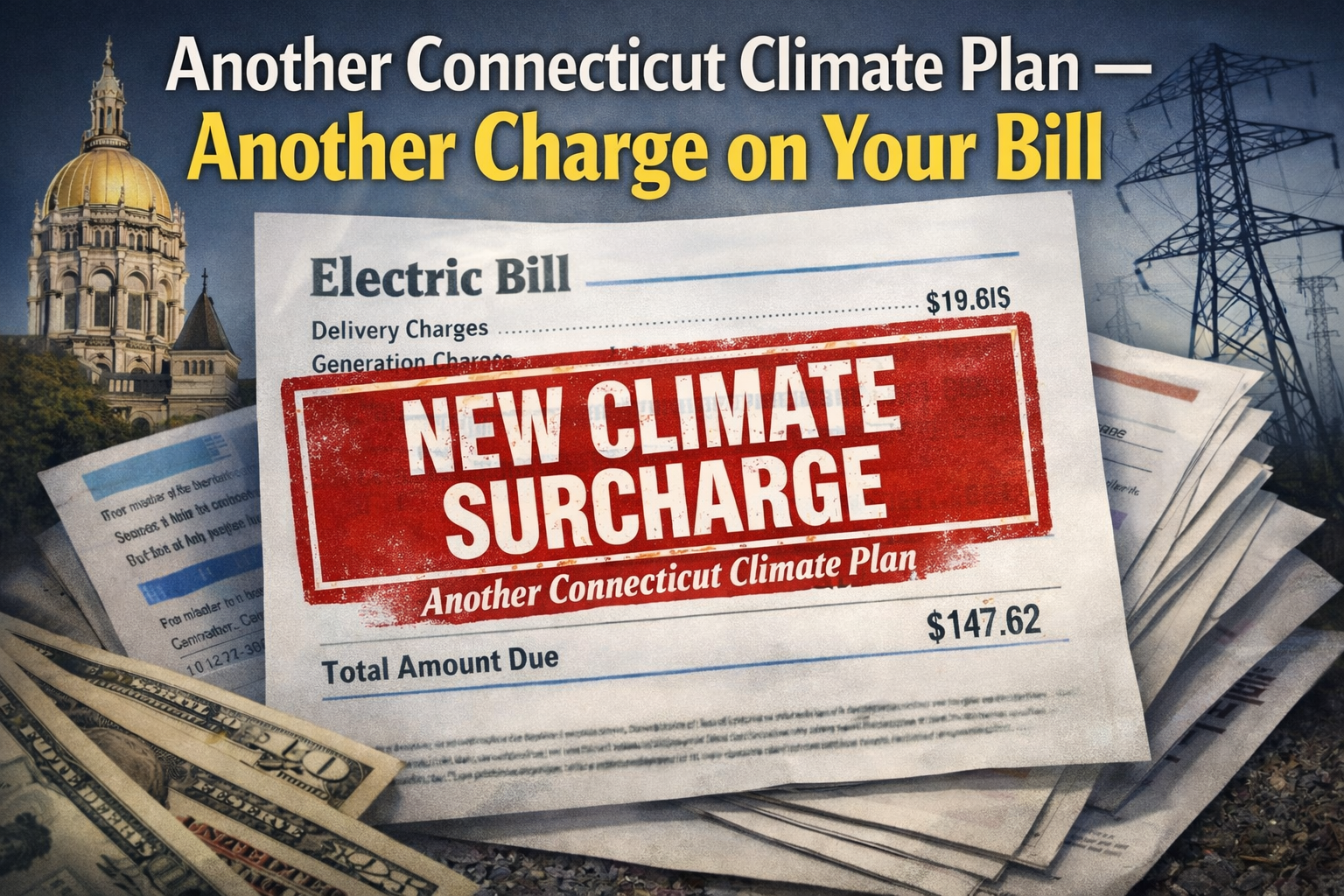
Another Connecticut Climate Plan — Another Charge on Your Bill
Connecticut lawmakers have a habit of raising taxes by calling them something else.
The latest example is S.B. 453, a proposal that would impose a five-percent surcharge on certain insurance policies tied to fossil-fuel infrastructure in the state.
The revenue would flow into a new “climate resilience account.” According to the bill, the fund would support projects such as flood-risk data collection, public awareness efforts in high-risk communities, and grants for infrastructure designed to mitigate flooding.
On paper, the plan sounds straightforward: apply a surcharge to fossil-fuel infrastructure and use the proceeds for climate-related programs.
In practice, costs introduced into complex systems rarely stay where they start.
They move.
How the Surcharge Works
The bill applies to insurance policies covering infrastructure involved in the processing, export, or transportation of oil, natural gas, or coal. It specifically references pipelines, refineries, terminals, and utility-scale generation facilities.
That last category is significant.
New England continues to rely heavily on natural-gas for electricity generation. When the cost of operating those facilities rises — whether from fuel, regulations, or insurance — those increases do not simply vanish. They are incorporated into wholesale electricity markets, which influence the supply rates paid by customers of utilities like Eversource and United Illuminating.
A surcharge introduced upstream can work its way, step by step, into ratepayer bills.
It is also important to note that the surcharge is not imposed directly on fossil-fuel companies themselves. It is added to the insurance policies that cover them. Insurers collect the surcharge and remit it to the state, but the insured entities ultimately bear the cost — and costs in the energy sector tend to ripple outward.
Not a True Lockbox
The bill creates a “climate resilience account,” but places it inside the state’s General Fund — Connecticut’s primary budget account and the same pool lawmakers reallocate during each budget cycle.
The bill specifies that funds would not lapse at year’s end, allowing balances to accumulate. But it does not create a constitutional lockbox. Future legislatures could amend the statute and redirect the revenue through the ordinary budget process.
In other words, S.B. 453 establishes a new revenue stream tied to climate policy, but ultimate control remains with lawmakers.
A Familiar Pattern
Connecticut residents have seen similar approaches before. Electric bills already include multiple charges adopted over time to fund public policy initiatives. Rather than appropriating funds directly through the annual budget process, policymakers increasingly use targeted surcharges embedded in complex systems.
Earlier this year, lawmakers proposed a climate “superfund” aimed at collecting payments from fossil-fuel companies tied to historical emissions. S.B. 453 takes a narrower approach, focusing on insurance policies connected to energy infrastructure. The Environment Committee is scheduled to hold a public hearing on the bill Friday (March 13).
Whether the surcharge will meaningfully reduce flood risks is a separate debate.
What is clear is that new costs introduced into insurance and energy systems rarely remain isolated. They travel through markets until someone absorbs them.
And in Connecticut’s energy system, that destination often looks familiar: the monthly bill.