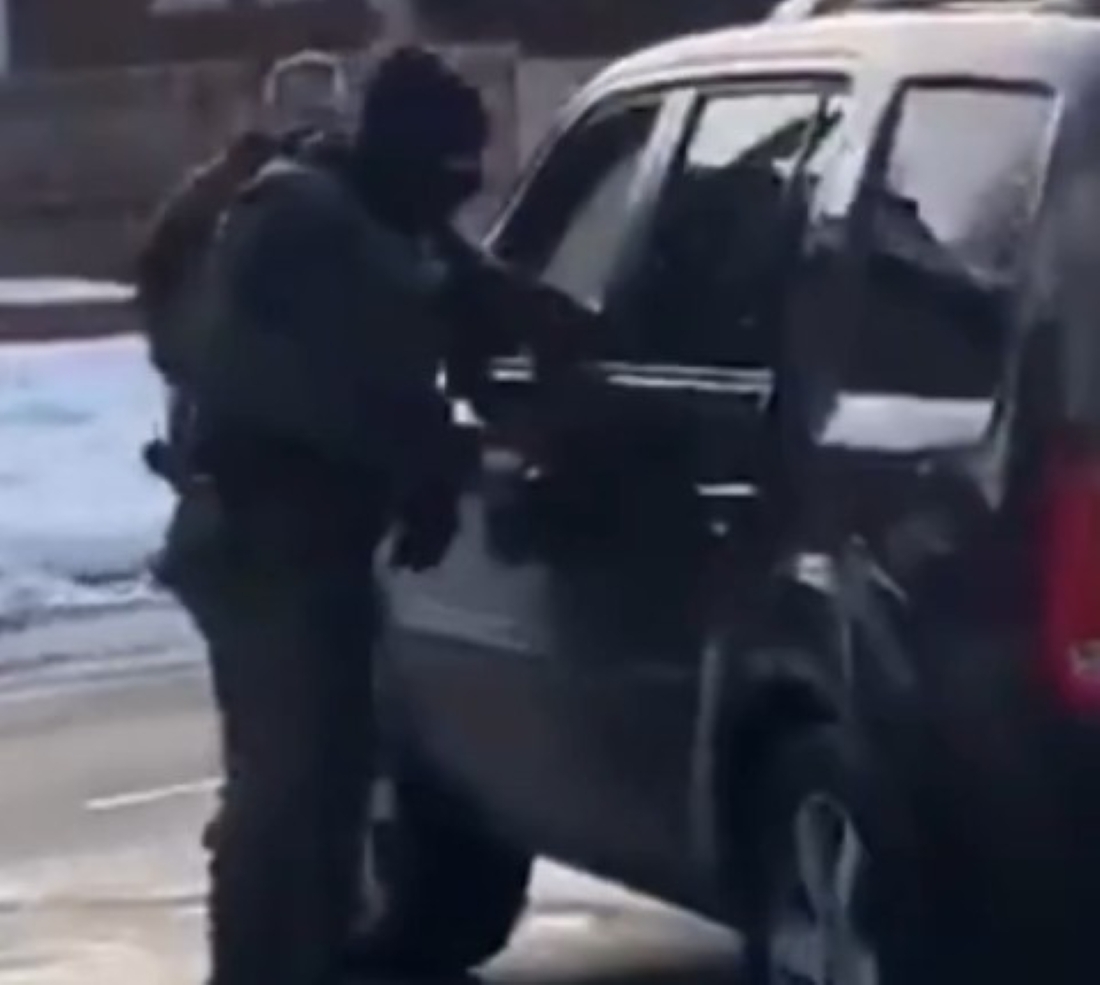
Last week agents from Immigration and Customs Enforcement (ICE) were conducting targeted immigration enforcement in South Minneapolis, when agent Jonathan Ross fatally shot an activist, Renee Good, who drove her car at Ross and struck his leg.
In the days following the fatal shooting a great deal of misinformation has emerged in varying degrees of importance. I will address three of these narratives. They are:
1) Agent Ross’s tactics were faulty and created an unjustifiable shooting
2) Arrest authority of ICE agents is limited to enforcing immigration violations
3) A car isn’t a dangerous weapon
“Poor tactics“
I have seen and read a growing number of purported law enforcement experts, suggesting agent Ross’s tactics were faulty and led to an unjustified shooting. Many are opining on TV or print media that agent Ross should never have put himself in front of the car. These critiques are premature and irrelevant to whether deadly force was justified.
First, they are being offered without having access to information that is literally still being gathered. It seems every day a new video or piece of evidence is found that offers a completely different perspective on what happened and why. To be spouting off at this early stage in the investigation seems to be driven by a desire to be relevant.
If there is one truth about law enforcement, it is that there has never been and never will be a tactically perfect event that couldn’t be picked apart in the comfort of a chair while viewing slow-motion enhanced video. To this point, the National Fraternal Order of Police shared a message to highlight the split-second decision making that is a reality of policing:
“Policing demands judgment under pressure, with limited information, real consequences, and no opportunity to pause or reset.”
The value in after-action review is in the ever-present quest to improve. That differs from an evaluation of whether a law enforcement shooting was justified. That evaluation, as defined by U.S. Supreme case Graham v. Conner, directs the evaluation to be made from the perspective of an objectively reasonable officer at the moment deadly force was used, not from the perspective of 20/20 hindsight.
From available video, including cell phone video taken by Ross himself, it appears he had gotten out of his truck just seconds prior to the shooting to assist his partners who were attempting to arrest Good who sat in the driver’s seat of her car. As he walked across the front of the vehicle to reach his partners, Good put the car in gear and accelerated. The on-going investigation will evaluate each of the videos and statements from all witnesses and from Ross, who by the way has a presumption of innocence.
To those wanting to question or criticize Ross’s training and tactics, and suggest he isn’t a “real cop,” I will say this: Ross served in a combat patrol in Iraq in 2005/6 as a member of the US Army. He then joined the U.S. Customs and Border Patrol (CBP) and went through the CBP Academy before serving in the field as a Border Patrol agent for 10 years. Ross then transferred to Immigration and Customs Enforcement (ICE) in Minnesota and has served for the past 10 years as an ICE agent in Minnesota. While in Minnesota, Ross has served on ICE’s Special Response Team, described as an elite “SWAT” like team of agents who receive monthly tactical training above and beyond what other agents receive. Ross’s resume puts him in a class far above many state and local law enforcement officers – and undoubtedly far above many of those who are now armchair quarterbacking his actions.
“ICE agents lack police authority”
A growing number of pundits have been suggesting, without merit, that ICE and CBP agents lack the authority to do anything but enforce immigration law. This is simply false. Title 8 US Code 1357 lays out the arrest authority of federal immigration officers including ICE and CBP agents. It specifically and broadly grants the power to arrest an offender(s) who commits any offense against the United States, if the offense is committed in the officer’s or employee’s presence.
Couple that with Title 18 US Code 111, which makes it a federal offense to assault, resist, oppose, impede, intimidate, or interfere with ICE or CBP agents while engaged in the performance of official duties, and the authority of the ICE agents attempting to detain or arrest Renee Good is not in doubt.
An article by Homeland Security Today offers this helpful advice to anyone doubting the arrest authority of a federal immigration agent:
“Like any other law enforcement officer, USBP agents have authority to stop and temporarily detain individuals to investigate potential offenses. This includes determining whether someone is in the country illegally or investigating other suspected violations.
Just as with any police officer, when a USBP agent directs you to stop, that constitutes a lawful detention. Anyone who forcibly assaults, resists, opposes, impedes, intimidates, or interferes with a USBP agent performing their official duties is committing a federal crime under 18 USC § 111. USBP agents can arrest individuals for this offense regardless of whether they are unauthorized immigrants or U.S. citizens.
The same authorities apply to ICE officers and agents.”
“Cars are not dangerous weapons”
They absolutely are. In fact, the Minnesota Supreme Court has ruled that a car meets the definition of a dangerous weapon whether the driver intended, or not, to cause death or great bodily harm.
Both federal and state statute and case law have affirmed that a car driven at agents/officers constitutes a dangerous weapon and that when an agent/officer is assaulted with a dangerous weapon (car), that may justify the use of deadly force by the agent/officer.
Ironically, one of the federal cases that affirmed a car could be a dangerous weapon involved Agent Ross. In that case Agent Ross was dragged 100 yards by a car driven by a man Agent Ross and others were attempting to arrest in Bloomington. The man was convicted of assault with a dangerous weapon – a felony.