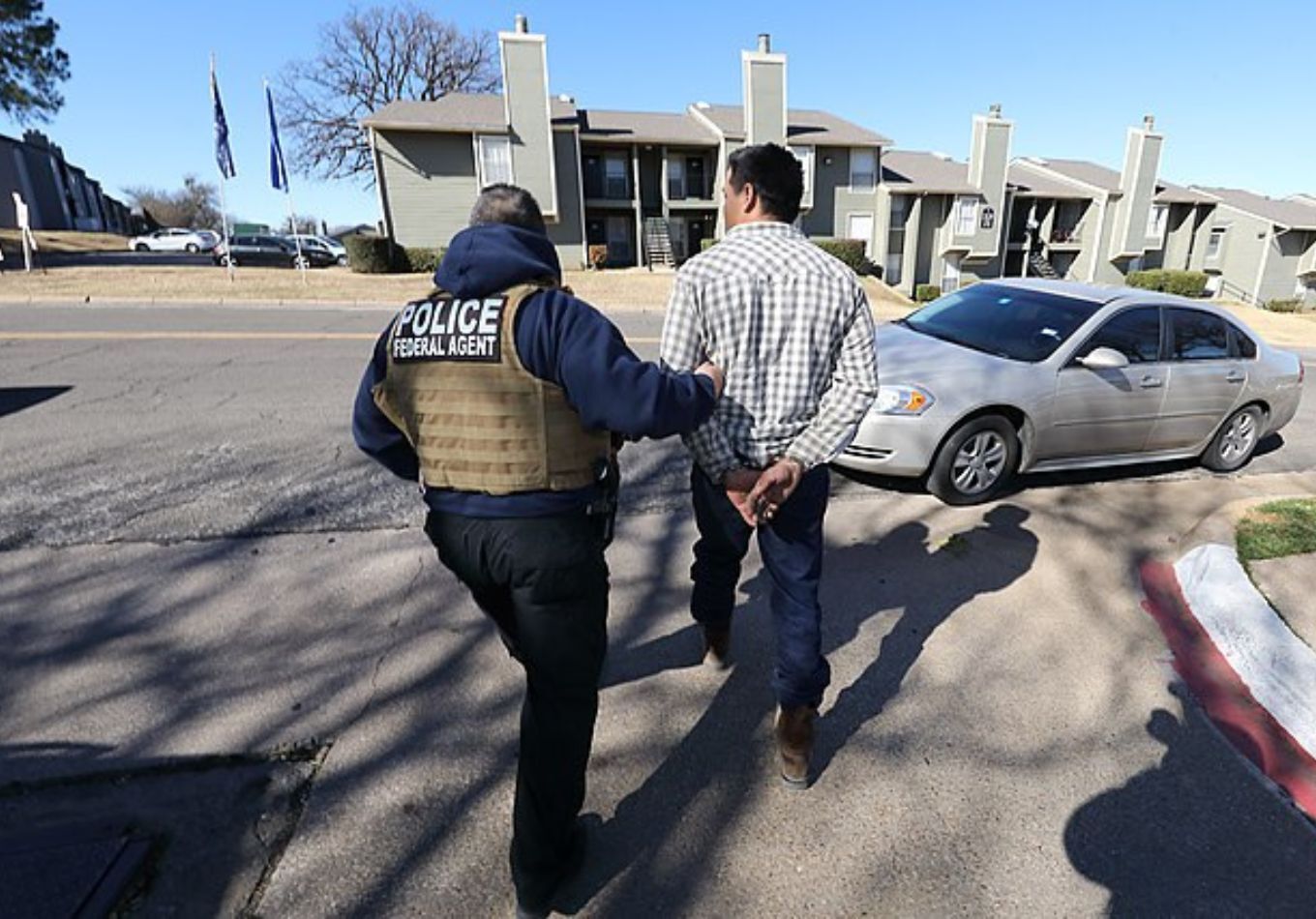
In recent weeks, in response to ICE’s Operation Metro Surge, nearly every major law enforcement agency in the Twin Cities has taken the time to put out a statement to their citizens to “clarify” what their policies are in terms of immigration enforcement.
Done right
Some have done better than others – Bloomington and Edina for example have issued reasonable statements that confirm their officers are not out conducting immigration enforcement, but they’ve moderated their messages to avoid setting unreasonable expectations.
Bloomington Police Chief Booker Hodges, for example, advised the community that our federal agents have a tough job to do and that the community has a responsibility to respect their efforts. He then made it clear that if any federal agents were in distress and called for help, the Bloomington Police Department would respond to that call for help.
The Edina press release made it clear that the Edina Police Department would not as a matter of routine be responding to the scene of immigration enforcement. Furthermore, it made clear that Edina was not in a position to have any say over whether federal agents wore masks during their operations, nor were the federal agents expected to provide any “after action” report to Edina if they had any enforcement in the city.
Done wrong
Others have gone too far in their efforts to “clarify.”
On December 2nd, a large press conference was held in Minneapolis involving the Mayor Frey, St. Paul Mayor Carter, and Minneapolis Police Chief O’Hara. During that press conference, Chief O’Hara re-emphasized that the Minneapolis Police do not conduct immigration enforcement. But then, in an effort to clarify, he went overboard by setting expectations that Minneapolis Police would “intervene” in ICE operations when necessary.
What he was referring to is a state statute that requires every officer in the state to “intercede” if they witness a fellow officer using force that is beyond what is “objectively reasonable.” This is known as an officer’s “duty to intercede and report” instances of excessive force.
There are a couple of problems with Chief O’Hara’s statement.
First, he coupled the legal duty to intercede on excessive force situations with his assertion that MPD officers would “intervene” on potential violations of “human rights and civil rights.” This could backfire badly, as it sets an inaccurate expectation with citizens that the Minneapolis Police Department will be intervening on their behalf against ICE when there are disputes involving alleged “human and civil rights” violations. They won’t, and they shouldn’t – that would be an issue for ICE and the Department of Homeland Security to respond to and address.
Second, the public has developed an inaccurate definition of “excessive force,” leading many to believe that any use of force is “excessive.” It’s not, and that misunderstanding will only become more problematic as people who heard Chief O’Hara say his officers had a duty to intervene, come unglued when MPD doesn’t “intervene” on ICE use of force incidents. Creating that expectation was an unforced error, and Chief O’Hara would be wise to clarify that not all force is excessive force.
Takeaways
It shouldn’t be too much to expect our law enforcement officials to state that while their mission might not include immigration enforcement, they support their fellow law enforcement partners and stand with them in spirit as they carry out their lawful and necessary missions.
Instead, we have allowed things to get to the point where any suggestion of support for immigration enforcement is forbidden. And, it has become normalized for cities, counties, and the state to overtly establish policies that block information exchange with ICE, or block the safe and secure transfer of criminal defendants already in the custody of local agencies to ICE. It’s all self-defeating, and sadly it’s lost on far too many people in leadership positions.
The evolution of the anti ICE narrative is the epitome of suicidal empathy – a that’s a narrative we need to desperately reverse.