If you were paying attention to the budget debates on both the House and Senate floors during the legislative session, you might think the Legislature made significant cuts to the Fiscal Year 2027 (FY27) budget. Unfortunately, based on preliminary numbers, total appropriations are a 2.5% increase, with FY27’s $14.453 billion outpacing the FY26 original appropriation of $14.102 billion. So, despite what you may be hearing, Idaho’s budget was not cut this session.
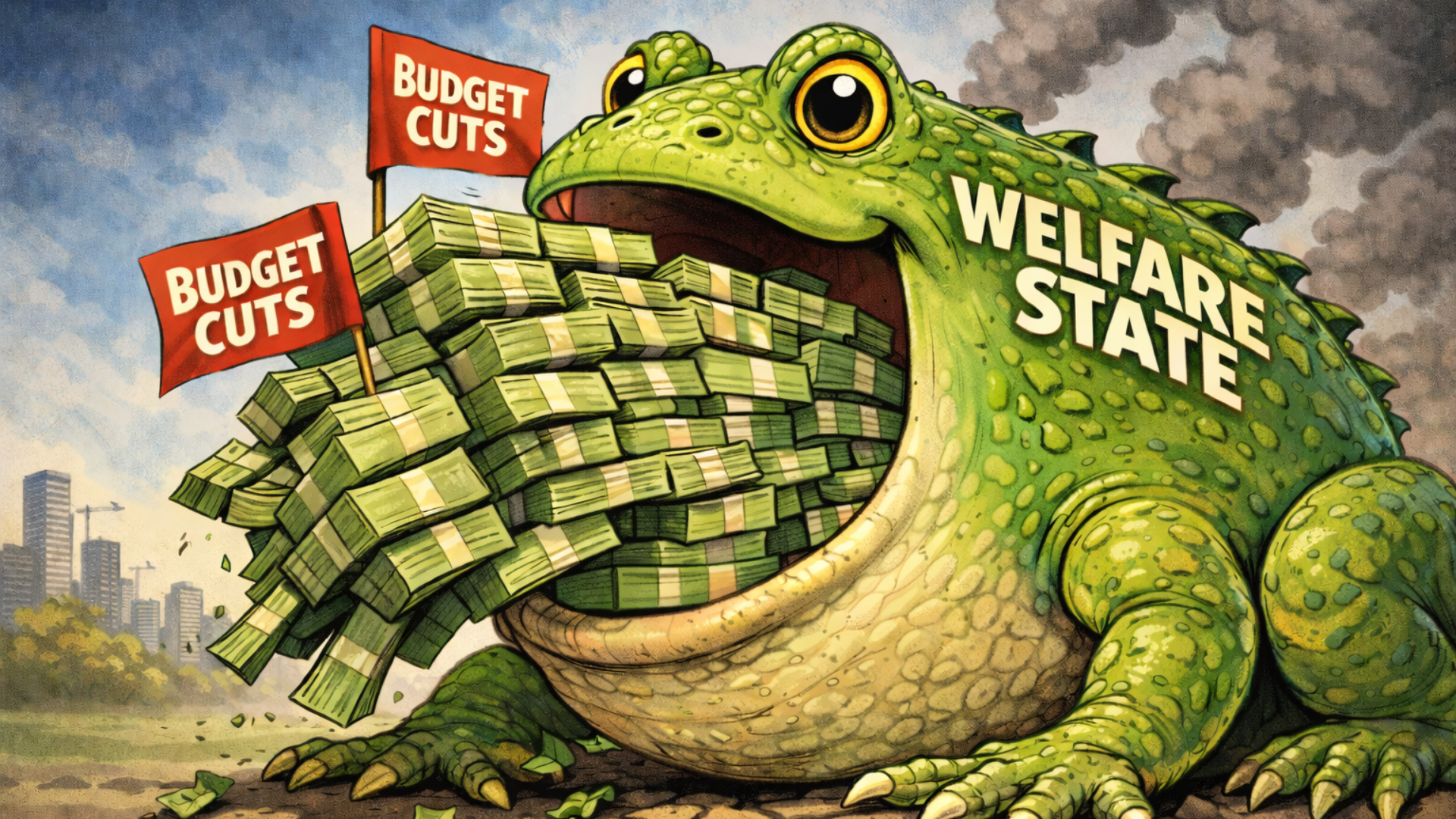
The reason is simple: the massive welfare budget increases eclipsed the cuts in other programs!
A bit of background: The legislative session essentially splits fiscal years. Currently, we are in FY26, which ends on June 30, 2026. When the Legislature convened in January, it considered updates to the FY26 budget, meaning increases or decreases, and set the budget for the following fiscal year.
This session, the Legislature passed Senate Bill 1331, which cut $193 million from the current fiscal year. While this may seem like a small achievement, it is a significant reversal of recent sessions, with COVID years exceeding $1 billion in supplemental spending and enhancements to soak up COVID funds. However, offsetting those cuts are additions called supplemental spending increases; the two largest are to accommodate current-year population growth for both the Medicaid program and Corrections.
Unfortunately, the story for FY27 is a mixed bag. Total FY27 spending is actually an increase from FY26. The FY26 appropriation for all funds was $14.102 billion, and as noted earlier, FY27 increased that amount by roughly 2.5%. Wait, isn’t that more than the reported increase for last year (meaning FY26 vs FY25), which was 1.5%? Well, as we noted at the end of last session, an estimated $450 million was moved off the books, so the increase was likely closer to 5%. This is a topic we will cover in another article.
So, why is spending increasing at all this year? It is almost entirely due to one agency, Health and Human Services (HHS). As the table below demonstrates, most functional areas of government did show a spending reduction, but HHS’s growth overshadowed those cuts.
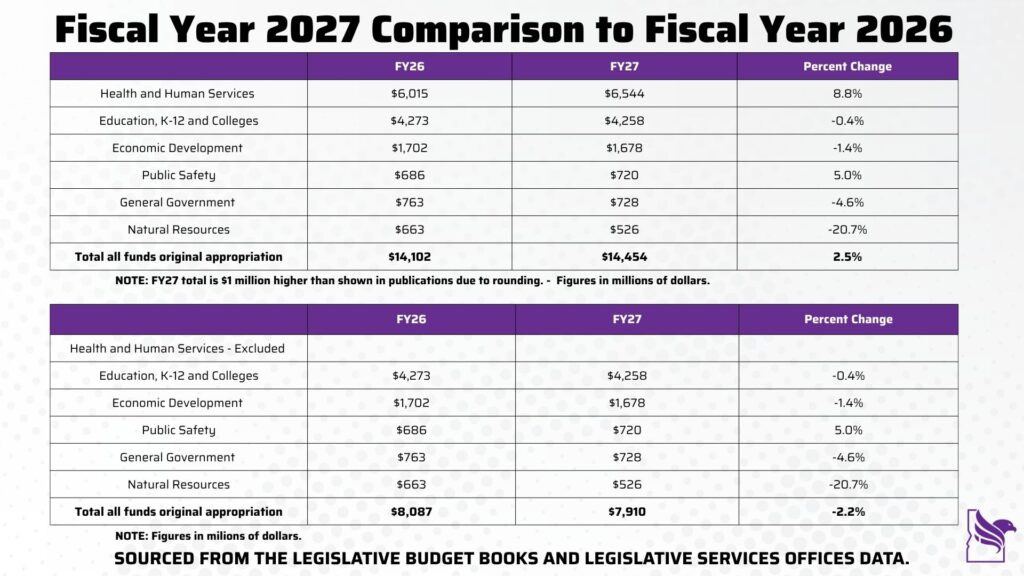
The most significant spending driver is Medicaid and the associated Rural Health Transformation Fund (a new federal program). These two budgets comprised increases from FY26 totaling nearly $527 million: $299 million for the rural health fund and $228 million for Medicaid. This effectively offsets all savings from the other budget reductions, including those in HHS.
The Legislature did not take Medicaid reforms seriously this session. House Bill 850, Medicaid expansion repeal, was never given a hearing. House Health and Welfare Chairman Rep. John Vander Woude allowed H850 to be printed, but never scheduled a hearing. As we have noted many times before, Medicaid expansion is unsustainable, and if the Legislature wants to get serious about controlling spending, Medicaid expansion repeal has to be on the table. This would be a significant step towards fiscal responsibility for the state (saving a projected $1.3 billion per year). This session proved that notion right again. All of the consternation over other budget cuts was washed away by one large agency, a pillar of the welfare state.
So, with the budget not actually cut for FY27, the next session will be a challenging one for the incoming Legislature for two key reasons: the welfare state was not tamed, and ongoing cuts were insufficient.