Kansas stands in a better position today than it did just a few years ago. According to the Tax Foundation’s 2026 State Tax Competitiveness Index, the state now ranks 23rd overall in the nation. That’s respectable progress, but in a country where states are competing aggressively for people, jobs, and investment, “respectable” isn’t enough.
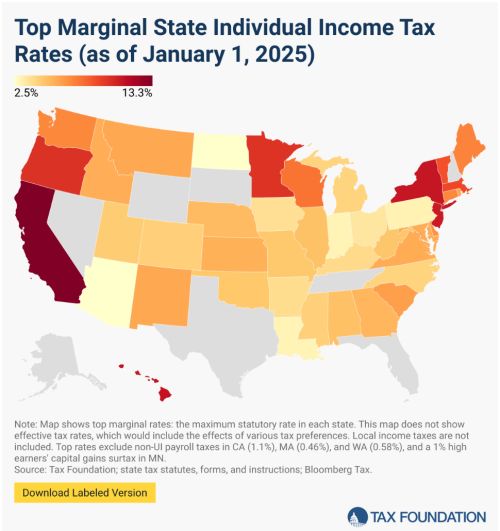
The Index measures how well states design their tax systems across five major areas: corporate, individual income, sales, property, and unemployment insurance. Kansas performs reasonably well in some categories and less so in others. The state ranks 26th in corporate taxes, 28th in individual income taxes, 21st in sales taxes, 26th in property taxes, and a strong 4th in unemployment insurance taxes.
These numbers reveal a mixed picture. Kansas isn’t a high-tax outlier, but it also hasn’t yet become a magnet for growth. The good news is that the building blocks are in place for that to change.
A Solid Base to Build On
Kansas has taken real steps toward simplification and reform. Recent efforts to flatten income-tax brackets and streamline corporate taxation have made the code easier to understand. The state’s consistent, centralized administration of sales taxes also gives it an advantage over many others, where overlapping local systems create confusion and compliance costs. And unlike some states, Kansas has no inheritance or estate tax, which helps attract retirees and family-owned businesses.
All of these points are in the right direction. The challenge now is to maintain fiscal discipline so that those tax reforms can take hold and be expanded. Without limits on government spending, to say nothing of actually cutting COVID era spending hikes under Gov. Kelly’s watch, even good reforms lose traction over time. When budgets grow faster than taxpayers’ ability to pay, pressure builds to raise rates or delay future cuts.
The Real Competitors
Kansas’s neighbors aren’t standing still. Colorado recently reduced its flat income tax rate and continues to emphasize spending restraint. Oklahoma and Missouri have enacted ongoing rate reductions, and Nebraska is flattening its income tax with the goal of further cuts tied to revenue triggers. Meanwhile, Texas — ranked 7th overall in the 2026 Index — continues to attract residents and businesses with its no-personal-income-tax policy and a relatively simple, broad-based sales tax system, despite its remaining weaknesses in local property taxes and the business margin tax.
Even Wyoming, which ranks 1st nationally, illustrates the benefits of stability and simplicity. The state lacks both corporate and individual income taxes and consistently earns top marks for neutrality and predictability. Kansas doesn’t need to copy those states exactly, but it should compete with them in seriousness and structure.
The Next Steps
To transition from a middle-ranked tax system to a top-tier one, Kansas should prioritize two key areas.
First, lawmakers should limit the growth of state spending to a rate less than population growth plus inflation. This rule, outlined in the Responsible Kansas Budget, ensures the budget remains aligned with what taxpayers can afford. By preventing overspending, Kansas could avoid future tax hikes and create the consistent surpluses needed for permanent rate reductions.
Second, the state should establish a clear, long-term path for lowering income taxes over time to zero. Publishing a schedule of rate reductions tied to surpluses above spending restraint targets would create confidence among investors and families. People respond to expectations: when they can see that tax burdens will fall, they make plans, expand businesses, and create jobs in anticipation of those improvements.
The Path Forward
Kansas has the foundation for a competitive economy: reform momentum and a workforce ready to grow. What it needs now is the discipline to hold the line on spending and the clarity to set a predictable course for lower taxes.
In an era where people and businesses can choose where to live and invest, policy expectations matter as much as current rates. States that trust their citizens with more of what they earn and keep government growth in check are the ones that build long-term prosperity. Kansas can be one of them.
Spend less, provide certainty, and let people prosper. That’s how Kansas can rise from good to great.