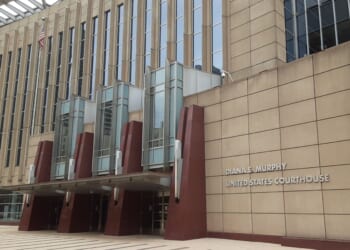
What if a single court decision could unlock billions in investment, protect local decision-making, and secure Louisiana’s role as an energy powerhouse? That is exactly what happened when the Louisiana Supreme Court overturned an appellate ruling and affirmed St. James Parish’s authority to approve Koch Methanol’s plant expansion. This victory is not just a legal milestone. It is a blueprint for reclaiming our state’s energy future from overreaching courts and out-of-state activists.
The Pelican Institute has long championed local control over land use decisions. In our previous reports and columns, we argued that communities, not distant judges or activist groups, know best how to balance development with environmental needs. The Supreme Court’s March 6 ruling echoes that view. It found that St. James Parish acted with a “sound, rational basis” in approving the $185 million expansion, which includes a pipeline link through wetlands. The court criticized the 5th Circuit Court of Appeal for overstepping its bounds and making a “fresh interpretation” of local ordinances. Instead, it emphasized judicial deference to parish officials, who are closest to the issues.
This decision directly addresses some of the barriers highlighted in our latest report. Excessive litigation has chilled investment and slowed progress in Louisiana’s energy sector.
By reaffirming that local leaders retain the authority to make their own land use decisions, the high court is sending a strong signal to their colleagues on lower court benches across the state. The message is clear: judges cannot substitute their judgment for that of elected officials and planning commissions.
It is our sincere hope that the court’s common-sense conclusion may help to restore some measure of predictability and reduce the risk of costly, protracted legal battles in the future. It also provides much-needed permitting certainty for job creators, like Koch, which can now begin investing in an expanded facility. The project retains 114 jobs, adds two permanent positions, creates 400 temporary construction roles, and is expected to generate $4 million in parish revenue over the first decade alone. These are real wins for working families and the local tax base– and that’s worth celebrating.
View the Opinion here: https://www.lasc.org/Opinions?p=2026-009
Melissa Landry is Director of the Center for Energy at the Pelican Institute for Public Policy.