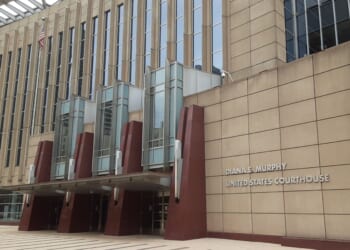
On November 17, the Maine Human Rights Commission (MHRC) filed suit against five school systems, MSAD 70, RSU 24, RSU 73, Baileyville and Richmond, arguing that their recently enacted “biological sex” policies violate the Maine Human Rights Act (MHRA). The Commission is suing on its own authority, not through the Attorney General, and its core claim is straightforward: gender identity discrimination hasn’t been allowed in Maine law since 2005, and the 2014 Doe v. RSU 26 decision already held that schools cannot deny transgender students access to facilities, in that case, school bathrooms, matching their gender identity.
On the face of the pleadings, the Commission has the legal upper hand. But this case is landing in the middle of a radically shifting national landscape, and some of MHRC’s claims are thinner than media coverage suggests.
The National Context: Two Presidents, Two Policies, and a Federal Circuit Split
This legal dispute is inseparable from the parallel national fight over Title IX. The Mills administration aligns closely with the Biden-era interpretation that “sex” includes gender identity across bathrooms, locker rooms, and athletics. By contrast, the Trump administration explicitly revived the biological-sex standard, and several federal courts, most notably in the Sixth and Eleventh Circuits, have embraced that interpretation or blocked previous federal rules that depart from it.
That means we now have a live federal circuit split on the meaning of “sex discrimination” under Title IX. Some courts require gender-identity accommodations; others reject that reading entirely. Maine is in the First Circuit, which hasn’t yet directly joined the conflict, but the gravitational pull of the national debate is obvious.
Why This Case Is a State Case, and Why That Matters
Despite the national noise, this case turns on state law. MHRA’s text is clear: gender identity is a protected class, and educational institutions may not discriminate in programs, facilities, or extracurricular activities. The Commission also cites its own 2016 guidance, asserting that students “should be allowed to compete on single-sex teams based on their gender identity.” However, an executive agency’s regulatory rules are far less critical to courts than actual legal precedent.
More importantly, Doe v. RSU 26 remains binding precedent. The Maine Supreme Judicial Court held in 2014 that denying bathroom access consistent with gender identity violates the MHRA. That’s the Commission’s strongest point, and the agency knows it.
The Department of Education’s historical posture also favors MHRC. Maine DOE has never adopted a biological-sex requirement in athletics or facilities, and its guidance has usually echoed the Commission’s interpretation.
If the case were only about bathrooms, MHRC would be far more likely to win outright. But athletics and multi-user locker rooms introduce different legal and constitutional considerations, and the Commission has exposed some weaknesses in its own case.
Where MHRC’s Case Is Weakest
1. Student Privacy in Intimate Facilities
Bathrooms and locker rooms are not the same. Federal courts have long recognized a legitimate privacy interest in shielding one’s unclothed body from members of the opposite sex. United States v. Virginia (VMI) upheld sex-separated accommodations even under heightened scrutiny. Other cases, like Faulkner and the First Circuit prison-privacy line of cases like Cookish v. Powell, make clear that bodily privacy is constitutionally cognizable. If prison inmates have a right to shield their bodies from members of the opposite sex, then it stands to reason that schoolchildren should have it, too.
MHRA’s text does not expressly ban all sex separation. Maine schools have multiple sex-segregated teams and facilities today, and the Commission has never attempted to abolish sex segregated sports wholesale. That alone undercuts the idea that any sex-based rule is per-se discrimination. If a non-trans boy is not disadvantaged by not allowing him on the girl’s sports team, where he would likely perform better comparatively, then it stands to reason that trans students are not discriminated against by such a restriction either.
Doe itself supported an individualized, evidence-based approach, not a blanket rule granting “casual access” to any facility based solely on self-identification. The court repeatedly asserted that these situations are complex balancing tests for schools, which must take into account the best interests of all students involved in their case-by-case decisions. The Commission’s complaint glosses over that nuance.
Privacy is the districts’ strongest constitutional argument, especially for communal changing areas and athletics.
2. Standing, Ripeness, and Mootness
This is likely the most vulnerable part of the Commission’s argument.
The complaint does not identify a single student who:
- attempted to join a team and was denied under these policies;
- tried to use a restroom or locker room and was excluded; or
- suffered discipline, retaliation, or a measurable loss of access in retaliation for refusing to comply.
Instead, MHRC leans on generalized hypothetical and unprovable fear, “chilling effects,” and hostile rhetoric at public meetings. Maine courts, however, are strict on justiciability. Under Roop v. Belfast and Halfway House, speculative, anticipatory harm is not enough to bring a case. The Law Court repeatedly rejects cases where the alleged injury “rests on contingent future events that may not occur as anticipated or may not occur at all.” To summarize this dense legalese: if you can’t point to someone who is actually injured currently, why are you making this the court’s problem?
While this is a state court, federal standing rules are often looked to for guidance in Maine, and federal standing doctrine points the same way. Lujan v. Defenders of Wildlife requires a “concrete and particularized” injury that is “actual or certainly impending.” Similarly, Clapper v. Amnesty International USA rejected standing built on chains of speculative future events, exactly what MHRC pleads here. The only injuries they can point to is a hostile environment, and students being “too scared” to come forward. To courts though, a case where there are students too scared to come forward is utterly indistinguishable from a case where no students are affected, as a court has no injured parties filing suit either way.
A judge could dismiss or narrow the case on ripeness grounds alone, or at a minimum deny early injunctive relief.
3. Federal–State Harmony and the Title IX Problem
One defense the districts might try to use is that title IX makes gender discrimination in education a federal issue, making state laws unnecessary or contradictory. However, the districts cannot claim federal preemption, as Title IX does not mandate biological-sex separation. But harmony between state and federal laws matters. Maine courts avoid interpretations of state law that create unnecessary conflict with federal law unless the Legislature unmistakably intended it.
Here, Title IX expressly allows sex-segregated sports, locker rooms, and overnight accommodations. Federal regulations permitting this structure have existed for over 40 years. Furthermore, these regulations clearly existed when the gender discrimination part of the Maine human rights act was passed, meaning the Maine legislature was aware of those laws.
If MHRC’s reading of MHRA effectively eliminates all sex separation, even in areas where federal law explicitly permits it, courts may hesitate. The Legislature never explicitly said MHRA should go further than Title IX on athletics, nor did it express an intent to overturn longstanding norms in competitive fairness and intimate-space management.
This gives the districts a middle-path argument: MHRA should be read in a way that assumes it doesn’t directly conflict with Title IX, and thus the court may simply assume that the legislature never intended for it to apply to school sports.
Where the Case Is Likely Heading
Realistically, Maine courts remain more aligned with the Mills administration’s interpretation than with the Trump DOE position. Doe v. RSU 26 is still the guiding point on this issue, and MHRA’s text protecting gender identity is hard to get around. A court could easily:
- strike down categorical restroom bans;
- strike down blanket prohibitions on team participation;
- avoid broad rulings on athletics by ordering individualized accommodation standards.
Even if the Commission stumbles on standing or overreach, the substantive law still leans in its direction.
But the momentum outside Maine, and inside, is moving the other way. Multiple federal courts now reject gender-identity-based access rules in schools. If the federal circuits eventually hold that accepting Title IX funds requires biological-sex separation in athletics or facilities, Maine’s schools could be put in an awkward situation, where complying with state law means losing federal Title IX funding.
And next year’s referendum, whether it affirms or rejects gender-identity protections in education, could render this entire case moot. All of these factors may cause the court to be cautious when ruling on this issue.
Conclusion
The Commission filed a bold, aggressive lawsuit at a moment when the legal terrain beneath it is shifting. Under Maine law, MHRC still has the advantage, especially on bathroom access and broad anti-discrimination principles. But there are several weak points in their case: privacy, standing, and federal–state harmony all create meaningful vulnerabilities the schools can emphasize in court.
The court will likely rule for the Commission on at least part of the case. But with the national circuit split, a potential federal funding showdown, and a statewide referendum on the horizon, this may become a fight that Maine courts resolve only for the ground to shift again. Whether this lawsuit ends up shaping state policy or becomes a short-lived waypoint in a much larger national conflict depends less on the pleadings and more on what happens in Washington, and at the ballot box, next year.