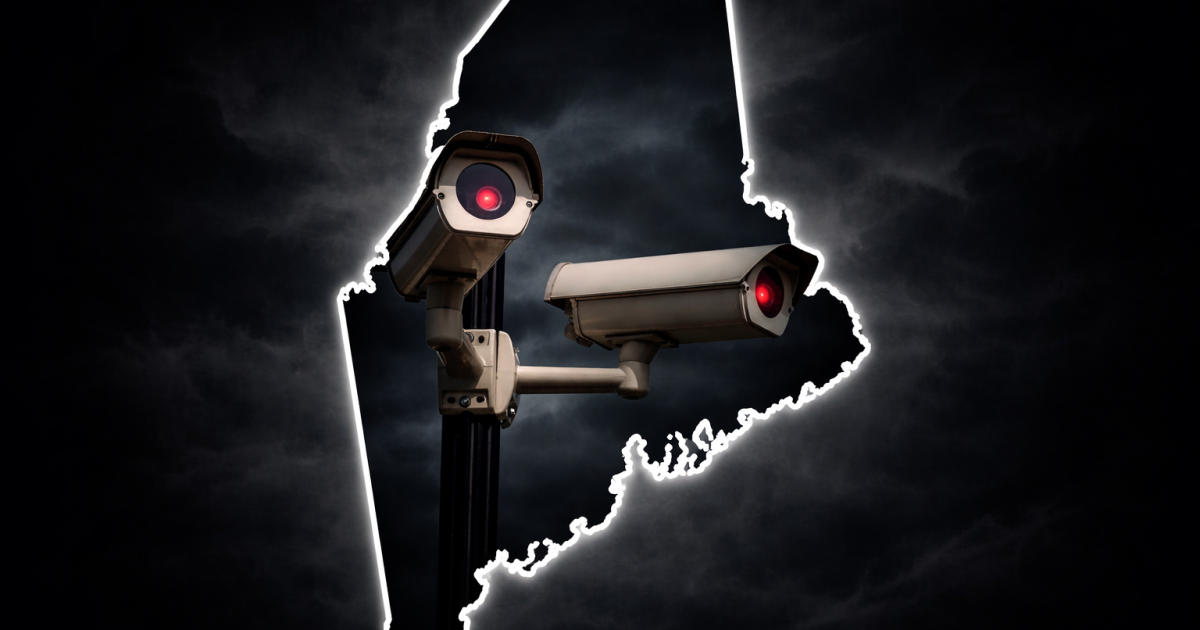
Lawmakers in Augusta are currently considering LD 1457, a bill that would authorize the Maine Turnpike Authority to run a pilot program using automated speed enforcement cameras in highway work zones.
Supporters argue that the proposal is narrowly tailored and limited in scope, designed simply to improve safety in dangerous construction areas.
But beneath the surface, LD 1457 does far more than create a “temporary safety experiment.” The bill establishes the legal and technological foundation for automated traffic enforcement in Maine, a system that could fundamentally change how traffic laws are enforced and how the government monitors the movement of the public.
Once the infrastructure for automated enforcement exists, it rarely remains limited to its original purpose. In that sense, LD 1457 risks becoming the classic example of the “camel’s nose under the tent.”
LD 1457 authorizes the Maine Turnpike Authority to establish a pilot program using automated speed control systems in highway work zones on the Maine Turnpike. The systems would use sensors and cameras to record vehicles traveling at least 11 miles per hour above the posted work-zone speed limit, capturing images of the vehicle and license plate along with the date, time, location, and speed of the vehicle. The recorded information would be used to identify the registered owner of the vehicle, who would receive a mailed notice of violation. The program would begin with a warning and then impose a $100 civil penalty for subsequent violations.
Vehicle owners would have the option to contest the citation through an administrative review process. If the penalty is not paid or successfully contested, the bill allows the violation to ultimately lead to suspension of the vehicle’s registration or plates. The pilot program could operate for up to three years and would allow the Turnpike Authority to contract with private vendors to design, operate, or maintain the automated enforcement systems.
One of the most significant, and concerning, features of LD 1457 is how it deals with Maine’s current law.
Maine has historically been cautious about automated traffic enforcement. This led to the enactment of 29-A M.R.S. § 2117, which restricts the use of speed cameras and similar systems in Maine. This reflects a longstanding policy preference for enforcement to be carried out by human law enforcement officers rather than automated surveillance.
Despite there being very clear, established law on this subject, LD 1457 simply attempts to bypass it. The bill authorizes the pilot program “notwithstanding any other provision of law,” which supposedly allows the Maine Turnpike Authority to implement an automated enforcement pilot program even when current statutes would otherwise prohibit it.
This approach should raise serious concerns. If lawmakers believe automated traffic enforcement is good policy, they should debate that issue directly and openly. Passing a resolve and using a “pilot program” to sidestep existing law creates a precedent that future legislatures can use to quietly introduce broader surveillance systems without fully confronting the underlying policy issues.
LD 1457 authorizes the deployment of automated speed control systems that record vehicles exceeding the speed limit in highway work zones. These systems use sensors and cameras to capture images of vehicles and license plates, along with the date, time, location, and speed of the vehicle. The data is then used to identify the registered owner of the vehicle and issue a citation.
At first glance, this may sound like a modest enforcement tool. But the underlying technology requires the creation of a sophisticated data collection and processing system capable of identifying vehicles, accessing registrant information, and issuing penalties automatically. The bill even defines “personally identifiable information” to include data such as the registrant’s address, license plate number, and information about the time and location of the vehicle’s travel.
In other words, the system creates a government-controlled record of where vehicles are and when they travel. Even if each individual enforcement action is limited to a specific work zone, the infrastructure itself such as cameras, data systems, vendor contracts, and enforcement procedures lays the groundwork for something much larger.
Supporters often emphasize that LD 1457 is limited to a small pilot program in highway work zones. But history suggests that such limits rarely last.
Across the country, automated enforcement programs have followed a very predictable pattern: they begin with narrow justifications and then expand as governments become accustomed to the data, technology, and revenue.
In Maryland, for example, speed cameras were initially introduced in highway construction zones much like LD 1457 does. This limited program was later expanded to include school zones and “other special areas allowed by law.” Other special areas of law now include residential areas in certain counties and even specific roads in other counties.
Washington, D.C. offers an even clearer example. The city started with a small number of red-light cameras at key intersections in 1999. Today it operates one of the largest automated enforcement networks in the country. This network is made up of over 500 cameras including red-light cameras, speed cameras, and stop sign cameras. This network issued over a million tickets and generated $267.3 million of revenue in 2025.
These examples offer the simple lesson that once governments invest in automated enforcement technology, the pressure to expand it becomes difficult to resist. LD 1457 may begin as a “pilot,” but the infrastructure it creates could easily support a much broader network in the future.
Beyond the broader policy concerns, LD 1457 also raises significant legal questions that could expose the program to constitutional challenges.
One of the most serious legal challenges LD 1457 could face is a procedural due process claim under the Fourteenth Amendment. Procedural due process is a constitutional doctrine requiring government officials to follow fair, established procedures, primarily a notice, a hearing, and a neutral decision maker, before depriving individuals of life, liberty, or property.
This bill allows violations to be issued automatically to the registered owner of a vehicle based on camera evidence, even if that person was not the driver at the time of the alleged offense. At the same time, the enforcement system relies heavily on automated records such as images, system logs, and calibration certificates, which are treated as presumptive evidence during administrative review. This can make it difficult for vehicle owners to meaningfully contest a citation, particularly when they lack access to the underlying technology or data used to generate the violation.
The legal risk becomes even more significant because unpaid penalties can eventually lead to suspension of the vehicle’s registration or license plates, a consequence that can substantially affect a person’s ability to travel or work. Courts have long held that when the government imposes penalties that affect an individual’s ability to operate a vehicle, meaningful procedural protections are required. In Bell v. Burson, the Supreme Court specifically ruled that states must provide adequate procedural safeguards before suspending driving privileges.
By combining owner-based liability, automated evidence, and escalating penalties within a streamlined administrative process, LD 1457 creates the kind of enforcement structure that could be particularly vulnerable to procedural due process challenges in court.
Another potential legal vulnerability arises from the unequal enforcement structure the bill creates. Because LD 1457 applies only to highways operated by the Maine Turnpike Authority, primarily the corridor from Kittery to Augusta, it effectively establishes two different systems of speeding enforcement in highway work zones depending on where the violation occurs.
Drivers on the Turnpike in a construction zone could be subject to automated enforcement that issues warnings for first offenses and civil penalties for later violations, but does not carry demerit points or insurance consequences. By contrast, drivers committing the same offense in work zones elsewhere in Maine would remain subject to traditional police enforcement, which can result in doubled fines, demerit points, insurance impacts, and potential license consequences.
This geographic disparity could invite an Equal Protection challenge under the Fourteenth Amendment, which requires that similarly situated individuals be treated alike unless the government has a rational basis for distinguishing between them. While the state could argue that limiting the program to a high-traffic corridor serves as a reasonable pilot program to test safety measures, critics may contend that the dramatically different consequences for identical conduct based solely on geography create the appearance of a two-tiered system of traffic justice.
LD 1457 may appear modest on its surface, framed as a limited pilot program to improve safety in work zones, but the bill also establishes the legal framework and technological infrastructure necessary for automated traffic enforcement in Maine. Once that system exists, experience from other states suggests it rarely remains limited for long. What begins as a narrow tool in construction zones can gradually expand as governments grow accustomed to the technology.
At the same time, automated enforcement raises serious legal questions involving due process, evidentiary standards, and equal protection. If those concerns lead to constitutional challenges, the state could find itself defending an expensive and controversial system in court.
Lawmakers should therefore consider not only the immediate proposal before them, but the precedent it may set for expanded surveillance and automated law enforcement in the future.