Elected officials in Massachusetts sure have a lot to say about “democracy” these days.
For those paying attention to goings on around here in recent years, hearing politicians trumpeting their state as a citadel defending democracy and the rule of law, you might be wondering, which state are they talking about?
Because it doesn’t seem like this one.
In the November 2024 election, Massachusetts voters overwhelmingly approved a referendum to enshrine into law the authority of the Office of the State Auditor to audit the Legislature. Legislative leaders then said they would not commit to following the law, voted to undermine it, and the Attorney General isn’t sure she’ll enforce it.
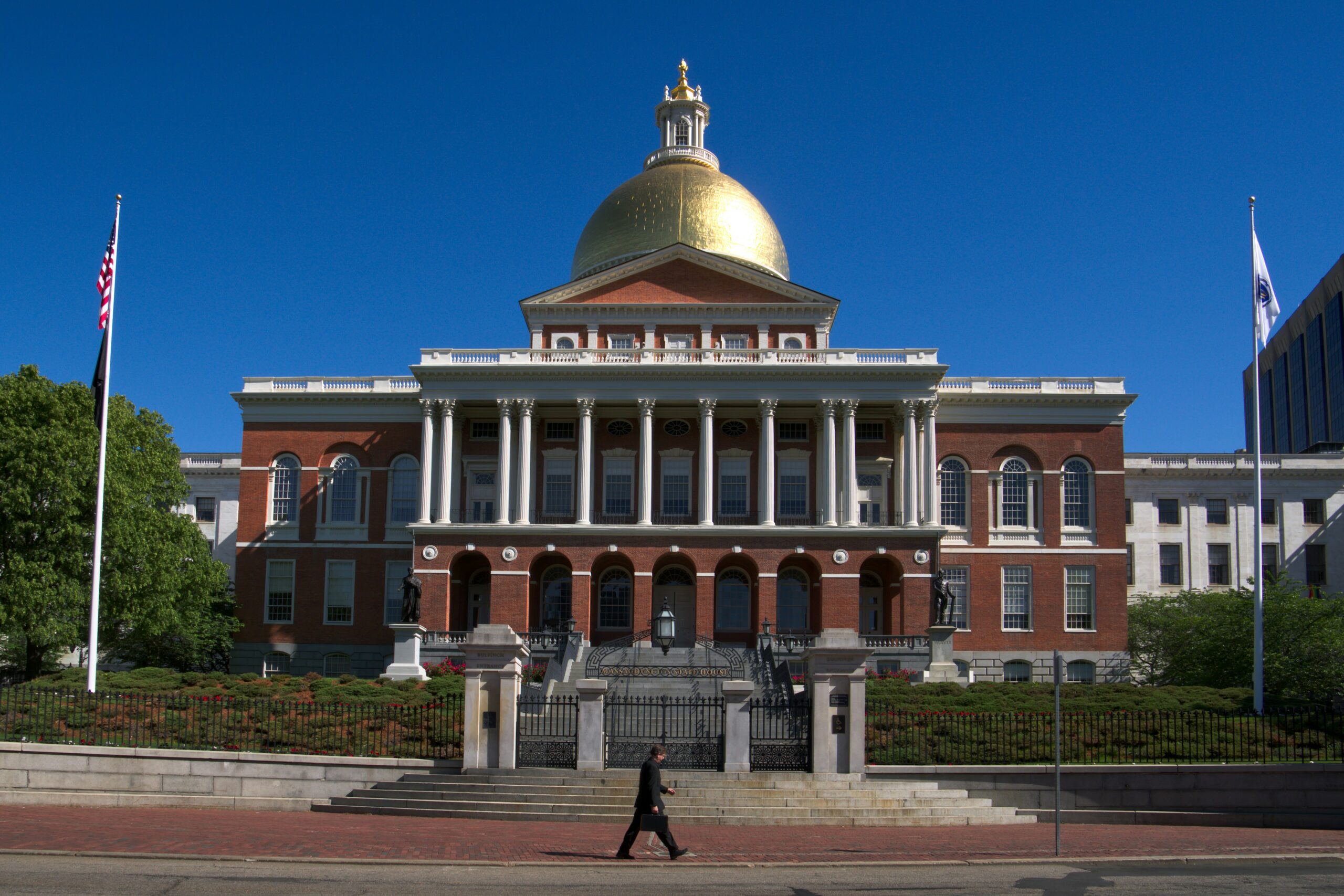
State Auditor Diana DiZoglio is now pursuing another ballot initiative, this time aimed at moving the State House under the state’s Public Records Law.
Officials on Beacon Hill have moved to abolish their own term limits, exempt themselves from public records laws, engage in speech and debate behind closed doors, and hold highly suspect relationships with special interests. Unsanctioned primary challenges are so uncommon and discouraged they’re practically illegal.
In Massachusetts’ system of machine politics, voters are often only allowed to play a limited role in elections. Primary winners are frequently hand selected by elites through a smoke-filled room process of insiders, and with no meaningful opposition party, general elections are decided at the primary.
Those in public office in Massachusetts have been getting caught breaking the law in recent years at a Louisiana-like rate. In 2025 alone, a State Representative was charged in an elaborate fraud and cover up scheme, a Boston City Councilor was sent to prison for embezzling cash in a City Hall bathroom, and each new State Police scandal rolls into the next. Corruption is now such a central feature of public life in Boston that even the city’s sheriff is getting in on the action—getting jammed up by the feds last summer for allegedly extorting a cannabis business.
The Massachusetts General Court, the Legislature’s official name, has been found to be the least productive state legislature in America—rarely passing any bills—and has to scramble at the 11th hour every summer to pass its annual budget and keep the state’s lights on.
Even basic legislative functions, like passing languishing bills to address the state’s most pressing issues like housing, MBTA reform, and energy policy, fail to come together, not because of partisan disagreement, but because of disorganization and institutional lethargy.
This is an awfully curious version of democracy for tweedy New England elites to be lecturing Americans about.
Jerold Duquette and Erin O’Brien, the authors of the 2022 book The Politics of Massachusetts Exceptionalism, summed up this dynamic well—quoting an activist who told them Massachusetts offers “a breed of liberalism that believes in progress but wants nothing to change, combined with a Puritan holdover desire to fix all 49 other states instead of our own.”
Indeed, when these kinds of figures speak sanctimoniously about “defending democracy,” what they are actually talking about defending is establishment power—where “democracy” is synonymous with themselves.
Ironically, Massachusetts has many of the problems it does because it does not have enough democracy. Establishment rule in Massachusetts is so corrosively thorough, there exists neither a check nor a balance, and seldom are challengers from the outside allowed to run as change candidates. This predictably leads to disaster.
It shouldn’t come as a surprise that the “defending democracy” message carries such little sway with voters nationally, when voters, focused on more immediate concerns like the cost of living, have come to understand that the out of touch and unaccountable system of elite rule in places like Massachusetts is its endpoint.
If politicos in states like Massachusetts are serious about democracy, they should start with reforming what is happening in their own shops. By making government—at all levels—more responsive to the public instead of elites and insiders, “democracy” narratives would be more persuasive, rather than a tedious, self-aggrandizing catchphrase whose national appeal often seems limited to the faculty lounge at the Harvard Institute of Politics.