The Minnesota Office of the Legislative Auditor (OLA) released a special review on March 17, 2026, titled “Department of Human Services Investigations of Alleged Kickbacks in the Early Intensive Developmental and Behavioral Intervention (EIDBI) Program.” This report examines the Department of Human Services’ (DHS) Office of Inspector General’s (OIG) handling of complaints about potential kickbacks in the EIDBI program—a Medicaid-funded service for children with autism spectrum disorder.
This troubling review exposes how DHS mishandled allegations of kickbacks in the autism program and routinely failed to use its authority to stop paying providers who misuse funds intended for vulnerable children.
From the OLA’s perspective, the report is measured: It concludes that most decisions to close complaints without full investigation were reasonable based on the information available at the time. However, the Auditor also found that DHS went out of its way to avoid finding fraud in the form of kickbacks—and when it did identify such allegations, it created elaborate and inappropriate rationalizations for taking no action.
The OLA points out: “When we inquired about three complaints involving kickback allegations, DHS officials asserted the department did not have the authority to investigate allegations of kickbacks in the EIDBI program unless the allegation also included non-kickback conduct that met the definition of fraud, theft, abuse, or error.”
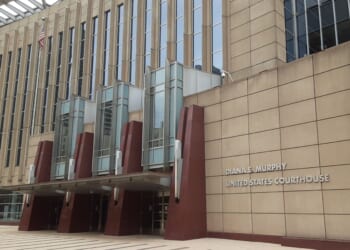
Last September, the U.S. Attorney’s Office in Minnesota charged Asha Farhan Hassan, age 28, with offering kickbacks of between $300 and $1,500 per child per month in a $14 million autism fraud scheme. In this investigation, prosecutors allege that every child tested for autism was diagnosed with it and enrolled in the fraudulent program. This brazen scheme, combined with the program’s explosive growth in just a few years, raised serious questions for Minnesota Legislative Auditor Judy Randall.
The Legislative Auditor’s subsequent review determined that DHS has had clear authority to act on kickbacks since the late 1990s but repeatedly claimed otherwise. A decades-old error in DHS administrative rules has been used as a convenient shield. As the OLA bluntly stated, DHS “has permitted the error to stand since 1995, limiting its authority to address kickbacks.”
Until 2025, when the Legislature defined kickbacks as a trigger for fraud investigations, regulators apparently believed it was permissible for program operators to offer cash payments to participants just for signing up? This new legislation allows DHS to “obtain monetary recovery from an individual or entity that has been improperly paid by the department” if they offer, give, or receive kickbacks. But most people with common sense would assume DHS already had the authority to at least stop paying for services tainted by kickbacks—and the OLA agrees.
The OLA responded: “We disagree that DHS’s assertion, that it did not have the authority to sanction MA (Medicaid) providers that solicit, receive, pay, or offer to pay kickbacks,” citing the same section of statute.
The OLA also correctly points out that because federal money is at risk, the state not only has the authority but the obligation to investigate kickbacks. “Regardless of the legislative changes in 2025,” the OLA states, “Minnesota has long authorized DHS to impose sanctions for kickbacks by citing specific federal Social Security Act provisions.” These include a provision to “impose sanctions for any reason” for which an individual or entity “could be excluded from participation if they engage in acts that would violate the federal anti-kickback statute.”
Why did DHS allow a 1995 “error” in interpreting the definition of fraud to blind itself to obvious, brazen crimes happening right under regulators’ noses? Taxpayers are being fleeced of up to $18,000 per child per year, with money kicked back to parents. But the real victims are the children whose parents trade their education for cash—and the children with autism who need legitimate services but can’t get them because, as is so often the case in Minnesota, the needy go without so the greedy can get rich.
Until the providers and the parents pay a price, the grift will just go on.
For additional information, please see:
Minnesota’s EIDBI Autism Program: Explosive Growth, Widespread Fraud, and a Coming Reckoning
by Matt Dean, March 13, 2026
Office of the Legislative Auditor, March 17, 2026