
Yesterday, Minnesota announced its state unemployment rate. From KWLM Radio,
State unemployment rate for January higher than the U.S. rate
The state rate stands at 4.4 percent. Somehow, while announcing a state unemployment rate increase, to higher the national average, when national unemployment for January (see below) fell, Trump is blamed,
The national economy has been slowing over the last year, with erratic tariffs and a radical shift in immigration policy taking a toll. No state has borne the brunt of these factors more directly than Minnesota, especially earlier in 2026.
That last sentence appears to be a reference to Operation Metro Surge, a connection which the Minneapolis Star Tribune makes directly,
[Employment Commissioner Matt] Varilek noted the gloomy January jobs picture aligned with the height of Operation Metro Surge. While ramped-up Immigration and Customs Enforcement (ICE) activity affected communities statewide, most happened in the Twin Cities metro, where DEED reported nearly 2,000 jobs lost in the month — a year-over-year drop Varilek said “is very unusual.”
Here’s the problem: the unemployment rate is estimated based on household surveys. We are to believe that illegal aliens skipping work while cowering in fear at home to avoid ICE are answering surveys from that same federal government?
Even so, if you have a job and are not showing up, you are not counted as unemployed. To be counted as unemployed, you have to not have a job and be actively looking for one.
More importantly, Minnesota has a significantly higher unemployment rate than its neighboring states,
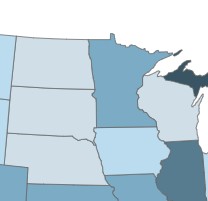
For those familiar with the region, Minnesota differs in only one significant aspect: politics.
You get what you vote for.
Meanwhile, the national employment numbers for March were announced today, From Fox 2 (Detroit),
US labor market rebounding as 178,000 jobs added in March, well above expectations.
The March report from the Bureau of Labor Statistics (BLS) can be read here. The unemployment rate came in at 4.3 percent. January numbers were revised up, February numbers were revised down.
My favorite sentence,
Federal government employment continued to decline in March (-18,000). Since reaching a peak in October 2024, federal government employment is down by 355,000, or 11.8 percent.
Digging into the numbers, state government employment was also down (local was up). Zerohedge noted,
More good news: government workers [at all levels] dropped again (-8K) in March, down for the 6th straight month, and 8 of the past 9.
BLS data continue to show year-on-year declines in the size of the foreign-born adult population and the number of foreign-born workers employed.