When the government negotiates with labor unions, it’s supposed to be doing so on the public’s behalf. After all, it’s negotiating contract terms for government workers whose salaries are paid by taxpayers. But for some reason, the city of Phoenix is intentionally keeping taxpayers in the dark about its union negotiations and refusing to release public records that would shine a light on the process.
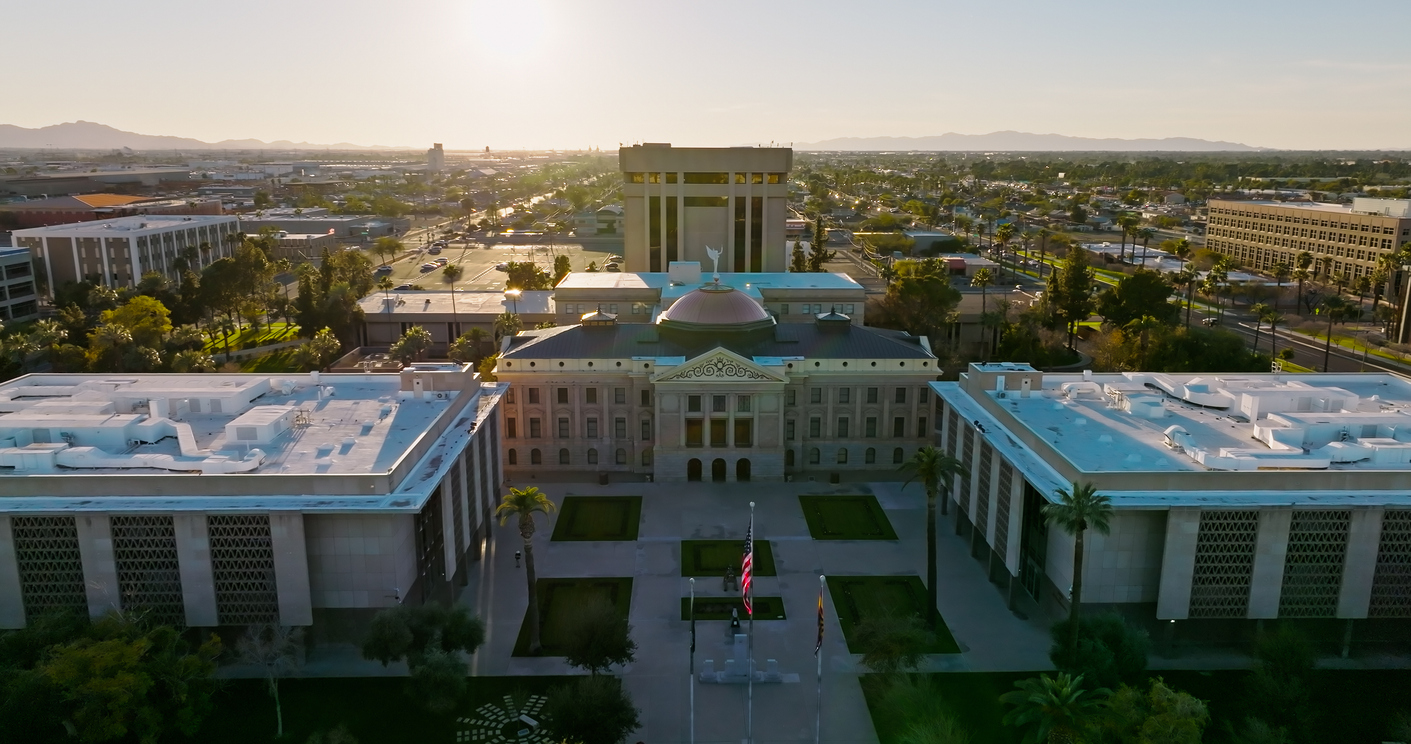
That’s a problem, and that’s why attorneys for the Goldwater Institute appeared at the Arizona Supreme Court today, this time to argue in favor of government transparency. Goldwater attorneys argued that Phoenix leaders are bound by Arizona’s Public Records Law and cannot hide documents from the public based only on speculation that releasing them may be problematic for the government.
“Self-interested speculation alone cannot be sufficient to justify withholding public records under the so-called ‘best interest of the state’ exception to public records disclosure,” Goldwater Staff Attorney Parker Jackson told the Court. “Arizona courts rightly scrutinize any purported justifications for the nondisclosure of public records because Arizona law strongly presumes in favor of disclosure.”
The case dates to 2022, when the Phoenix Law Enforcement Association and other public-sector unions refused to comply with the city code requiring them to submit draft contract proposals for public comment before beginning negotiations with the city. Phoenix leaders did nothing to hold the unions accountable and agreed to conduct the contract negotiations behind closed doors without public scrutiny or feedback.
When the Goldwater Institute requested records related to the negotiations, city leaders claimed that releasing them “would hinder the negotiations process” and that keeping them hidden was in the “best interests of the state.”
But city leaders never showed how disclosing the documents would harm the public—they claimed only that disclosing the documents “may result” in the “politicization” of union negotiations, even though those negotiations are inherently political.
The Goldwater Institute is asking the Arizona Supreme Court to clarify the scope of the “best interests” exception to the records law and to reiterate that any time the government claims it must withhold public records without express permission from the legislature, it must demonstrate a probability that specific, “material” harm would result. Courts cannot simply defer to the government but must instead carefully and independently examine the government’s rationale—a process called a “de novo” review.
As Jackson told the court: “The public records law exists to allow citizens to be informed about what their government is up to.”
This was the Goldwater Institute’s fourteenth time arguing before its home state’s highest court. Goldwater’s position is supported by the Phoenix-based nonprofit Poder in Action, which the city shut out of the negotiation process, and by the ACLU of Arizona, which participated in Monday’s oral argument.