How the DFL “trifecta” made Minnesota less affordable
One of the ways the DFL’s “historic” trifecta of 2023 hit Minnesotans in the pocket was by hiking car tab fees. This hike has generated some recent comment.
Yesterday, CBS News reported:
If you have a newer car, you may be in for some sticker shock when you renew your Minnesota license tabs. That’s because the formula for calculating fees has changed due to a 2023 bill.
If your car is less than five years old, you could even be seeing tab prices go up year over year.
…
The new formula means the average driver paid $178 in registration taxes this year — a 20% increase.
…
But the 2023 bill didn’t just change the state’s overall formula for calculating license tab fees; it also changed the way it calculates the depreciation of your vehicle.
…
The state calculates that your new car loses 5% of its value a year, so 10% over two years. The Kelley Blue Book estimates that over two years, the average new car loses 30% of its value.
On Tuesday, the Star Tribune put these fees into some context:
It’s difficult to compare tab fees across states. Some have flat fees, but many, like Minnesota, have a combination of different charges, some of which use sliding scales based on vehicle weight, age or other factors.
But one recent comparison of nine western states by the National Conference of State Legislatures found they range from $50 to over $500, putting Minnesota well into the higher range.
A calculator maintained by the Wisconsin Department of Transportation that compares driving-related taxes and fees for dozens of different vehicles in that state to Minnesota, Iowa, Illinois and Michigan, found Wisconsin typically had the lowest and Minnesota often the highest.
The 2023 “trifecta” session also hiked the gas tax, from 28.5 cents per gallon to 32.6 cents per gallon now. According to the Tax Foundation, Minnesota’s gas tax went from 26th highest in the country in 2021 to 22nd highest now.
With these hikes in fees and taxes on driving, the DFL made Minnesota less affordable than its neighbors.
A solution..?
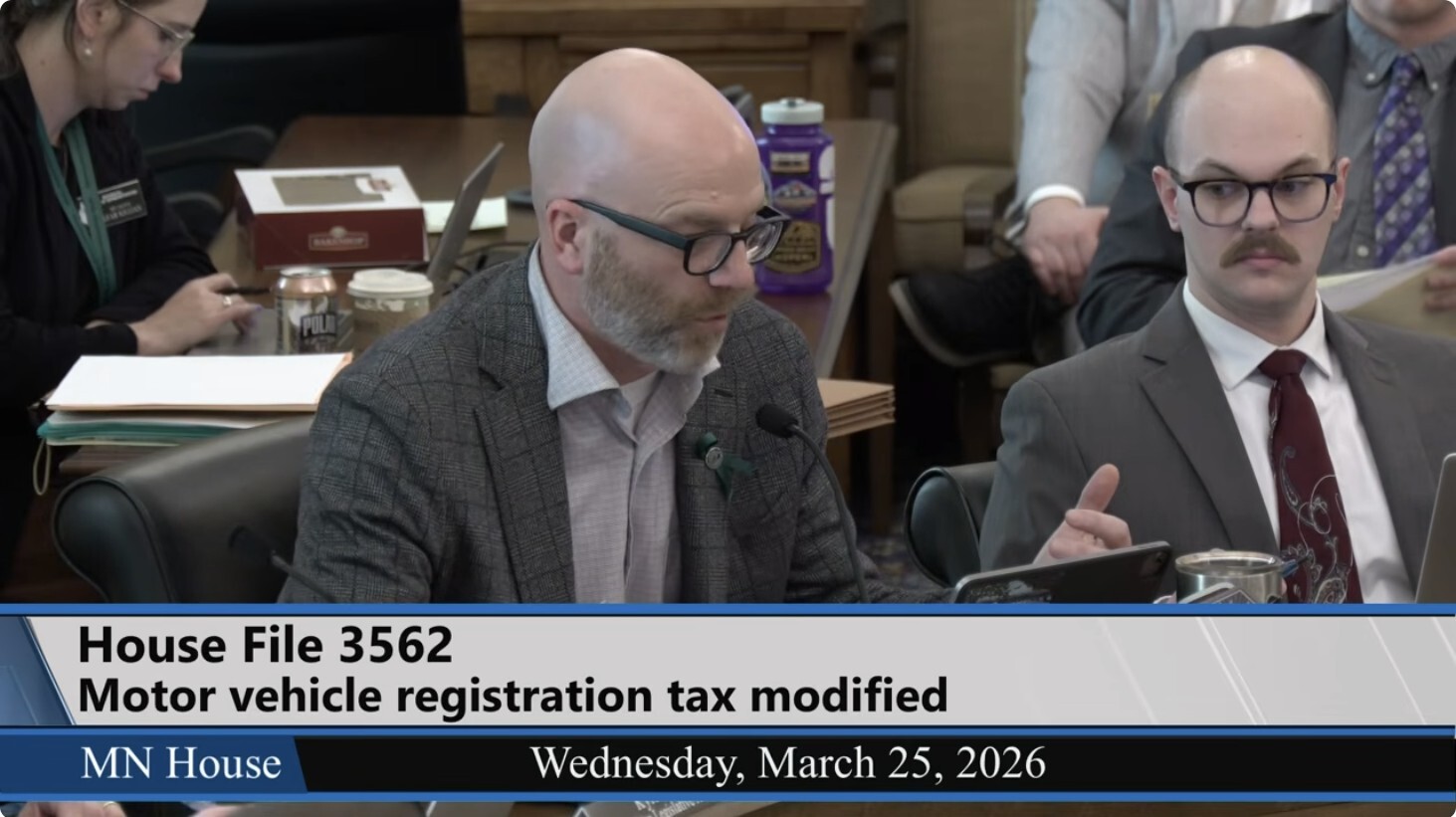
To help hard squeezed Minnesotans with affordability, Rep. Patti Anderson (R) offered HF 3562, a bill that would change the state’s tax calculation formula for vehicle purchases and registration.
“By increasing tab fees 22% and changing the depreciation schedule, we have made things incredibly unaffordable for people in Minnesota,” Rep. Anderson told the House Transportation Finance and Policy Committee yesterday. “This bill brings the depreciation schedule back to what it was. … If we are serious about making Minnesota affordable, this is something that we should be serious about doing.”
In addition to lowering the base rate from 1.575% to 1.285% of the manufacturer’s suggested retail price — or from 1.54% to 1.25% for vehicles registered in the state before Nov. 16, 2020 — the bill would also create a devaluation schedule that sets out declining portions of the base rate as the vehicle ages, effective for registration periods starting Jan. 1, 2027.
Sadly, as the Minnesota House reports, the bill “couldn’t get started in the House Transportation Finance and Policy Committee, failing on a tie vote;” every single Republican on the committee voted for the bill and every single DFLer voted against it, and, as the House and Committee are evenly balanced, that was enough to block its passage. “If you vote yes for this [bill], you’re cutting teacher’s pay, you’re cutting home health care pay,” Rep. Brad Tabke (DFL), co-chair of the committee, railed.
Minnesotans need real solutions to the affordability issues they face, not non-solutions like an expanded child care tax credits and new limits on grocery store price gouging, and corporate ownership of single-family homes. This bill would have been a step in that direction, and we hope it gets another chance.