Pollsters love a contradiction, and our new Florida poll seems to deliver one. Seventy-two percent of Floridians want the state to expand its power generation capacity. Sixty-two percent support teaching kids how to use artificial intelligence responsibly. And then, 60% think autonomous vehicles are unsafe. Fifty-five percent are alarmed about advanced medical devices being manufactured by foreign-linked companies. The temptation is to call this incoherent, the predictable muddle of a public that hasn’t thought carefully about any of it.
These numbers aren’t muddled. They reflect something consistent and, once you see it, obvious: Floridians are enthusiastic about technology they can steer and deeply uneasy about technology that steers them.
Start with the AI education findings. A majority views AI in education favorably, 54%, but support jumps eight points when the question shifts to teaching students how to use AI safely and responsibly. That gap is the whole story in miniature. Parents aren’t cheering for AI to wash over their children; they’re cheering for their children to get their hands on the wheel. There’s a meaningful difference between “AI in schools” as a passive condition and AI literacy as an active skill.
The energy numbers are even cleaner. Seventy-two percent support expanding Florida’s power generation capacity, one of the highest readings in the survey, and not a close call. It’s worth sitting with why. This is a question about Florida doing something, building something, for itself. Nobody is being subjected to anything. The state is acting. Voters like that, and they liked it by a three-to-one margin.
Data centers are trickier, with 52% in favor, 34% opposed and 14% unsure. The honest explanation for the soft support is probably not ideology but a lack of familiarity. Data centers are abstract. Most voters have no working model of what one is, what it produces, or why a state would want to attract them. The 14% who said they weren’t sure are reachable; the 34% in opposition probably includes a fair number who conflated “data center” with surveillance, or Silicon Valley excess.
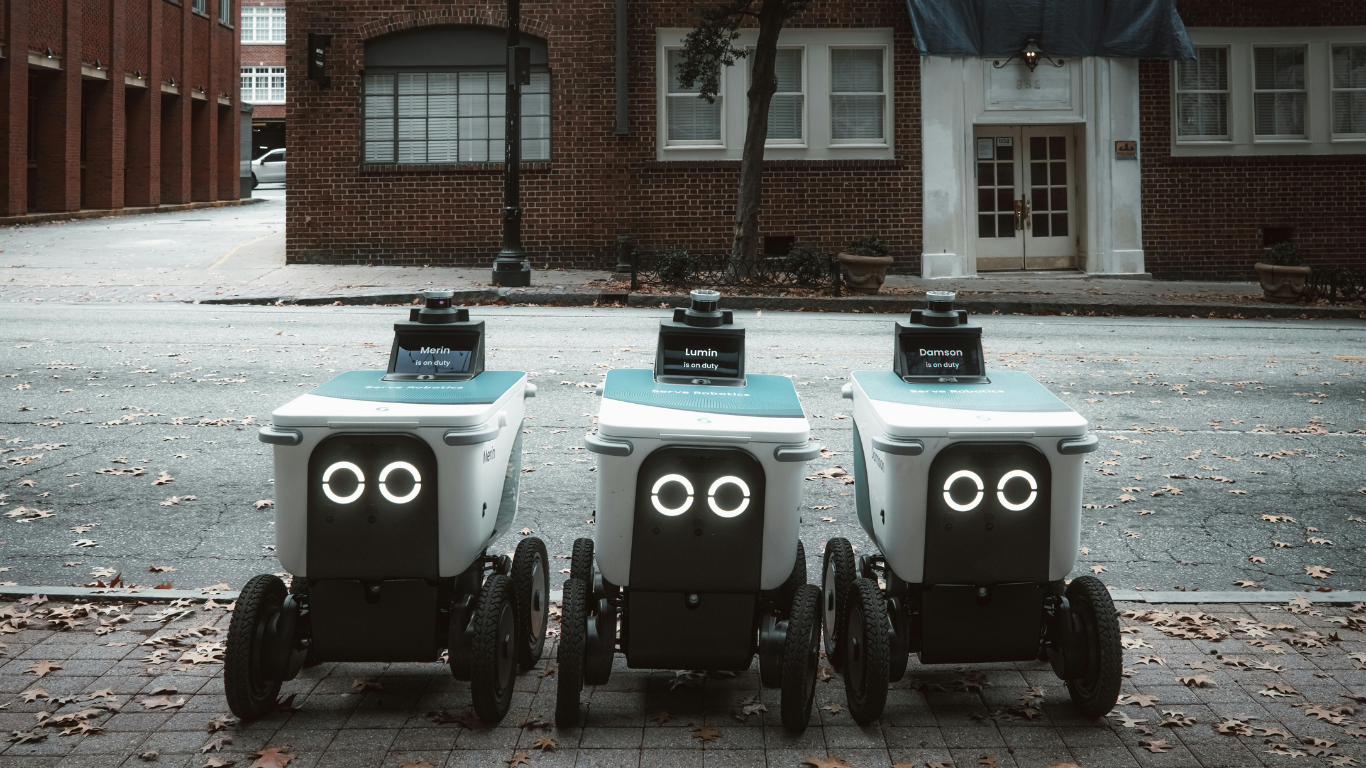
Then there are self-driving cars, where the agency thesis really earns its keep. Sixty percent of Floridians consider autonomous vehicles unsafe. I’d argue that the number has almost nothing to do with safety in the engineering sense, with crash statistics or sensor reliability or the particular state of Waymo’s lidar technology. The word doing the work in that question is “autonomous.” These are vehicles in which, by design, the human is not in control. The car decides. That is not a technical concern for most respondents. It is a structural one. They are being asked to surrender the wheel to a system they didn’t build, don’t understand and can’t override.
The medical device finding runs on the same anxiety, just applied internationally. Fifty-five percent are concerned about life-sustaining equipment being made by foreign-linked companies. This isn’t really about manufacturing quality, as American consumers don’t typically audit the provenance of their MRI machines. It’s about dependency. When the machine keeping you alive is answerable to a foreign government rather than to you or your doctor, you’ve lost something important.
So what should policymakers do with all this? Here’s what they shouldn’t do: treat the skeptical numbers as permission slips for restriction. The logic that says 60% distrust self-driving cars, therefore regulate them into oblivion; 55% worry about foreign devices, therefore nationalize the supply chain, gets the public’s actual message exactly backwards. Floridians aren’t asking to be insulated from technology. They’re asking to remain participants in it rather than subjects of it. Those are very different requests, and they imply very different policies.
The right response is a framework, not prohibition, and specifically the kind that works with market forces rather than against them. That means working with AI companies to give Floridians a clearer picture of how autonomous systems make decisions — not because regulators demand it — but because consumers who understand what they’re buying make better markets. It means genuine competition in AI and data so that “choice” isn’t just a word on a terms-of-service page nobody reads. Removing barriers to domestic investment is the honest answer to supply-chain dependency; that doesn’t turn Washington into the procurement office for every medical device company in the country. Accountability mechanisms(real ones, not the decorative kind) are needed that preserve the human ability to audit, override and correct algorithmic systems when they go wrong.
None of this is especially novel as policy. What’s notable is that Florida voters are already there intuitively. They haven’t read the libertarian literature on technology governance. They’ve just lived long enough to know that systems without accountability tend to work for the people who built them, not for everyone else.