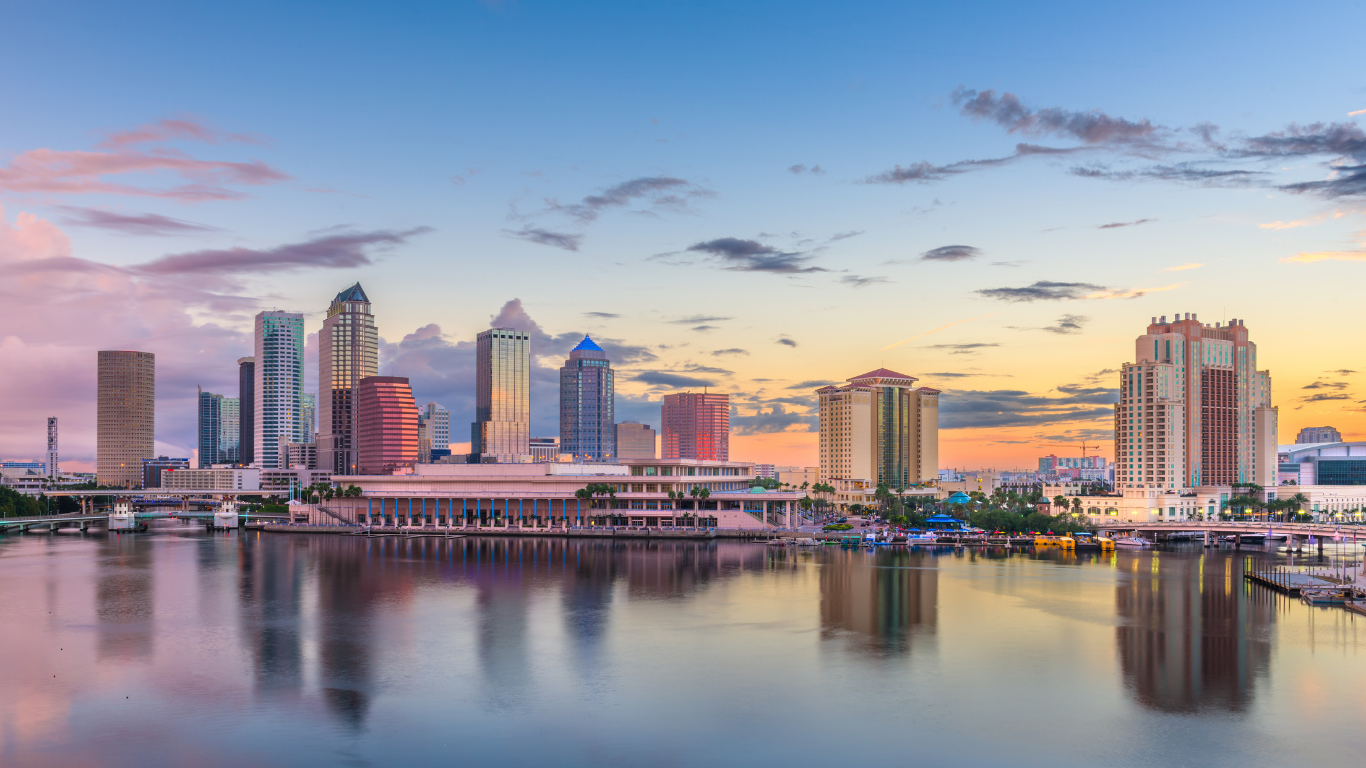
Of the thousands of events commemorating this year’s National School Choice Week, the wildest and most imaginative may be the one that just took place in Tampa. It seemed straight out of Dr. Seuss’s “If I Ran the Zoo.”
Called the Tampa School Choice Safari, the event was held at ZooTampa. And it attracted lots of Seuss-loving parents, eager to learn more about the array of K-12 options available for their children.
Yet, the thing that made the Tampa gathering so wild and imaginative wasn’t its location (though the zoo animals were a nice backdrop). It was the exotic learning options that one could find sprinkled among the booths and tables offering more traditional schooling fare.
Florida, you see, boasts a more robust — and more creative — K-12 education ecosystem than any other state in the country. And Florida enjoys this, in large part, because of the proliferation of flexible school-choice scholarships that give parents the freedom to direct how their children’s per-pupil dollars are spent.
More than 500,000 Florida students are currently enrolled in a K-12 scholarship program. And education choice has become so much a part of the Sunshine State’s culture that more than half (51 percent) of all Florida students now attend something other than their zoned public school.
Most of the Florida families opting for alternatives to zoned public schools choose comprehensive learning environments — such as private, charter, magnet, or faith-based schools. All of these sectors are flourishing in the Sunshine State. In fact, Florida is one of the few states in the country where Catholic school enrollment has been increasing steadily in recent years.
At the same time, a growing number of Florida families are choosing to curate a “customized” education for their children, drawing upon multiple education providers. Some of these providers offer specialty programs in subjects where they have expertise.
For example, the Florida Aquarium participated in the Tampa Safari to acquaint parents with its marine biology opportunities for scholarship students. WonderHere introduced Safari parents to its half-day and full-day programs, emphasizing play-based, project-driven learning opportunities. And the Urban Cottage Educational Collaborative showcased its highly personalized enrichment center, which was recently featured in a story about the “unbundling” of K-12 education published in The Economist.
Author Kerry McDonald believes “micro education” programs like these will become increasingly common as flexible scholarship programs spread across the country. Her recent book, “Joyful Learning: How to Find Freedom, Happiness, and Success Beyond Conventional Schooling,” highlights many innovative education enterprises, including several from Florida.
Interestingly, a growing number of Florida school districts are adapting to the “unbundling” of K-12 education. Some are now marketing “a la carte” courses to scholarship students who want to take an (often hard-to-find) Advanced Placement class or science lab course. This is a win-win. Scholarship students get the instruction they need; school districts get new revenues — sometimes from students with no previous public school experience.
All in all, the beauty of what’s happening in Florida is that parents are getting an opportunity to choose what works best for their children — whether that’s public or private, secular or faith-based, traditional or exotic, bundled or unbundled. This bodes well for Sunshine State students and for the future of Florida’s workforce.
As families across America continue to celebrate National School Choice Week, the Tampa School Choice Safari offers a glimpse of K-12 education’s future. For Florida’s K-12 education ecosystem is becoming as wild and imaginative as a Dr. Seuss classic. And to those of us in the Sunshine State, this is all truly glorious.