Set to go into effect Jan. 1, 2027, the new federal education tax-credit is a practical, market-oriented step toward making education more affordable for families at the household level.
By converting individual donations into scholarships, the program helps reduce out-of-pocket education expenses and gives families more direct control over how education dollars are used. Support follows the student, not the system, and it doesn’t expand government programs or bureaucracy.
For many K-12 students, this flexibility is what makes the policy meaningful. The funds generated through the tax credit can help pay for tutoring in reading, math, or other core subjects, as well as test preparation for standardized exams and college readiness assessments. Families can also use these scholarships for enrichment opportunities or advanced coursework.
The availability of scholarships for these services not only creates an opportunity to close learning gaps and strengthen academic performance, but also helps address disparities in out-of-school enrichment spending.
From a policy standpoint, the program strengthens affordability in a way that is both targeted and responsive to individual students in public and nonpublic school settings across Minnesota. Education is not one-size-fits-all, and this model reflects the belief that parents are in the best position to decide what their child needs to succeed — and should be empowered to act on that.
Polling shows that a majority of Minnesotans across the political spectrum support the state’s participation in the federal tax-credit program. Support is above 50 percent for every demographic group, reflecting broad recognition that the program helps families afford helpful educational services.
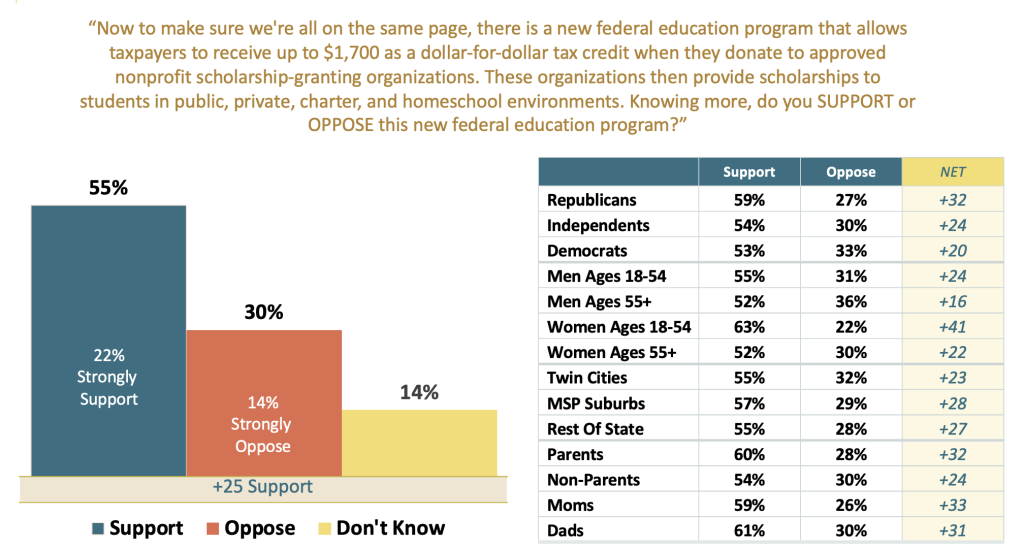
With this level of public backing, state leaders have a straightforward decision: participate in a program that expands opportunity, strengthens affordability, and keeps scholarship dollars here for Minnesota families and students, or opt out and send those resources to benefit students in other states.