FOR IMMEDIATE RELEASE
December 22, 2025
Birmingham, Alabama
Last week, President Trump signed an executive order directing the U.S. Attorney General to expedite completion of the process of rescheduling marijuana to Schedule III of the Controlled Substance Act (CSA). Reducing the schedule of marijuana would lessen the penalties if someone is convicted of illegal possession. Possession of a Schedule I drug is typically charged as a felony, while possession of a Schedule III drug is typically charged as a misdemeanor.
As a review, the US Drug Enforcement Administration uses five schedules to classify drugs. Schedule I drugs are defined as “drugs with no currently accepted medical use and a high potential for abuse.” Some examples of Schedule I drugs are heroin, LSD, ecstasy, and cannabis. Schedule III drugs that you might be familiar with are Tylenol with codeine, anabolic steroids, and testosterone. By signing an Executive Order to reschedule marijuana to Schedule III, President Trump has signaled his approved of both medicinal and recreational use of marijuana.
Despite rhetoric from drug use profiteers and advocates, marijuana is addictive. Approximately 2 million people aged 12 or older met the diagnostic criteria for a cannabis use disorder in 2020 alone. Cannabis use disorder is a higher risk for people who use marijuana before the age of 18 and marijuana accounts for nearly half of admissions into substance use treatment for youth between the ages of 12 to 17.
Marijuana use also impacts mental and physical problems, such as affecting the parts of the brain responsible for memory, learning, attention, decision-making, coordination, emotion, and reaction time, an increased risk of psychosis or schizophrenia in some users. The Food and Drug Administration (FDA) had already approved drugs containing cannabis or cannabis-derived compounds for certain medical conditions. However, a recent study from researchers at UCLA reviewed over 2,500 scientific papers focusing on using cannabis for medical purposes and found that, “Evidence is insufficient for the use of cannabis or cannabinoids for most medical indications.”
Despite the demonstrated lack of effectiveness, Alabama legalized medical marijuana in 2014 and expanded that legalization in 2021 (though the process has been mired in litigation). Last year, Alabama effectively legalized recreational use of certain cannabis products – including legalizing THC drinks to be sold alongside food and other drinks in grocery stores across the state. Many groups stood idly by or even encouraged this legalization of recreational drug use within our borders under the guise of increased regulation. API understands that governmental legalization of a product will never reduce the consumption of that product and stood with legislators seeking a full ban of recreational THC/marijuana use in Alabama. Regardless of intention, the result of the passage of HB445 is that products that were once illegal in Alabama are now legal and accessible – even in grocery stores. Note: the recent controversy over the ABC Board regulation would be moot if conservatives had stood together to ban the products outright.
While Alabama has been on a slow march toward recreational marijuana, other states are seeing the significant damage done to their citizens and families and are trying to walk back their legalization laws. Massachusetts is reconsidering the legalization of marijuana in their state after a surge of children being hospitalized due to marijuana. Unfortunately, this recent decision by President Trump will hasten and exacerbate the number of families negatively impacted by marijuana use.
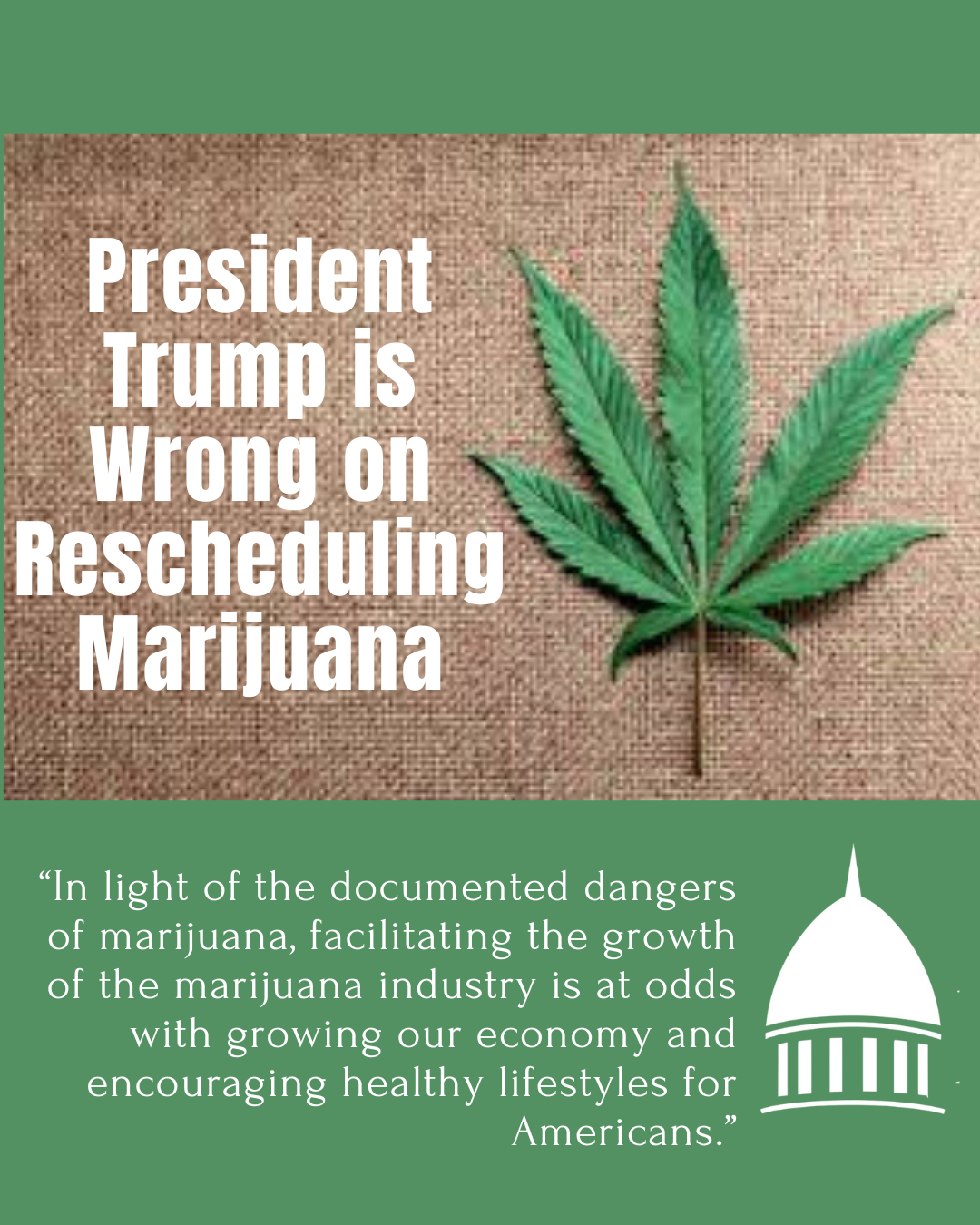
Alabama Senior Senator Tommy Tuberville and twenty other U.S. Senators sent a letter to President Trump asking him “to uphold marijuana’s status as a Schedule I drug.” They stated that rescheduling marijuana to a Schedule III drug would undermine his strong efforts to Make America Great Again. The letter concluded by saying: “In light of the documented dangers of marijuana, facilitating the growth of the marijuana industry is at odds with growing our economy and encouraging healthy lifestyles for Americans. We urge you to continue your strong leadership of our country and our economy, and to turn away from marijuana rescheduling.”
API agrees.
FOR MORE INFORMATION, contact:
Stephanie Smith President & CEO | Alabama Policy Institute
205-870-9900 or stephanies@alabamapolicy.org