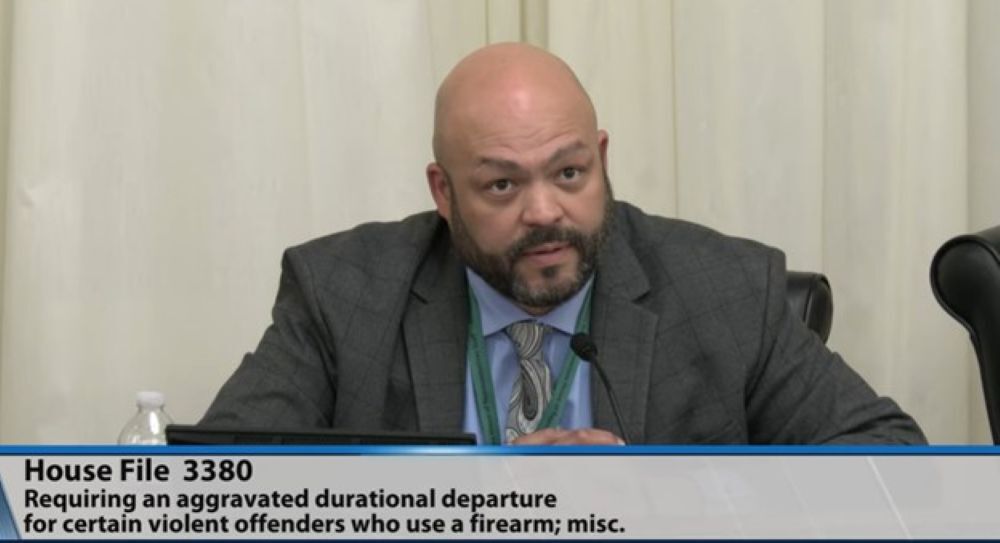
The Minnesota House Public Safety Committee held its first committee hearing of the 2026 legislative session yesterday. Rep. Walter Hudson (R) introduced HF-3380, which seeks to strengthen sentencing involving repeat violent offenders who use firearms in commission of their crimes. This should not be considered controversial legislation, but in the Minnesota Legislature even commonsense measures run into opposition.
Center of the American Experiment’s Public Safety Policy Fellow David Zimmer testified in support of the bill, noting that its strength was in its exclusive focus on repeat violent offenders using firearms. But this focus apparently wasn’t acceptable to DFL members of the committee.
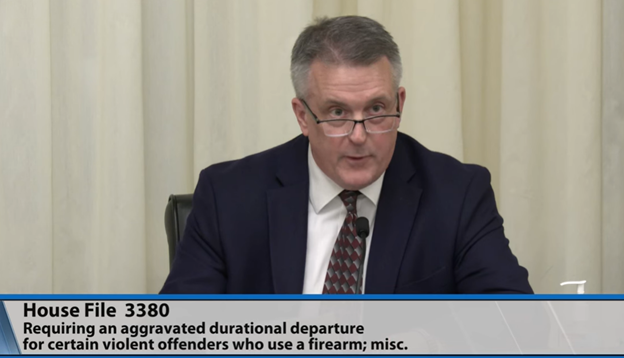
Following testimony, several DFL members questioned Rep. Hudson’s rationale for introducing the legislation, as if concerns over repeat offenders receiving reduced sentences in Minnesota were not justified.
Rep. Dave Pinto (D) asked, “What problem are you trying to fix?”
Rep. Hudson responded,
“We have a problem with activist judges giving reduced sentences, based on irrelevant criteria — like their personal story, and what they look like, and their skin color, and where they grew up — and not taking into account the conduct…”
Following the committee member’s questions, Chair Paul Novotny (R) announced that the DFL had introduced an amendment to the bill, and that as the Chair he had reviewed the amendment and found it to be “out of order.” This decision led several DFL members to begin objecting and attempting to speak over Chair Novotny. Chair Novotny dismissed the objections, laid the bill over (which keeps it alive for further debate and action), and adjourned the meeting.
Following the hearing it became evident that the DFL never intended to legitimately discuss or consider Rep. Hudson’s bill. The amendment the DFL had introduced was a “Delete All” amendment, which sought to completely strike Rep. Hudson’s repeat armed and violent offender sentencing language and replace it with a distinctly separate 20 page assault weapons ban.
This disingenuous effort by the DFL represented politics at its worst — a fitting reminder of where Minnesota finds itself in 2026.