State Legislative Auditors want to know why basic fraud controls were shut down
The Minnesota Legislative Auditor (OLA) released a shocking new report that examines mostly ignored controls over taxpayer money handed out by the state’s Behavioral Health Administration. This bureau helps Minnesotans struggling with addiction and mental illness. The report, released on January 6, covers a 29-month period from July 1, 2022, to Dec. 31, 2024. The team audited $425 million in grants going out the door to private vendors, including one that hired a state employee who days earlier handed the nonprofit a check for $673,000. Audits produced by the OLA are generally low-key reports that avoid hyperbole or finger-pointing. This was not that kind of report.
The audit found that “The Behavioral Health Administration did not comply with most requirements tested and did not have adequate internal controls over grant funds.” This is not an isolated problem. A culture has developed in the Walz administration that prioritizes getting money out the door to desired groups, while punishing those who get in the way.
Governor Walz withdrew from the 2026 gubernatorial race amid a massive fraud scandal across multiple agencies and programs. Federal attorneys now believe up to half of the $18 billion they are reviewing could have been stolen. Walz must now face a reckoning his temperament seems particularly ill equipped to accept, just as his administration’s chickens have come home to roost.
Public program fraudsters have targeted Minnesota for more than a decade because generous benefits combine with weak program integrity controls to make public money easy pickings for crooks. The big-hearted do-gooders who created these policies in the state of Lake Wobegon likely saw looking away from fraud as an affordable price to pay for the benefits of being generous. After all, addiction and mental health numbers are through the roof, so shouldn’t the priority be on getting money out the door rather than worrying about making down-on-their-luck folks jump through hoops and fill out forms?
Not Just Looking the Other Way
A review of other Walz entitlement initiatives shows that the fraud taking place in Minnesota is not just a problem with eligibility determination checks or overly-empathetic regulators wanting to cut a break to enrollees. Perhaps that is the historical context, but since the pandemic, social service program dollars have become sacrosanct even if the budget explodes and there are more red flags than a Chinese New Year parade.
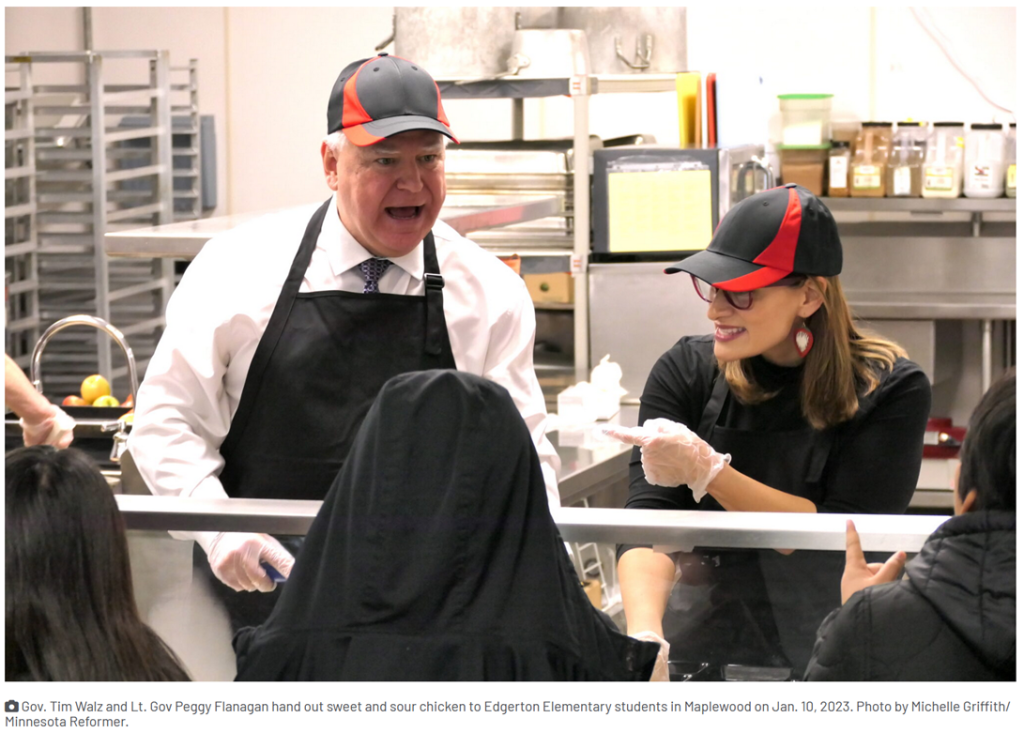
In a January 10, 2024, media event at Edgerton Grade School in Maplewood, MN, Mr. Walz promoted his “free” school lunch program. He is very proud of the program which is arguably his most effective political victory. But his new free school lunch program was 20% over budget and running out of money. Walz characterized the challenge as “a good problem to have.” He went on to mock critics of the measure who said rich people should pay for their kids’ lunch.
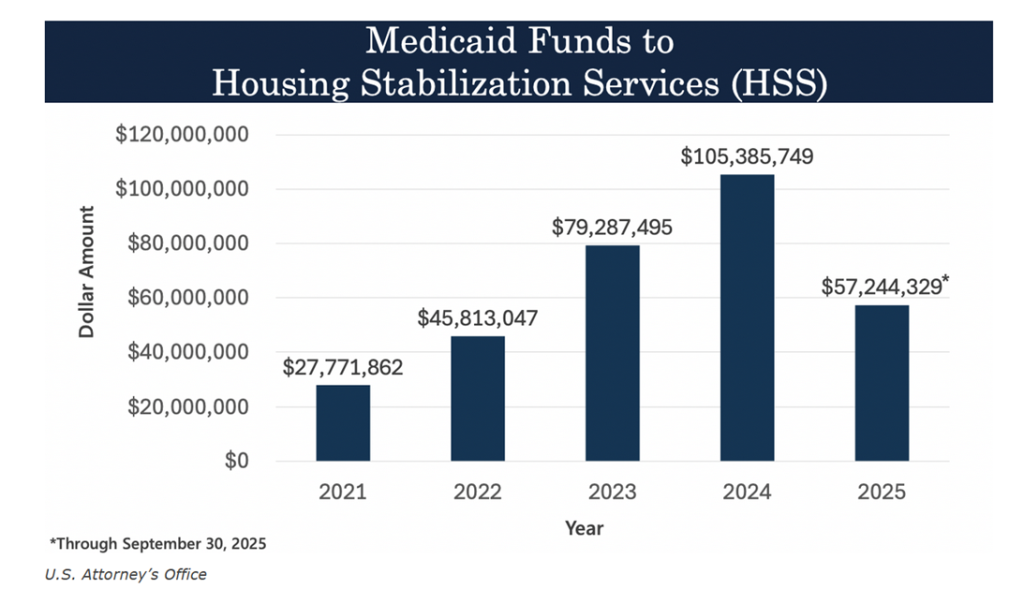
Fraud regulators see spikes in use and blown budgets as a warning. This administration sees it as validation. The Minnesota Housing Stabilization Services grants go out to nonprofits to help keep a roof over the heads of at-risk Minnesotans with disabilities. The Medicaid dollars flowing into Minnesota for this program exploded in just a few years, going from $28 million in 2021 to $105 million in 2024. Some whistleblowers alerted people in the program that the services billed on their behalf were never performed. None of them reported this as a “good problem to have,” but it’s a familiar narrative when looking at the Walz Administration’s experience with social service program dollars.
Minnesota’s $250 million Feeding Our Future fraud looted taxpayer money through the Department of Education. Millions of lunches were reimbursed, despite almost every penny being stolen and spent on personal luxury items, and perhaps millions more sent to terror groups like Al-Shabaab.
Bogus invoices with randomly generated names and ages of children were delivered to and paid by state officials despite unbelievable numbers of kids supposedly being fed. In person checks to feeding sites were cancelled for the investigators who were working from home out of an abundance of caution during the coronavirus pandemic.
Through federal prosecution, dozens of fraudsters are going to prison, but some of these same crooks went to the Minnesota Attorney General complaining that the federal prosecutors were targeting them because of their Somali heritage. They obviously knew they were participating in a scam but felt safe with a demand to call off an investigation in a meeting with Minnesota’s top law enforcement officer. They even offered campaign donations. Attorney General Ellison was unaware someone in the group surreptitiously recorded the meeting, but to his credit recognized the impropriety of discussing campaign donations in the same meeting.
Hiding Fraud by Making It Untraceable
In 2023, Walz signed a bill to provide taxpayer-funded MNCare health insurance to illegal aliens. In the first three months of the program, 17,000 signed up, essentially swamping the entire two-year budget for the program. Enrollees did not need a social security number or an address or anything other than an intent to reside in the state.
In the November 7, 2024, bulletin titled “Expanding MinnesotaCare Eligibility to Include Undocumented Individuals,” the Minnesota Department of Human Services stated: “When an enrollee who has previously indicated that they are a U.S. citizen or lawfully present non-citizen corrects their information to indicate that they are not considered lawfully present, the new attested information is not subject to verification.” This essentially gives a free pass to those who defraud the government to get Medicaid.
Importantly, the guidance charts a clear path to defraud the state once again. “An individual who reports having no income is not required to provide verification or an explanation, unless electronic sources or other information the agency has indicate there is inconsistent information.” The message is clear. Attest that you make less than 200% of the federal poverty guideline. Attest that you have no social security number. Attest you are not lawfully present but have no address. You “shall” receive MNCare without further review unless there is a discrepancy (which is impossible unless you provide more information).
Nick Shirley and the Last Straw
YouTuber Nick Shirley, with a viral iPhone video viewed more than 139 million times on X, exposed to the world exactly how easy it is to steal from the state of Minnesota. In a 40-minute tour of daycare centers, Shirley tried to find the hundreds of children whose daycare tuition was being paid millions for by taxpayers. He looked and looked, but the kids were nowhere to be found. The viewer is left with the conclusion that they (like the kids whose lunch money was stolen through Feeding Our Future) exist only on paper for the purpose of defrauding the state. This is not new.
In 2019, the Minnesota Senate held hearings on massive daycare fraud allegations by whistleblowers within the Walz administration. This followed sensational reports that claimed “up to $100 million” in taxpayer-funded child care cash was packed in declared carry-on luggage and flown to foreign countries known to be controlled by foreign terror networks.
Scott Stillman, a former FBI investigator, worked for the DHS to find fraud. When Stillman found systemic fraud within what turned out to be Somali refugee-owned daycare facilities, and transfer of funds through foreign travel, he reported his findings. This met with immediate push-back from his boss, Carolyn Ham, to the extent that it created an unworkable environment for Stillman, who left. Ham, rather than investigating the claims, spent $90,000 investigating Stillman and his colleagues with an outside firm.
Investigators punished for finding fraud
A 2019 Legislative Auditor special review criticized the handling of Stillman and other whistleblowers. It noted that Ham “did not meet with them,” instead consulting other OIG units, fostering “a sense of alienation or distrust within the office—a stark contrast to her predecessor.” The OLA report confirmed pervasive fraud but could not quantify terrorist links. However, it referenced Minnesota arrests for Al-Shabaab and ISIS support, as well as a Financial Action Task Force report on “emerging terrorist financing risks” via alternative remittance methods in conflict zones like Somalia.
Ham was placed on paid leave in March 2019 amid complaints, reassigned later that year, and cleared of wrongdoing in a DHS internal probe by December 2019—with no discipline imposed.
Many who in 2019 questioned the reports of millions of state taxpayer dollars being sent to day care facilities with nonexistent children now believe the claims should be investigated. The Feeding Our Future fraud proved that there was no outer limit to the brazenness of organized crime networks set up to defraud taxpayers.
Many of these organized crime networks appear to be operating within the tight-knit Somali immigrant community in Minnesota. Like other immigrant groups who came to America before them, their reliance on each other for services because of language and cultural differences creates an opportunity for organized crime. Targeting the Somali community for prosecution of organized crime is a breach of law and ethics. However, not investigating crimes because Somalis are involved is perhaps more unfair to the community, as it undermines public trust in both the state and its 100,000 Somalis.
The 2019 OLA special report on childcare fraud was authored by Jim Nobles. Nobles bemoaned the fact that this report was prevented from getting a legislative hearing because committee chairs barred the OLA from testifying on it—they had been instructed not to give OLA reports about fraud any public hearings. More troubling is the fact that the reason given was to protect an important constituency. “They (DFL committee chairs) felt that OLA reports were subjecting human service programs to too much criticism, particularly programs administered by Somali community organizations.”
Nobles retired in 2021 after 38 years as the state’s Legislative Auditor. Both he and his successor, Judy Randall did their jobs in warning the state about the fraud problem. In a recent editorial, Nobles uncharacteristically let his anger show through.
“All the state needed was to implement standard financial controls and oversight.. Why the Walz administration did not do that is still a mystery, and it is disturbing.”