U.S. average gas price drops below $4 a gallon
The national average for gasoline slipped under $4 on Tuesday, AAA data showed, as oil prices fell amid signs of progress in Iran peace talks.
The full story
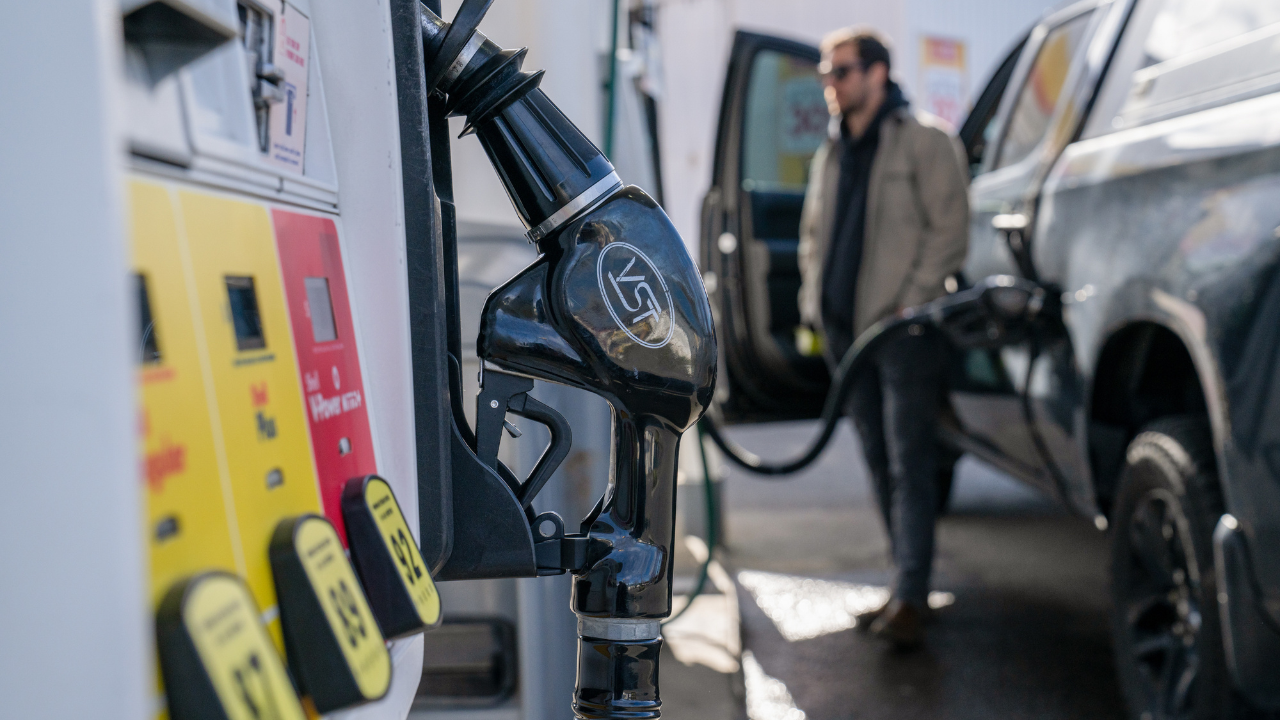
Here is the full story. The national average price of gasoline fell below $4 a gallon on Tuesday, according to AAA. Outlets put Tuesday's figure at $3.97 and $3.98 a gallon. That was about 3 cents lower than Monday's report and the first time under $4 since July. Prices have fallen about 17 cents a gallon over the past week and roughly 39 cents over the past month, AAA figures show. GasBuddy, which tracks prices separately, had the national average dipping under $4 a few days earlier, at $3.961 on Nov. 8. GasBuddy called that the first reading below $4 since Aug. 10.
The slide in pump prices follows a steep drop in crude oil. Brent crude futures briefly fell below $90 a barrel on Tuesday morning for the first time since August. That came after a 13% plunge last week, the steepest one-week decline since the pandemic shutdown in April 2020. On Nov. 9, Brent closed at $92.57 a barrel, down 5.9% on the day. U.S. light sweet crude settled at $86.85, down 4.4%. Both benchmarks have fallen about 19% to 23% since Oct. 30. The decline in energy prices helped spark a broad stock rally on Nov. 9. The Dow Jones Industrial Average rose 1,104 points to 52,390, and all 11 sectors of the S&P 500 finished higher.
The immediate trigger was a signal from President Trump that new attacks on Iran were not coming soon. He said that as long as negotiations continue, it is "highly unlikely" the U.S. will resume strikes. On Monday he said the Iran war "is effectively over" militarily, as his administration meets with mediators over the country's nuclear program. TheStreet cited an Al Arabiya report that the administration was prepared to let Iran keep enriching uranium to 3.67%, with Iran supposedly agreeing to that limit. The New York Post reported that last week's Democratic midterm wins also pushed oil futures lower, because traders expect pressure on the administration to reach a deal soon. Skirmishes were still reported around the Persian Gulf and the Strait of Hormuz on Nov. 9. Before the U.S. and Israel attacked Iran in February, as much as 20% of the world's crude passed through the strait.
Seasonal forces are adding to the decline. Refiners have switched to winter blends of gasoline, which usually cost slightly less than summer blends. Fewer people drive in colder weather, so demand for fuel drops. Airlines, truckers, railroads and the fall harvest keep demand for jet fuel and diesel steadier. But refiners still produce gasoline alongside those fuels, which tends to push gas prices down sharply in fall and early winter. AAA has said gas prices may fall another 10 to 30 cents a gallon over the winter months.
Gas has been expensive for much of the year because the war disrupted oil flows from the Middle East and tightened supplies for refiners. Energy Information Administration data show prices peaked at $4.50 a gallon on May 11, fell to $3.77 on July 6, then climbed back to $4.47 on Sept. 21. Even after the latest drop, gasoline is still about 30% higher than before the Feb. 28 strikes and roughly 40% higher than at the start of the year. Diesel, used by heavy trucks and farm equipment, remains high at $6.16 a gallon.
What drivers pay depends heavily on where they live. North Carolina had the lowest statewide average on Nov. 9 at $3.223 a gallon, according to GasBuddy, down about 20% from a month earlier. California had the highest at $5.681, down 10% in a month and below its Oct. 1 peak of $6.396.
Energy costs remained a major driver of inflation in October. The Bureau of Labor Statistics reported Tuesday that gasoline rose 1% for the month, a much slower pace than September's 9.1% jump and August's 3.9%. Gasoline was up 37.4% over the past 12 months. Fuel oil, used to heat homes, posted one of the largest monthly increases. Food prices rose 0.5% in October, and airfares were up 0.4% for the month and about 27.8% over the year.
Joe Adamski, managing director of the supply chain consultancy ProcureAbility, said gas could stay below $4 until spring if markets keep expecting negotiations to continue. "Current forecasts show a potential floor of $3.60 to $3.65, so there is still some room to come down," he told the New York Post. He added that gas station markups are above normal. "But any breakdown in peace talks or another attack on Gulf oil supplies could reverse any gains within days," he said.
Reported by
Get this email every day
Want the day's top story in your inbox every morning? Sign up below to get this email daily.
Other news / Full articles
 Nvidia shares fall after CEO Jensen Huang admits affair with suspected Chinese spy
 Nvidia board hires former prosecutor Joon Kim to investigate Jensen Huang affair
 Nvidia's Jensen Huang faces probes after admitting affair with suspected Chinese spy
 Anthropic sets $70 to $78 IPO price range, targeting up to $1.4 trillion valuation
 US consumer prices rose 0.4% in October, more than economists expected