People gradually get fed up with the Third-World style “progressive” delusions . . . . Perhaps the quiet changes already have begun in Colorado.
By Rob Natelson
This article first appeared in Complete Colorado on April 13, 2026.
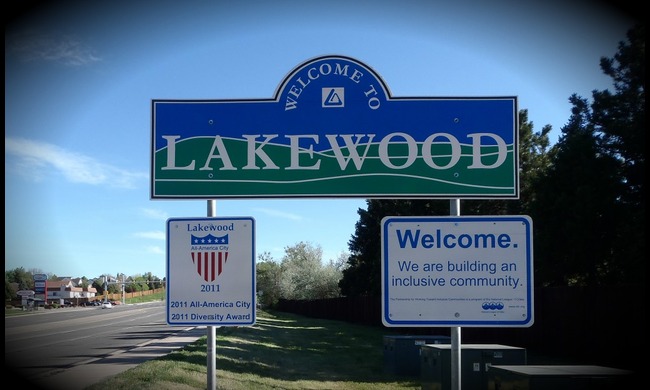
On April 7, voters in Lakewood crushed four “densification” ordinances by 63-37 percent majorities.
The civic-minded people who led the opposition to the ordinances in Colorado’s fifth largest city were not all, or even mostly, political conservatives. Yet the results represent a victory for conservative values.
This article reviews the underlying issues in the Lakewood referendum and explains why it may be a harbinger of things to come.
Densification and affordability
Lakewood’s proposed ordinances would have opened districts now zoned “single-family residential” to multi-family use. This commonly is called “up-zoning”—although when I served as a municipal attorney many years ago, we called it “down zoning.”
Up-zoning is now part of a national movement, driven mostly by the political Left, but also supported by some mistaken libertarians. The professed goal is to make housing more affordable by sweeping away single-family zones and piling people on top of each other. Colorado, like other states, has enacted legislation somewhat promoting the cause, but the Lakewood ordinances would have gone much further.
Densification measures are similar to other “progressive” proposals in this respect: They purport to cure problems that “progressives” themselves created or aggravated—and to do so by shifting burdens onto innocent people.
Gun control is a good analogy. Many areas of the country suffer from crime waves due to lax law enforcement and social programs that shatter families and encourage dependence. But rather than change the policies that caused the problems, “progressives” promote gun control to shift the onus onto innocent gun owners.
Similarly, “progressives” bear much of the blame for high home prices. Unrestrained federal deficit spending has pushed prices upward. Excessive regulations raise the cost of construction. Arbitrary “urban growth boundaries” around American cities (including the Denver metropolitan area) further limit construction and inflate prices.
But instead of revisiting these failed policies, “progressives” try to shift the burden to innocent people who live in single-family zones.
Densification is like gun control in another way, too: It doesn’t work. Densification doesn’t lower housing prices for most people and may actually lead to price hikes. Dense cities can be expensive cities.
What libertarians get wrong
Densification advocates have managed to enlist some libertarians and free-market think tanks. Libertarians are (with reason) skeptical of excessive zoning schemes, and some see up-zoning as a way to weaken them. They also see up-zoning as supporting property rights: After all, if Brenda owns a present possessory interest in fee simple absolute, doesn’t that give Brenda the right to use her land as she wishes?
However, this view rests on an inaccurate understanding of property rights. Property rights do not arise because government chooses to define them. In the real world, property rights arise from the interaction of law, custom, investment, expectancies, and reliance.
Single-family zones offer a good example. When a person purchases a house in an established single-family zone, the zoning is baked into the price he pays. What he pays for is not just a lot and building, but a particular quality of life. In addition, once the house becomes his home, his investment includes all the non-financial connections one has with one’s home. Scholars sometimes label these connections “special value” to distinguish them from the financial values reflected in the market.
Up-zoning disrupts all that. A quiet residential neighborhood becomes noisier. Traffic increases. Crime and litter may increase. Street frontage becomes a parking lot. Views are obstructed. The entire quality of life changes.
Some libertarians argue that single-family zones are not necessary because people can enter into protective covenants to achieve the same result. That may be a good argument against initial zoning. But it is a poor argument once a zoning scheme is established. Zoning induces people to buy without insisting on covenants. And once some lots in a subdivision are sold, imposition of covenants becomes (for several reasons too complicated to go into here) almost impossible.
So the abstract merits of zoning are not really relevant to ordinances such as those repudiated in Lakewood. What is relevant is that established single-family zoning creates de facto property rights, and destroying single-family zoning after people have relied on it destroys property rights.
The Lakewood vote
The results in Lakewood are remarkable for several reasons.
First: The densification ordinances did not go to the ballot automatically. Opponents had to organize a petition campaign to put them on the ballot. Opponents were not experienced at grass-roots organizing, and city officials did not make it easy for them. For example, the up-zoning plan originally was a single unit, but city officials divided it into four separate ordinances, reportedly to make petitioning more difficult.
Yet densification opponents succeeded in forcing a referendum.
Second: In recent years, Lakewood officials have been authorizing urban-style apartment construction (multi-story, narrow set-backs) in what was once a suburban community. Apartment renters tend to be more liberal than homeowners, and, of course, they can be susceptible to the claim that more density will make it easier for them to buy a home.
Third: The pro-densification campaign was supported heavily by left-leading individuals and organizations. Among the individuals were the current and immediate past local members of Congress, the city mayor and most of the city council, all three county commissioners, and several state legislators and legislative candidates. Among the organizations were the ACLU, the AARP, and a range of conservation and environmental groups.
Fourth: Densification advocates portrayed the referendum as “left vs. right”—that is, if you leaned left (as most Lakewood voters seem to do), you should support the up-zoning ordinances. In addition to gathering endorsements from leading “progressive” officeholders, they employed leftist buzz-words like “environment,” “sustainability,” and “livability.” They also accused opponents of “using MAGA-style lies.”
Fifth: The pro-densification people weren’t much constrained by the truth. Their principal flyer claimed the ordinances protect “our environment and our neighborhoods,” when up-zoning actually alters neighborhoods. They claimed that opponents—who were about as much grass-roots as you can imagine—were “special interests” funded by “dark money.”
The leaders of the campaign against the densification ordinances were not all, or even primarily, conservatives. Yet they were fighting for conservative values: culture, stability, gradual change, and protection of property rights.
By contrast, densification advocates were overwhelmingly people of the Left who portrayed the contest as one of Left (good) vs. Right (bad).
But they got clobbered.
The Implications
Colorado’s violent lurch to the portside over the previous fifteen years has had many conservatives wondering if they can ever recover the state’s prior pro-freedom and socially moderate political climate. Republicans wonder if they can ever win statewide elections again.
But there is one unchangeable political rule: Politics always changes. One day, an impregnable wall divides the city of Berlin. The next day it is gone. The shock may seem sudden, but it generally arises from changes that have proceeded quietly for some time.
Several developments caused Colorado’s lurch: The “blueprint” effectuated by four wealthy “progressives.” Dislike for President Trump, even among many conservatives and moderates. Sudden and massive in-migration by young, socially-liberal Lefties.
But these developments are all transitory: Activist billionaires get old and tired, or are supplanted by others. Presidents eventually leave office. Young, socially-liberal Lefties get married, have children, buy homes, become older and more experienced, and start to vote Republican. And people gradually get fed up with the Third-World style “progressive” delusions that endlessly raise taxes while fostering crime, homelessness, and social decay.
Perhaps the quiet changes already have begun in Colorado. One indication of change was the success of Protect Kids Colorado in qualifying three conservative initiatives for the ballot through a petition campaign staffed almost entirely by volunteers. The overwhelming anti-density vote in Lakewood may be another.
* * *
Robert G. Natelson, a former constitutional law professor, is Senior Fellow in Constitutional Jurisprudence at Independence Institute. He authored “The Original Constitution” (4th ed., 2025) and contributed to the Heritage Foundation’s “Heritage Guide to the Constitution.” However, for 30 years prior to turning to constitutional law, he practiced, taught, and wrote widely on property law, and produced two major legal treatises on the subject.