National Teacher Appreciation Week is a time to recognize the commitment and impact of educators across the country. But beyond the celebratory headlines (guilty!), new survey data points to a more complicated picture inside America’s classrooms. Teachers in public schools and private schools are reporting very different levels of confidence in whether their students are making meaningful academic progress. This should prompt a deeper conversation about how our public education system is structured and whether current policies are supporting both teachers and students.
Conducted by Morning Consult on behalf of EdChoice, the April poll surveyed more than 1,000 teachers across traditional public, charter, and private schools. Among private school teachers, 51 percent said their students are progressing “very well” academically this year, compared to just 29 percent of district school teachers.
The gap is not only large but growing. When the same question was asked in September 2025, 35 percent of private school teachers and 26 percent of district school teachers reported strong confidence in student progress (which is understandable given the survey was administered at the beginning of the school year). Since then, district teacher sentiment has only improved slightly — from 26 percent to 29 percent — while private school teachers’ confidence has jumped more sharply.
How teachers feel their students are progressing, April 2026 vs. September 2025
The scale of the perception gap raises questions about what is impacting teachers’ viewpoints of student learning. Private schools often provide teachers with greater autonomy over curriculum and discipline, and are typically more directly accountable to families (not just bureaucracies). These factors can influence both the classroom environment and how teachers perceive student progress.
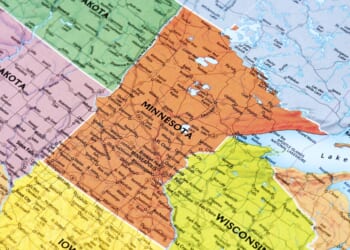
There is also a governance difference. Public school systems are layered with a lot of administrative layers before classroom-level decisions are made. In addition, there are multiple levels of bureaucracy involved with the Minnesota Department of Education and state mandates.
Several policy reforms already in place in other states are worth policymakers exploring to better support teachers:
Consider strengthening school-level autonomy within public schools through waiver-based governance models.
Some states already allow districts to bypass certain regulatory requirements in exchange for performance accountability. For example, states participating in the federal Ed-Flex program, including Iowa, North Dakota, Wisconsin, Texas, Georgia, Indiana, and Colorado, can waive certain state and federal requirements at the district or school level to encourage local innovation and reform. States like Colorado and Massachusetts have used their waivers to implement “innovation school” models, which allow individual public schools to waive certain district rules in exchange for “performance commitments,” or accountability for student outcomes.
More recently, Iowa became the first state to receive approval for a Returning Education to the States waiver, which expands the state’s flexibility over federal education funding. The waiver’s flexibility is expected to reduce compliance costs, “allowing nearly $8 million to be redirected from bureaucratic red tape to the classroom over four years. State education leaders will use the redirected funds and the greater flexibility they afford to expand support for evidence-based literacy training, strengthening their teacher pipeline, and narrowing achievement gaps.”
Consider targeted mandate relief at the district and school level.
Minnesota legislators have proposed legislation that would allow school boards to opt out of certain new state mandates through formal resolution. Reducing top-down requirements would not only provide mandate relief but restore flexibility in areas like discipline policy, where rigid, one-size-fits-all requirements aren’t beneficial.
Consider differentiated compensation systems.
Several states and districts have experimented with differentiated compensation systems. The Dallas school district redesigned its compensation structure to incorporate performance-based metrics — and student achievement improved. Multiple studies on aligning compensation with effectiveness have found statistically significant positive results on student test scores. More broadly, states such as Tennessee and South Carolina have “career ladder” systems that reward teachers for effectiveness and for taking on additional responsibilities or serving in high-need schools.