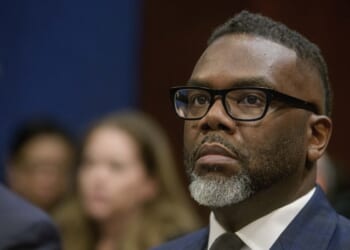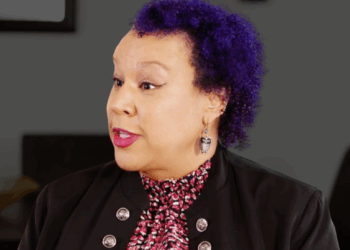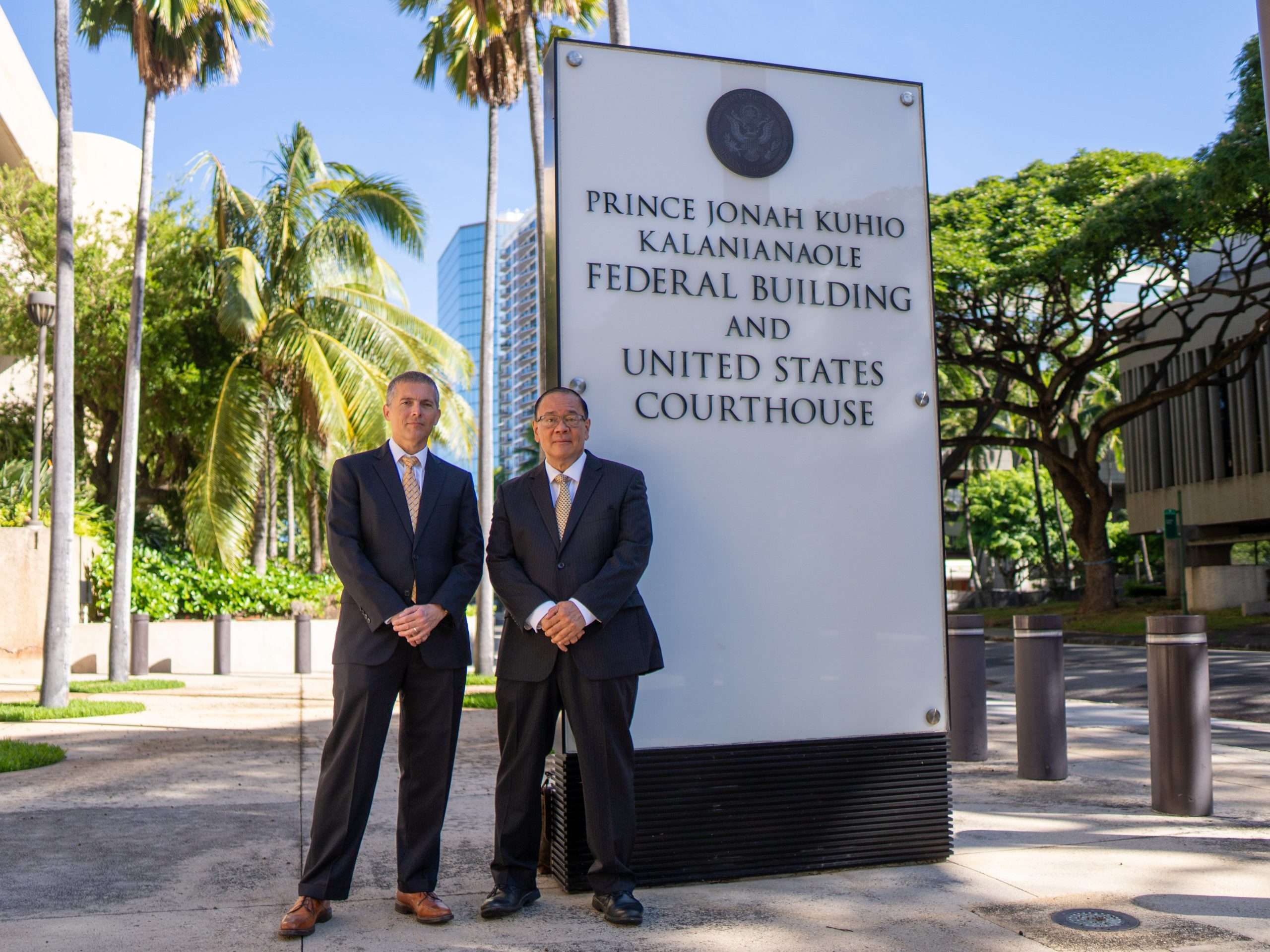
Owen Yeates, left, senior attorney for the Institute for Free Speech, is representing the Grassroot Institute of Hawaii, led by Keli’i Akina, right, in a constitutional challenge to the state’s new Act 11.
The following commentary was first published Sept. 2, 2026, in the Honolulu Star-Advertiser under the headline “Law infringes on advocacy groups’ rights.”
_____________
For the past 25 years, the Grassroot Institute of Hawaii has worked to educate the community about housing, taxes, government accountability and the economy because we believe better-informed citizens help advance policies that improve everyone’s quality of life.
So, it came as a shock when the Hawaii Legislature passed a law earlier this year that effectively prohibits us from doing that meaningful work.
Act 11, signed by the governor on May 14, has been billed as a way to get money out of politics. In reality, it limits the First Amendment rights of individuals and groups.
It does so by stripping so-called “artificial persons” of the ability to engage in what it calls “election activity” and “ballot-issue activity.”
Crucially, “artificial persons” applies to advocacy and educational organizations such as Grassroot, unions, charitable nonprofits, trade associations and other independent organizations.
Under Act 11, simply educating community members about a ballot measure could result in severe penalties for those groups, including involuntary dissolution.
That potential penalty is not a mere fine or other minor consequence. It means the state can permanently shut down an organization simply for speaking out on a public issue. Any advocacy group that engages in voter education could be at risk.
At Grassroot, the kind of public outreach prohibited by Act 11 is central to our work.
We have long opposed measures asking voters to amend the state Constitution to grant the Legislature power to impose property taxes. We have also weighed in on ballot measures to amend the Honolulu City Charter and informed community members about many other ballot measures related to taxes and government spending.
But under Act 11, which is set to take effect July 1, 2027, continuing such work would jeopardize our very existence. That is why we asked the Institute for Free Speech to file a federal lawsuit on our behalf challenging the constitutionality of the law.
Simply put, this case is about our First Amendment rights to speak, associate and petition the government. Hawaii residents also have the right to hear diverse viewpoints. Many of the groups impacted by Act 11 hold views quite different from our own, but that does not matter to us. We believe they should be able to speak out too. Act 11 will silence all of us.
Critically, Hawaii residents do not lose their constitutional rights to speech, assembly and petition simply because they pool their resources to make sure their voices are heard. Act 11 forces organizations to choose between their very existence and their First Amendment rights, and the government should never be allowed to demand that kind of trade-off.
As our state lawmakers deliberated this legislation, Hawaii’s own attorney general repeatedly cautioned that it likely conflicts with existing legal precedent, could impose unconstitutional restrictions on speech and could expose Hawaii taxpayers to significant litigation costs. The Legislature passed it anyway.
Now, it appears the attorney general’s office is tasked with defending the very law its leader warned against passing.
We at Grassroot did not file this lawsuit lightly, and we did not file it for ourselves alone. Every civic group, advocacy organization and union in Hawaii has a stake in the outcome.
And so do all Hawaii residents. A healthy democracy relies on civic involvement and public debate, and the government has no constitutional authority to silence those conversations. We are asking the court to reaffirm that principle.