The safety of children has quickly become one of the highest values in technology policy debates. Few discussions of social media or artificial intelligence policies are complete without a consideration of their impact on the wellbeing of young people. Drone technology has entered this world, as developers work to make drones one of the resources schools turn to in the event of a safety crisis.
The Louisiana Legislature is currently considering a bill to use drone technology to support school emergency response procedures.SB 488, introduced by state Senator Rick Edmonds, instructs the Louisiana Department of Education (LDOE) to outline criteria for drone use and partner with a drone vendor in order to supplement already existing protocols for emergencies and crises. The pilot drone response program outlined by SB 488 would begin with no more than four schools and involves coordination between the schools, the LDOE, and the vendor to ensure that the drones are prepared for deployment. In terms of potential vendors, Justin Marston, CEO of Campus Guardian Angel, a drone-based on ground response capability, told the Louisiana Center Square that he is seeing great interest from the State of Louisiana as well as others.
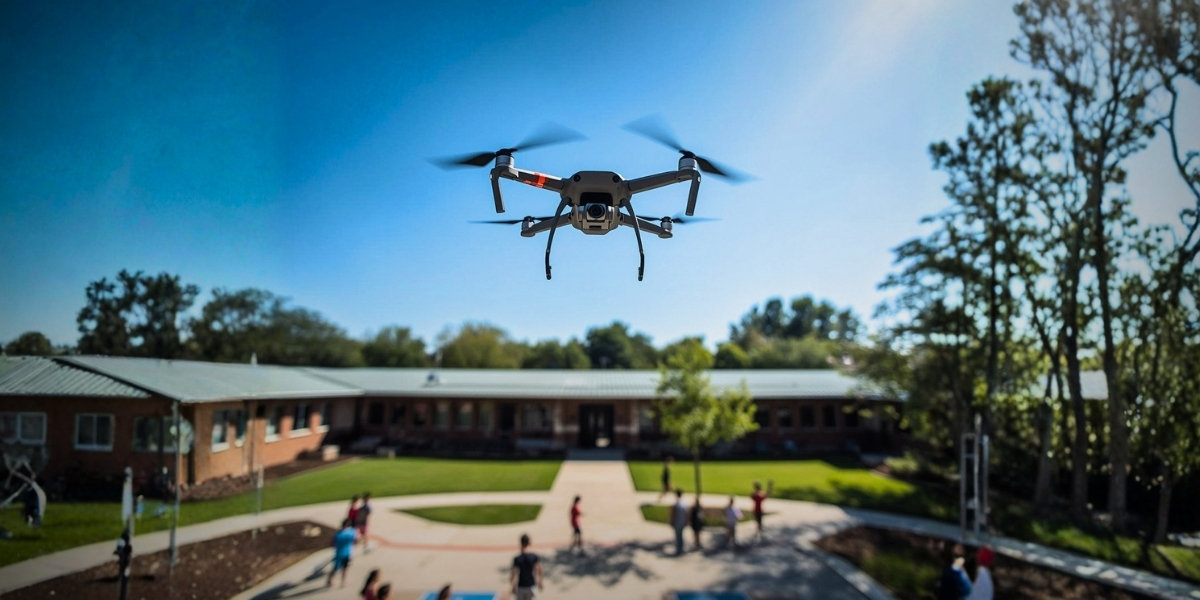
Campus Guardian Angel is a system from Mithril Defense and has already partnered with schools in Florida and Georgia, after each state approved and allocated funds towards the high-tech defense programs. Last week, some Florida schools became the first in the nation to have drone capabilities installed. The drones remain dormant until they are activated in response to certain alerts and are controlled by pilots in an off-campus facility. Once deployed, the pilots navigate the drones using real time video feedback and 3D maps from the school. The primary selling point for these drones is their ability to offer live footage to law enforcement from areas where it previously would not have been available and to deploy deterrents, like strobe lights and pepper spray.
Whether Louisiana will join the growing number of states employing drone technology to protect their schools remains to be seen. Regardless of the outcome, the consideration of drone defense programs highlights the vital role that state legislatures play in ensuring that their constituents are able to benefit from new and emerging technologies. Lawmakers must craft policies in such a way that innovations can be tested and refined and existing guidelines are clear and accessible. This approach benefits not just developers, but the public—schools, children, and general users—as well.