July 9, 2026, 2 p.m.
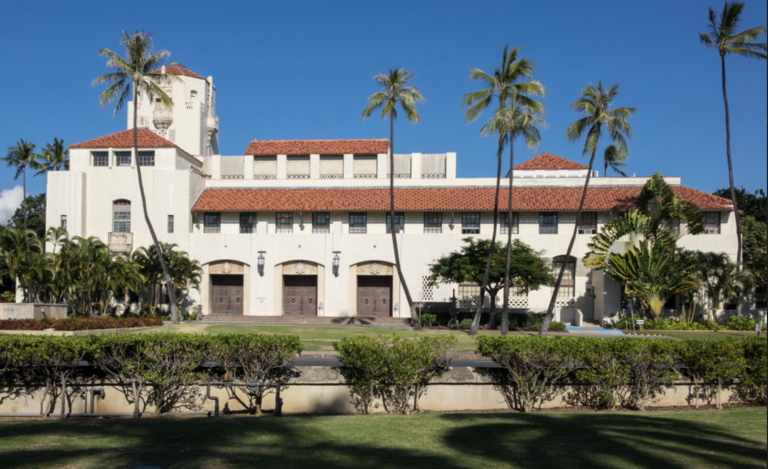
Honolulu Hale
To: Honolulu Charter Commission
Dawn Szewczyk, Chair
Sommerset Yamamoto, Vice Chair
From: Grassroot Institute of Hawaii
Ted Kefalas, Director of Strategic Campaigns
RE: P170 CD1 — RELATING TO AN EMPTY HOMES TAX
Aloha Chair Szewczyk, Vice Chair Yamamoto and other members of the Commission,
The Grassroot Institute of Hawaii opposes proposed charter amendment P170 CD1, which would ask voters whether to create an empty homes tax that could generate revenue for affordable housing construction.
According to the proposed ballot measure, an empty homes tax would be equivalent to at least 2% of the assessed value of the home. For a single-family home valued at $1.24 million — the current median sales price on Oahu — that would equate to a tax bill of $24,850 per year.[1]
However well-meaning, such a tax could be illegal and risks embroiling the city in expensive lawsuits. It also is sure to be an administrative challenge for the city Department of Budget and Fiscal Services to implement and could negatively affect Honolulu’s broader economy.
For starters, the current draft of the ballot measure is vague and could mislead voters regarding the intent of the new tax. For instance, the statement “housing units that are empty or unavailable to local residents” could refer to derelict homes vacant for years, expensive long-term rentals or even homes owned or lived in by people who do not claim Hawaii as their state of primary residence. Unfortunately, the proposed ballot measure does not define “empty” or “unavailable to local residents.”
The proposed wording for the charter amendment itself is also suspect.
If this ballot measure were to pass as written, Section 9-401 of the city charter would state that “There shall be assessed annually an empty homes tax surcharge of not less than two percent of the value of each residential tax classified real property.”
In the next section, it would state that “The assessment may be established as a supplemental tax surcharge on empty homes or as a new tax classification for empty homes that is assessed a tax rate of at least two percent higher than the tax rate for the residential A tax classification.”
First, the Residential and Residential A tax classifications are distinct from one another, but the proposed language blurs that distinction.
Second, “not less than two percent of the value” does not have the same meaning as “at least two percent higher than the tax rate.” The current Residential A tax class relies on a tiered structure, with rates set at $4 per $1,000 of assessed value for the first $1 million of a property’s value and $11.40 per $1,000 for any value above $1 million.[2] A tax rate 2% higher than the Residential A rate would be $11.63 if applied to the higher of the two rates, but it is unclear from the proposed charter language which of the two rates — the higher or the lower — this would apply to.[3]
In addition to the unclear language of the ballot question and the charter amendment, an empty homes tax could face legal challenge.
In San Francisco, an empty homes tax that was due to go into effect in 2025 was overturned in late 2024 on constitutional and state law grounds. In the order granting summary judgment, state Superior Court Judge Joseph Quinn found that San Francisco’s empty homes tax violated the U.S. Constitution’s due process and equal protection clauses, as well as California’s own constitutional right to privacy.[4] The case is now in the appeals process.
That tax, approved as a ballot measure in 2022, would have meant that owners of vacant apartment units needed to pay between $2,500 and $5,000 per unit, with higher amounts possible for units vacant for multiple years.[5]
Given that Honolulu’s penalties would be even more severe than San Francisco’s, it seems likely that adopting P170 CD1 would be vulnerable to a similar challenge.
Furthermore, the city Department of Budget and Fiscal Services in response to previous attempts to create an empty homes tax has expressed concerns regarding implementation because it is difficult to anticipate how much work the proposal would require from the department’s staff or from property owners trying to comply with it. However, it can at least be predicted that the magnitude of all this required paperwork, investigation and enforcement would be enormous.
There is also research indicating that empty homes taxes can increase housing prices in the long run, which is extremely concerning for a city that already has some of the most expensive housing in the nation.
For example, economist Mariona Segu examined France’s national vacancy tax in 2020 and found that the tax reduced the number of vacancies by 13% over four years, which coincided with many of the vacant units being converted to primary residences. But her study also noted that as rental affordability improved in the short term, housing prices increased in the long term.[6]
Economists Lu Han, Derek Stacey and Hong Chen reached a similar conclusion in 2023. Vacancy taxes can reduce vacancies, they found, but can also distort the home sales market, increasing housing prices and lowering homeownership rates.[7] Some sellers might be more reluctant to leave their properties on the market for long periods of time, as doing so risks being subject to the tax.
Consider, too, that an implicit empty homes tax already exists as a function of the housing market. Anyone who chooses to leave their home empty for more than six months out of the year is already forgoing close to $12,000 in rental income, based on average rents.[8]
This suggests that owners who leave their homes empty have good reason to do so, and an empty homes tax surcharge might not motivate them to act otherwise.
Thank you for the opportunity to testify.
Ted Kefalas
Director of Strategic Campaigns
Grassroot Institute of Hawaii
1050 Bishop St. #508 | Honolulu, HI 96813 | 808-864-1776 | info@grassrootinstitute.org
[1] Andrew Gomes, “Oahu home sales median price hits record $1.24M in June,” Honolulu Star-Advertiser, July 7, 2026.
[2] “Honolulu Sets FY2027 Property Tax Rates and Vacation Rental Owners Will Pay More,” REALTOR.com, June 14, 2026.
[3] Complicating this further, a third tier will be added to the residential A classification beginning in fiscal year 2028. It would involve a to-be-determined rate applied to any value above $3.5 million. See: Ordinance 25-44, accessed July 8, 2026.
[4] Caitlin Connell and Jessica Wilson, “UPDATE: San Francisco Empty Homes Tax – Superior Court Judge Strikes Down San Francisco Empty Homes Tax, Grants Challengers’ Motion for Summary Judgment,” Coblentz Patch Duffy & Bass LLP, Nov. 18, 2024.
[5] Adhiti Bandlamudi, “San Francisco Considers Pausing Empty Homes Tax,” KQED, March 18, 2025.
[6] Mariona Segu, “The impact of taxing vacancy on housing markets: Evidence from France,” Journal of Public Economics, Vol. 185, May 2020, p. 10.
[7] Derek Stacey, Lu Han and Hong Cheng, “Frictional and Speculative Vacancies: The Effects of an Empty Homes Tax,” Asian Bureau of Finance and Economic Research, May 2023, pp. 22-23.
[8] “What is the average rent in Honolulu, HI?” Apartments.com, accessed July 8, 2026. .