Hennepin County residents face a proposed 1% local sales tax under House File 4841, introduced on April 7, 2026, by Reps. Esther Agbaje (DFL-Minneapolis) and Danny Nadeau (R-Rogers). The bill would dramatically expand the expiring 0.15% “ballpark tax” — originally authorized in 2006 to help fund Target Field — generating an estimated $300–350 million annually.
There is nothing more enduring than a temporary tax
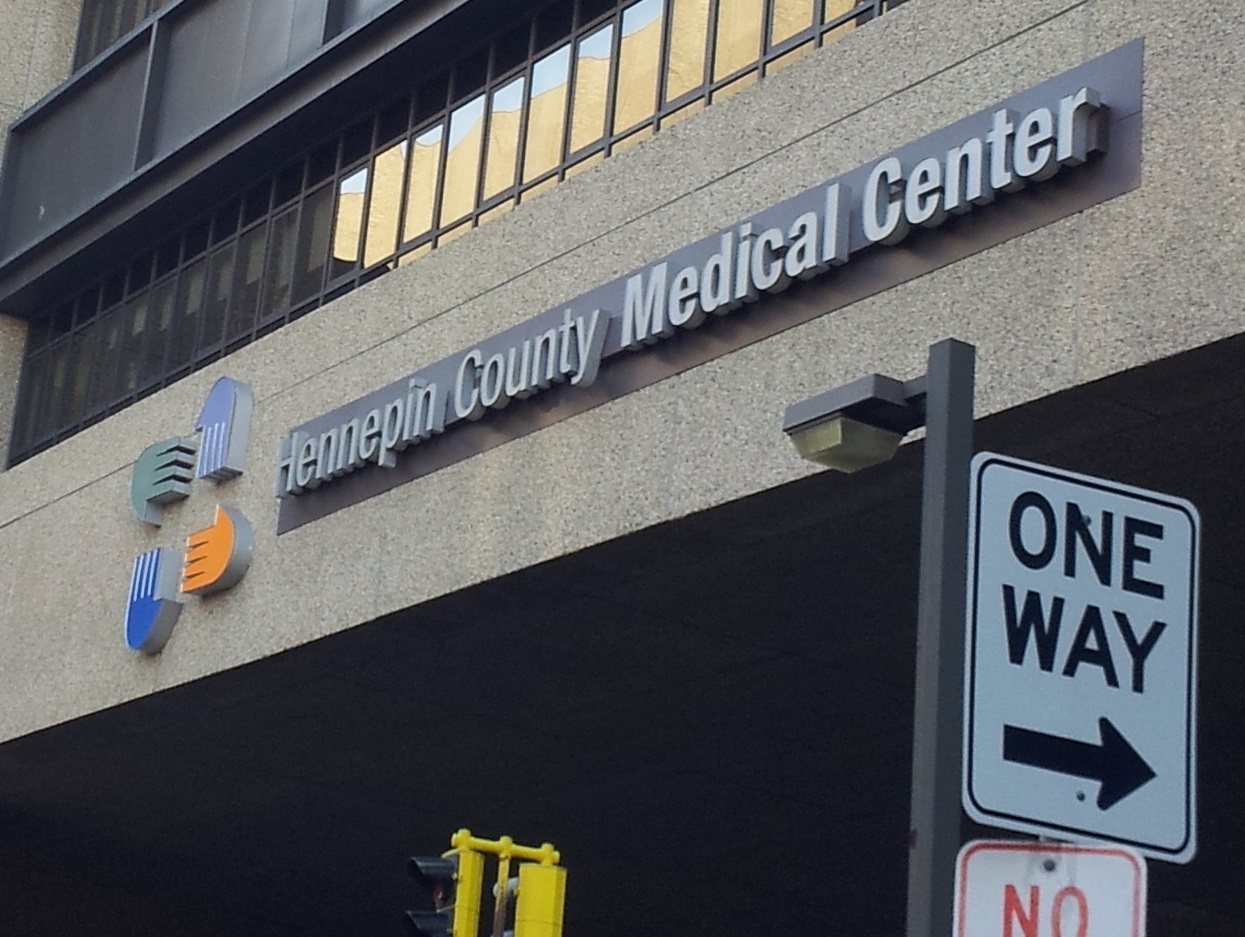
Not only is the temporary Twins tax not expiring, but it is also growing seven-fold. Much of the new revenue would support Hennepin County Medical Center (HCMC) for operating costs, uncompensated care, capital projects, and “health-related social needs,” while still directing funds to stadium improvements and a “private Level I trauma hospital.” HCMC’s focus on “health related social needs” (at the cost of education and trauma care) has caused much of their current financial dilemma.
HCMC claims uncompensated care is breaking the bank. Haven’t we heard this before? In 2011, Minnesota had state-only programs like General Assistance Medical Care (GAMC) for single adults who didn’t qualify for health insurance, the Minnesota Comprehensive Healthcare Association (MCHA) for people with preexisting conditions, and MNCare for low-income families. But all those Minnesota tax dollars were not enough. When Minnesota expanded Medicaid under Obamacare, and we were promised that the financial troubles would disappear thanks to a doubling of the number of people on Medicaid (now over 1.2 million Minnesotans).
If everyone in the state living below 200% of the federal poverty guidelines is immediately and retroactively eligible for Medicaid and MNCare — with no premiums, deductibles, or copays (since Medicaid and MNCare are 99% funded by taxpayer dollars) — why are we still seeing huge uncompensated care costs from “poor folks”? Could it be that much of this uncompensated care comes from people with high-deductible plans or those who are uninsured because they are here illegally?
A new hospital for people here illegally?
In 2025, MNCare was opened to illegal aliens for free healthcare. Those roughly 20,000 people lost coverage on January 1, 2026. The state paid out $104 million to cover them in 2025, but now — if they remain in Minnesota — they will be on their own to buy insurance or remain uninsured. Are we really going to build a new a hospital for illegal aliens? Even if you think that’s a good idea, this tax increase is a silly way to pay for it.
This proposal builds on a half-century of rickety stadium-financing schemes. It started with the 1980 “nickel by the drink” tax for the Metrodome, whose roof famously collapsed under just 10 inches of snow. That venue was later replaced by an e-pull-tab-financed $1 billion stadium, which was named the twelfth-ugliest building in the world. Now legislators want to repurpose the fading Twins tax into a broad, near-permanent sales tax to prop up a struggling public hospital and professional sports venues. HCMC should not be thrown into the shark tank of professional sports owners, forced to compete for its operating budget.
HCMC’s financial troubles are real. The safety-net hospital has already cut $50 million from its 2026 budget and plans another $150 million in reductions. Uncompensated care surged from roughly $40 million in 2020 to $104 million in 2024. Leaders warn of more than $170 million in annual federal cuts, with Commissioner Angela Conley stating the hospital faces a “real risk of closing” without relief. CFO Abdirahman Abdi called the situation “very serious,” noting recent cuts of 100 beds and several programs.
The Minnesota Medical Association strongly supports HF 4841, emphasizing HCMC’s critical role as Minnesota’s premier Level I trauma center, regional burn and hyperbaric facility, and major training ground for physicians who serve rural and underserved areas. Without stable funding, supporters argue, patients statewide could face delayed care and longer transport times.
Indeed, HCMC plays a vital role in trauma care and physician training. We can’t afford to lose it — but this tax-fed slush fund is not the answer. HCMC should narrow its focus to trauma care and education. Any additional taxpayer money should be targeted strictly to those areas and have a barbed wire fence around it in the form of enhanced reimbursement rates or creative delivery models that allow the hospital to retain more revenue. These could be obtained through waivers from the Trump Administration.
More to come…
See also: https://www.americanexperiment.org/magazine/article/save-hcmc