The demand for American workers who can build, power, and apply AI systems is outpacing supply.
This deficit is being felt by two distinct but codependent bottlenecks. America lacks skilled tradespeople to build the data centers and ancillary physical infrastructure that AI runs on, including power substations, transmission lines, and internet connectivity. Simultaneously, employers are struggling to find professionals who can effectively put these tools to use in the workplace. The U.S. needs roughly 300,000 new electricians this decade just to meet AI-driven data center demand, while employers estimate that 7,000 AI-related jobs will be unfilled over the next two years due to a lack of qualified workers. A shortage of labor for one layer of the AI ecosystem could render the other worthless: applications of the technology are impossible without the physical infrastructure, and the infrastructure is worthless without workers putting it to use.
Closing both gaps is vital for states like Florida, especially as the supply of talent has become a factor in choosing where to build new data centers. Capturing the capital investment and job growth AI brings requires building both workforces at once.
The Physical Layer of the AI Labor Shortage
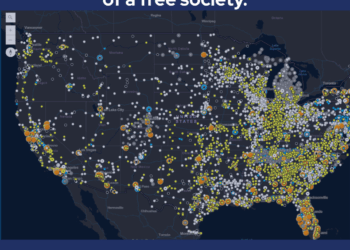
The AI boom is, in large part, a construction boom. McKinsey estimates global spending on the data center buildout could approach $7 trillion by 2030, nearly half of which will be invested in the United States. So far, approximately 3,000 data centers have been announced or are already under construction — on top of the 4,000 currently in operation. Each project depends on highly specialized welders, fiber technicians, plumbers, electricians, and HVAC workers who are now in short supply as the data center buildout continues. Traditional construction teams cannot easily swap in for these positions, leaving a growing need for training programs to expand the available workforce.
Private companies are responding by building out new vocational pipelines themselves. Earlier this month, Meta announced an initial $115 million investment for “America’s Workforce Academy” that will provide training for the next generation of tradespeople needed to build out data center capacity. The five-week program is free for admitted applicants, and graduates are guaranteed a job, removing the financial risk that could otherwise be a barrier to entering the trades. Since graduates leave with a portable National Center for Construction Education and Research credential, the skills follow the worker to any employer, building capacity across the trade rather than locking it to a single company.
Meta is not alone in making this kind of investment. In March, BlackRock launched a $100 million Future Builders initiative to train 50,000 electricians, plumbers, HVAC technicians, and ironworkers over five years.
Florida Universities Teaching the Application Layer of the AI Shortage
A survey from ManpowerGroup found that roles with AI skills are now the hardest for employers to fill, beating out engineering and traditional IT for the first time. The skill gap has widened in recent years, with more than half of the job postings that now ask for AI skills falling outside computer science and IT, and demand in non-technical roles has climbed roughly 800 percent since 2022. As AI fluency has moved from a specialty to a baseline skill, universities are preparing the workforce that develops and applies it. In particular, Florida’s public universities are tackling that pipeline by training both the specialists who will build AI systems and the much larger population of students and workers who simply need to use them.
The broadest of these efforts treats AI literacy as a general competency rather than a computer-science specialty. The University of Florida (UF) and the University of Central Florida (UCF) have created new divisions to help integrate AI into each major. As UF’s “AI Across the Curriculum” program aptly explains “AI has changed how we do business, plan cities, grow food, treat patients, write, learn, and teach. Every profession uses AI; every program should teach it.”
For Floridians already in the workforce, shorter credentialing programs provide students with a practical understanding of how to utilize AI systems in their respective fields. These shorter “micro-credentialling” certifications also allow working professionals to build the skills needed to leverage AI in their existing roles without having to leave the workforce. The University of West Florida’s nine-credit “AI in the Workplace” certificate teaches generative-AI tools on a foundation of ethics, with coursework tailored to a student’s field, while Florida International University pitches its AI360 certificates at working professionals and executives focused on AI strategy and automation.
Teaching people to use AI, though, is only half the task. Building and maintaining these systems requires technical knowledge that literacy initiatives or upskilling certifications cannot provide. Several Florida institutions are experimenting with new degree tracks aimed specifically at preparing students for that work. In 2024, Miami Dade College (MDC) launched Florida’s first bachelor’s degree in applied artificial intelligence which the school describes as “a comprehensive program that provides you with the knowledge and skills required to effectively maintain AI systems.” MDC views the AI degree as a direct pathway for students to obtain roles as AI analysts, computer vision specialists, and machine learning engineers that boast near six-figure salaries.
For all the money and computing power pouring into AI, the binding constraint is people — the tradespeople who build it and the professionals who use it. Though the two shortages can appear to be disconnected problems, one side of this workforce pipeline lagging behind will become a ceiling for the other. New trade academies and degree tracks across Florida are widening both halves of the workforce pipeline. But if Florida doesn’t continue to take the right steps to build and attract this new modern workforce, other states will step in and take investments that would’ve otherwise landed in Miami or Tampa. How well Florida keeps them in lockstep will determine how much of the AI economy it can actually claim.