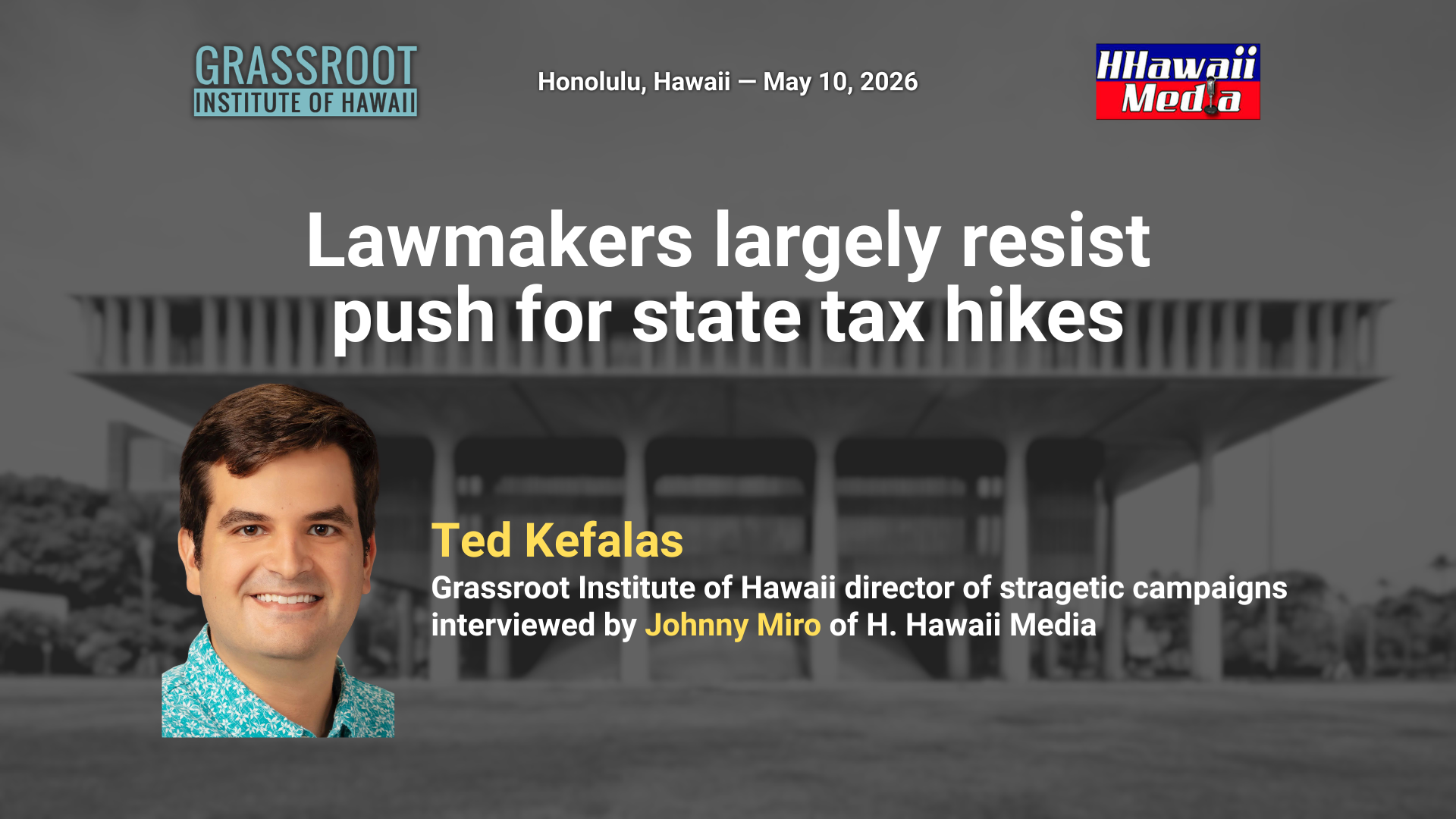
The biggest takeaway from the 2026 legislative session is that lawmakers appear to still be focused on addressing Hawaii’s affordability crisis, especially when it comes to passing housing reforms and turning down major tax increases, according to Ted Kefalas, the Grassroot Institute’s director of strategic campaigns.
Kefalas joined H. Hawaii Media radio host Johnny Miro on Sunday, May 10, to discuss the outcome of the 2026 legislative session, which ended May 8. He characterized the legislative session as “mixed” but ultimately better than expected, especially considering all the “aggressive tax-hike proposals” Grassroot helped to defeat.
Among the failed proposals were increases to capital gains taxes, a new state-level property tax, higher conveyance taxes on real estate transactions, and even taxes on concert tickets, Kefalas said.
The most important result, of course, was preserving the 2024 income tax cuts for 98% of residents, Kefalas said. Rather than use SB3125 to pause the phase-in of the tax cuts for everyone, as Gov. Josh Green had requested, lawmakers kept the cuts in place for most earners but created a new top tax bracket of 13% for income over $1 million, which Kefalas said will put Hawaii’s top marginal rate just behind California for highest in the country.
Kefalas expressed concern that increasing income taxes on higher earners could drive away “business owners, entrepreneurs, doctors, people that we really need in our state.”
He also highlighted concerns about SB2694, which will allow shipping companies such as Young Brothers to automatically increase rates each year without improving service.
On the positive side, Kefalas praised lawmakers for making “a lot of meaningful progress” on housing reform.
He said HB1741, if approved by the governor, will require counties to study the economic impact of inclusionary zoning mandates before imposing them, and HB1710, if approved, will create review deadlines for the State Historic Preservation Division.
“For years, Hawaii in general has talked about housing primarily through things like subsidies and mandates,” Kefalas said. “But the past few sessions have included more of a focus on the actual barriers that have prevented housing from being built.”
He noted, however, that “these incremental reforms help, but they aren’t going to be enough on their own” to end the housing crisis.
“We really need to take bold action before it’s too late,” he said. “So while there were definitely some positive developments this session, there’s still, I think, a tremendous amount of work left to do if we want to reverse the long-term trends that have continued to drive local people away.”
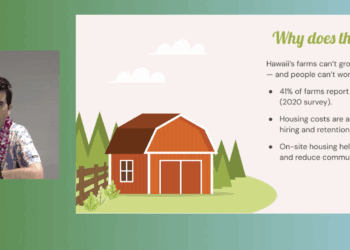
The entire 21-minute conversation can be heard by clicking on the image below.