
Adjusted for inflation, average college tuition has more than doubled since 1970 (Figure 1). This tuition rise impacts more than just college payers, as an annual $124 billion of federal tax dollars subsidizes financial aid. As tuition climbs, so does the federal contribution.
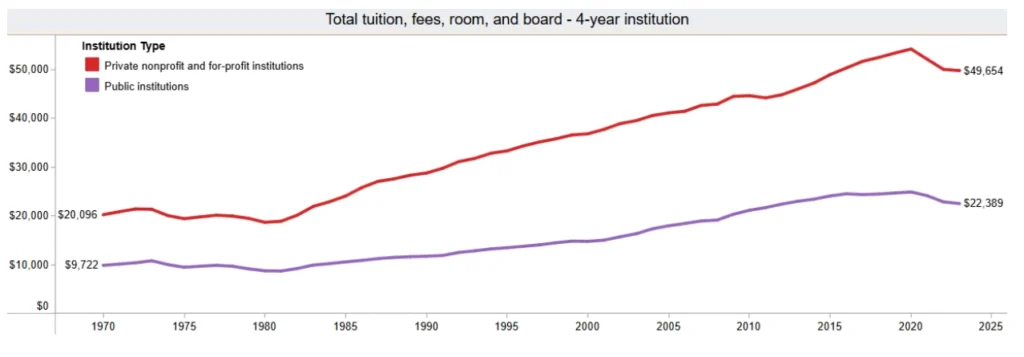
Figure 1. Total Tuition Expenses per Student since 1970 (Inflation Adjusted) from Pioneer’s US Data Labs.
Despite the rise in tuition, most of this increased funding does not go toward academic instruction. So, where is it going? Tuition circulates throughout a university, contributing to everything from student services to administrators hired to oversee compliance. Increased costs in these non-academic areas have forced universities to hire an exorbitant number of administrative staff. In fact, most universities have more administrative staff than professors (Figure 2).
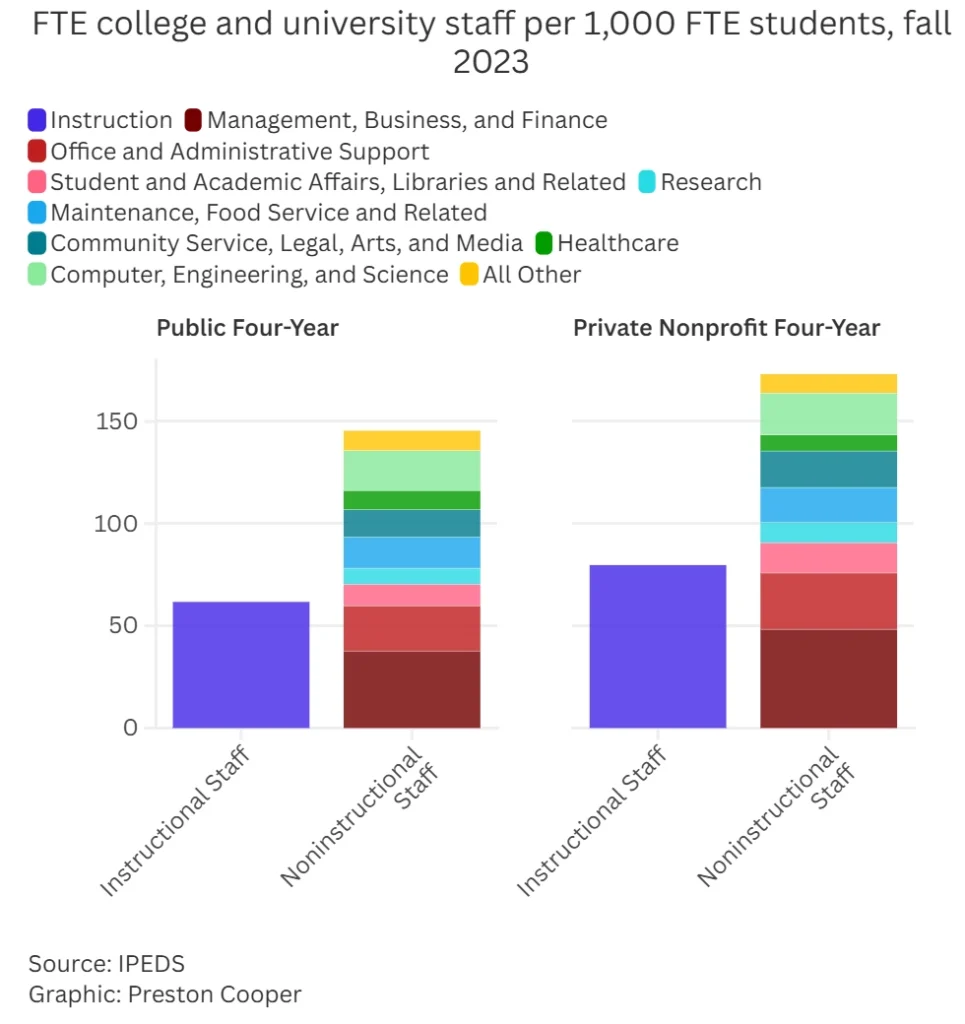
Figure 2. IPEDS Data of Instructional Staff Compared to Types of Noninstructional Staff, developed by the American Enterprise Institute (AEI). AEI counts “management, business, and financial operations,” “office and administrative support,” and “student and academic affairs, librarians” as administrative roles.
While there are many theories on the increase in administrators, one of the best known is Bowen’s principle, the central idea of which being that colleges spend all their revenue to stay competitive. As colleges gain revenue from tuition, they spend it on administration – even when it is unnecessary. This causes colleges to keep increasing tuition as they continue to find new programs on which to spend the revenue.
Research from the Progressive Policy Institute there are many reasons for excess administrators. Upon review, they all fit into one of two overarching categories: enriching the college experience or regulatory oversight. Bowen’s principle explains much of the first category. To make matters worse, the current admissions environment is challenging due to a strong labor market, declining enrollment, and rising student expectations. These factors push colleges to compete for students in new ways which encourage spending on the student experience. While solving higher education’s cost spiral problem requires complex economic solutions, some of the most feasible causes to address may instead be overregulation and accreditation.
The federal government, under both Democratic and Republican administrations, has increased the number of requirements colleges must comply with. A well-known 2015 report by Vanderbilt University found colleges spend $27 billion (Figure 3) cumulatively a year complying with federal regulations, or 3 to 11 percent of non-hospital operating expenses per school. Many college administrators are hired to cut through the red tape and ensure compliance.
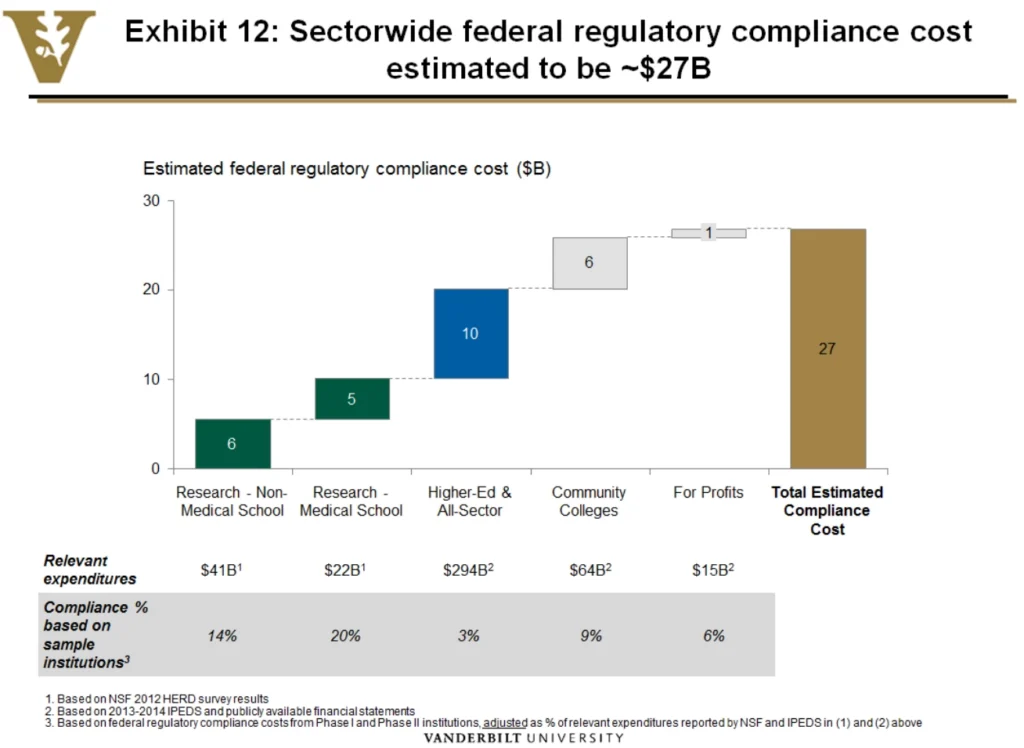
Figure 3. Total yearly compliance expenditures in the United States broken down by category. Data gathered and pushed by Vanderbilt University in 2015.
To make this problem even worse, accreditation organizations, which claim to uphold rich academic standards, are growing across subject matter. These 100+ private entities evaluate and enforce high academic standards, in a wide range of subjects from culinary arts to healthcare. Participation in subject-matter accreditation programs is voluntary, although many college’s participate to remain competitive for enrollment and grants.
Accreditation programs for healthcare professionals are sensible, given the stakes of a mistake. However, the number of accreditation programs for lower stakes fields, such as library studies, is likely unnecessary. Nevertheless, accreditation is an extremely lucrative business, as earning one is costly. In the U.S., $6 billion was spent on accreditation in 2015 and has only continued to rise with inflation. To stay competitive, colleges chase every accreditation they can, which requires even more administrators.
Proponents of expansive college administrations claim they are not only essential but services they provide ease the burden on faculty. A 2024 Israeli Department of Education and Ariel University study quantified that claim, showing that student satisfaction scores dropped when teaching faculty had to take on administrative duties. It reasons that professors’ time being pulled away from teaching caused a drop in student satisfaction. Though the study was conducted in Israel, the dynamic is universal: satisfaction fell as professors shifted from teaching to spending more time on administrative tasks.
Instead of just blindly cutting administrators, legislators can address the root of the problem by cutting the regulation and accreditation that drive excess hiring. Economically, overregulation has persisted because regulators do not bear the cost of implementing the rules. If the regulator shared the cost, they’d have a better understanding of which rules are actually necessary and redelegate some standards back to schools. Having the government share all compliance costs is not ideal – it further strains taxpayers. However, they certainly can do a comprehensive review and updating current regulatory standards would be a productive step.
This review could slow or even stop the climb in tuition. For it to be effective, unnecessary standards must be genuinely slashed. Rebranding and consolidating them simply covers up the problem and will not address the root of the issue.
Samuel Klein is a Roger Perry Education Intern at Pioneer Institute. He is a rising Junior at the University of Rochester, studying Politics, Philosophy, and Economics (PPE).