No child should be denied medical care or the love of a caring family simply because of their skin color, but that kind of injustice is common under the Indian Child Welfare Act, or ICWA—a federal law that actually provides Indian children with less protection than kids of other races. Now, the Goldwater Institute is urging the Supreme Court to take a case involving two medically fragile Minnesota children who were removed from a loving foster family under ICWA and sent to a reservation hundreds of miles from their doctors.
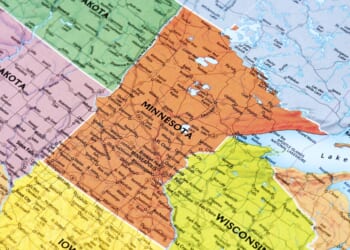
The children—twins born in 2022, suffering from severe medical distress due to their mother’s prenatal drug use—were immediately placed with loving foster parents who cared for them for over a year, took them to their appointments at the Mayo Clinic, and hoped to adopt them. But because the twins have Native ancestry, ICWA and Minnesota’s state version of the law allowed tribal officials to remove the children from the home and place them on a reservation 300 miles from the Mayo Clinic with a cousin of their birth mother, against the birth mother’s wishes.
Sadly, ICWA routinely deprives Native children of legal protections provided to kids of other races, resulting in many Native children being placed in dangerous homes or returned to parents who have abused them. The Supreme Court now has the opportunity to protect those kids by declaring ICWA’s race-based rules unconstitutional.
When a Virginia school board bullied two moms for exposing the board’s spending, the Goldwater Institute sued and won. When an Indiana school barred a mom from campus simply for recording a meeting with the principal, Goldwater came to her defense. Now, the Institute is standing up for the constitutional rights of parents in Mesa, Ariz., to speak freely and express their unfiltered concerns during school board meetings.
The Mesa Public Schools Governing Board has a policy that bans “personal attacks on Board members, staff, students, or members of the public” during the public comment period of board meetings. The problem: the policy amounts to viewpoint discrimination, and that’s a violation of the First Amendment. In fact, the board’s policy thwarts the core purpose of public comment periods—educating the board about community members’ concerns.
In a letter to the Mesa board, the Goldwater Institute is urging board members to amend the illegal policy. Goldwater will always defend parents when public school officials violate their rights—in Arizona, Virginia, Indiana and across the country.
It shouldn’t be a surprise, but the most economically competitive states tend to have something in common—a commitment to economic liberty and free-market, low-tax policies. In a new column, the Goldwater Institute’s Mike Brownfield details what happens to states that move in the opposite direction.
After Michigan leaders hiked the minimum wage and repealed their Right to Work law, the state plummeted in the annual Rich States, Poor States rankings by the American Legislative Exchange Council. Increasing the minimum wage is expected to harm job growth, especially for young workers. Meanwhile, repealing Right to Work—a law that makes union membership optional—is limiting business investment in the state, meaning fewer jobs and more reasons for talented people to seek opportunities elsewhere.
“It’s not just about winning a Rich State trophy,” Brownfield writes. “Michigan’s bad policies are resulting in terrible outcomes.”
While Michigan is taxing and spending more, Mississippi and Oklahoma are taking a different approach, voting to phase out their personal income taxes altogether. That’s because it’s clear, states that spend less and tax less tend to experience higher growth rates—a truth that too many blue state lawmakers simply refuse to accept.